How to Choose a Mold Cleaner for Different Surfaces
For a small, accessible patch on a sound hard surface, start with detergent and water. Scrub the growth off and dry the area. Use a specialty product only if its label allows that material and use. If the material is saturated or damaged, the growth is extensive or hidden, or the water is contaminated, get it assessed, replace it, or call a professional remediator. Fix the moisture source before you call the job done.
Before buying a mold cleaner, decide whether cleaning is appropriate
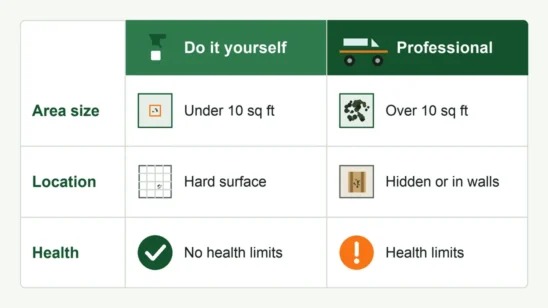
Use a cleaner when the material is sound, within reach, and fine for surface cleaning. The EPA’s household mold guidance says homeowners can usually handle patches smaller than about 10 square feet, roughly 3 by 3 feet. Any of these changes the decision, even when the visible patch is small: extensive water damage, suspected growth behind walls or in HVAC equipment, sewage or other contaminated water, and health concerns.
Match the cleaning approach to the surface beneath the stain
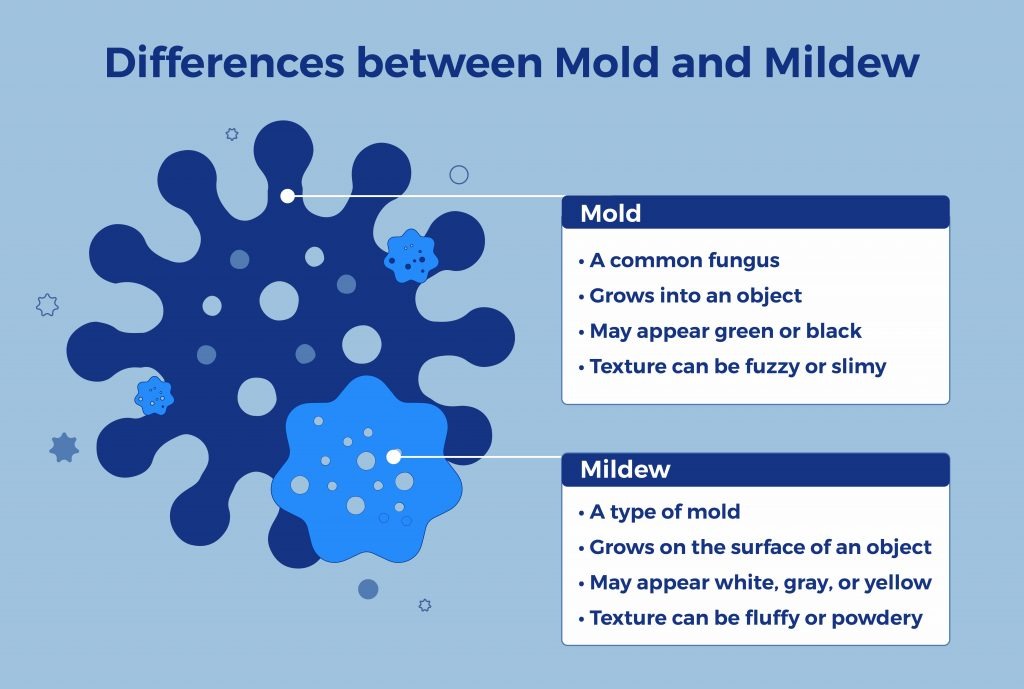
A glazed shower tile, the grout beside it, and the caulk sealing its edge can all show dark discoloration. They are different materials with different cleaning and repair needs. A bottle labeled for bathroom use can suit one and damage another.
Identify the material and its condition first. Then check the finish: painted, sealed, refinished, glazed, and unfinished surfaces react differently to cleaners.
| Surface or material | What to do | Skip cleaning if |
|---|---|---|
| Glass and sound glazed ceramic tile | Scrub with detergent and water, then dry | Damaged joints, coating restrictions, or water behind the surface |
| Grout | Clean with a product the label allows on grout, if the joints are firm | Crumbling joints or moisture behind tile |
| Silicone caulk and other sealants | Check that the seal is intact, then clean the surface lightly | Growth extending behind a failed seal |
| Fiberglass, acrylic, or refinished tubs | Follow the finish maker’s care method | Unknown coating, marks, or a prohibited chemical |
| Painted walls and drywall | Clean lightly, only if the finish and the board underneath are sound and dry | Soft wallboard, peeling finish, or a hidden leak |
| Sealed or unfinished wood | Check the finish first, then clean with a product made for it | Moisture penetration, deterioration, or rot |
| Natural stone | Use stone-specific care and a compatible cleaner | Sensitive finish, possible etching, or water infiltration |
| Sound concrete and masonry | Scrub and control moisture | Continuing seepage or concealed damage |
| Carpet, padding, and absorbent ceiling tile | Decide whether the item can be kept | Penetrating mold, saturation, or contaminated water; replace the item |
| Washable fabrics and shower curtains | Follow the item’s care instructions and check its condition | Incompatible treatment or damage that makes cleaning impractical |
The EPA notes that moldy porous materials such as carpet and ceiling tile may need to be discarded because thorough cleaning is difficult. If you’re unsure about a valuable item, get it assessed before you throw it out.
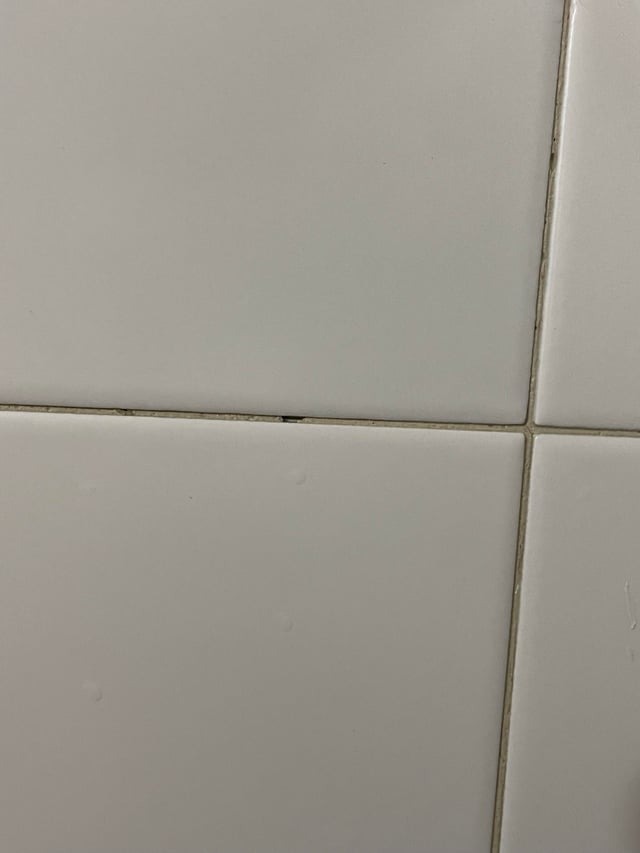
Grout shows how the wrong cleaner turns into a repair job. Toilet-bowl products and bathroom surface cleaners are made for different jobs.
YES, preach! Undiluted bleach and toilet gel will ruin grout, and toilet bowl gel should not be used on anything other than toilets…and especially grout! It becomes brittle, chips away, and allows moisture, cleaners and mold to grow under the backside of the grout and tiles. It will also eat away at the tile adhesive/subfloor.
Back when I used to clean houses, I had several customers that didn’t know that, and absolutely destroyed the grout and had to redo it. One unfortunate customer had to pull up entire sections of tile and replace the subfloor because it was getting so wet (house entryway), and the whole subfloor had molded and sunk. This was a NICE house, too…just, incorrect cleaning can lead to disaster.
Edit: Also feel the need to tell people to stop doing tiktok cleaning trends. Don’t flood your floors with buckets of mop water, don’t put baking soda on carpet pee stains, and please, PLEASE, stop cleaning carpet and furniture with shaving cream. Ya’ll are killing me! XD
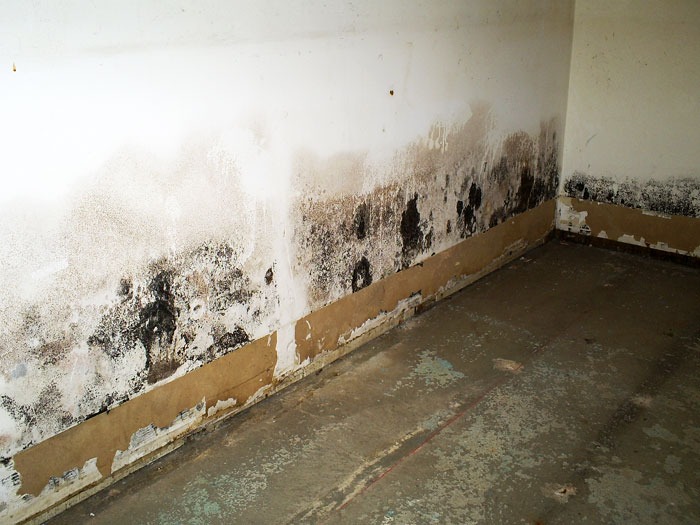
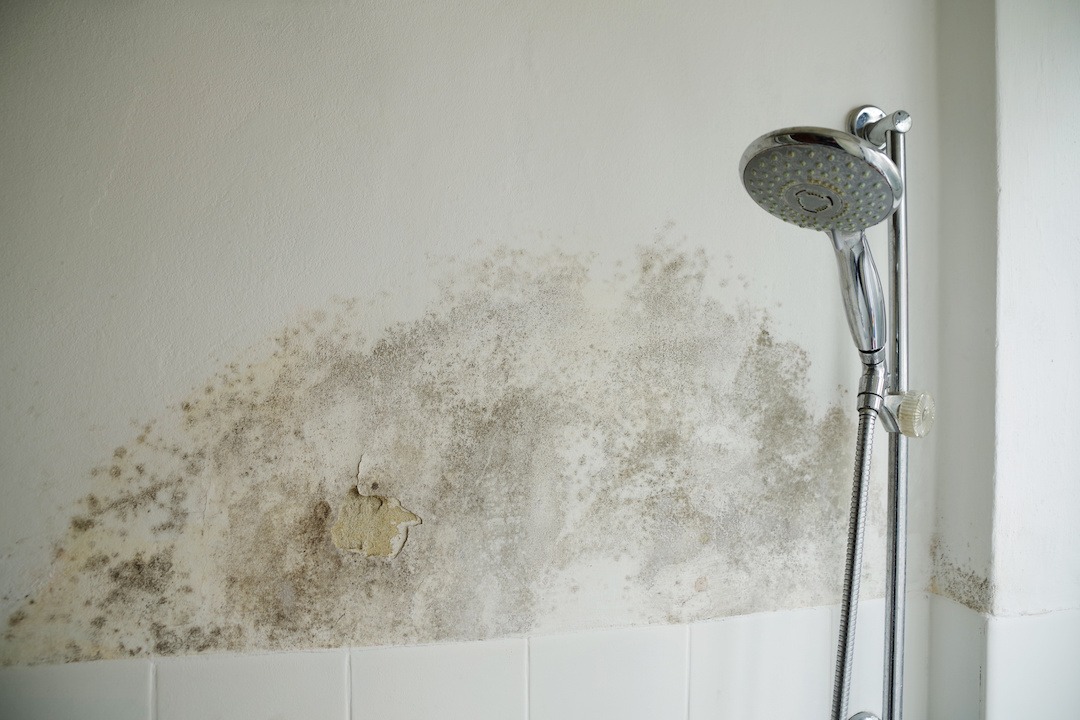
A stain on sound, dry paint is a cleaning job. Wallboard softened by a leaking pipe is a repair job. A cleaner can’t repair damaged material underneath. Black discoloration doesn’t tell you the mold species, and pink shower deposits aren’t necessarily fungal mold.
Know what the bottle promises: cleaning, stain removal, or antimicrobial action
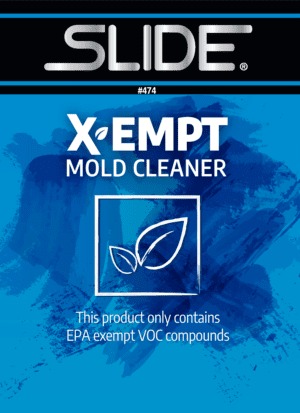
The label tells you whether a product cleans a surface, removes stains, or makes a registered antimicrobial claim.
| Product type | What it does | Check before use |
|---|---|---|
| Ordinary detergent and water | Removes mold physically from suitable hard surfaces | Whether the material is sound and can dry thoroughly |
| Mold-stain remover | Lightens or removes discoloration on permitted surfaces | Whether contamination and moisture damage are also dealt with |
| EPA-registered antimicrobial product | Makes specific registered claims under labeled conditions | Organism, use site, surface, contact time, and directions |
| Bleach-based household cleaner | Has labeled cleaning or antimicrobial uses on compatible materials | Finish restrictions, rinsing, and exposure precautions |
| Vinegar or peroxide household product | Works as a household cleaner where the directions allow | Actual product instructions and finish compatibility |
RMR Solutions markets RMR-86 as a mold-stain remover. Its FAQ says the product lacks the EPA registration needed to make a registered mold-killing claim. A lightened stain can still sit on damaged building material.
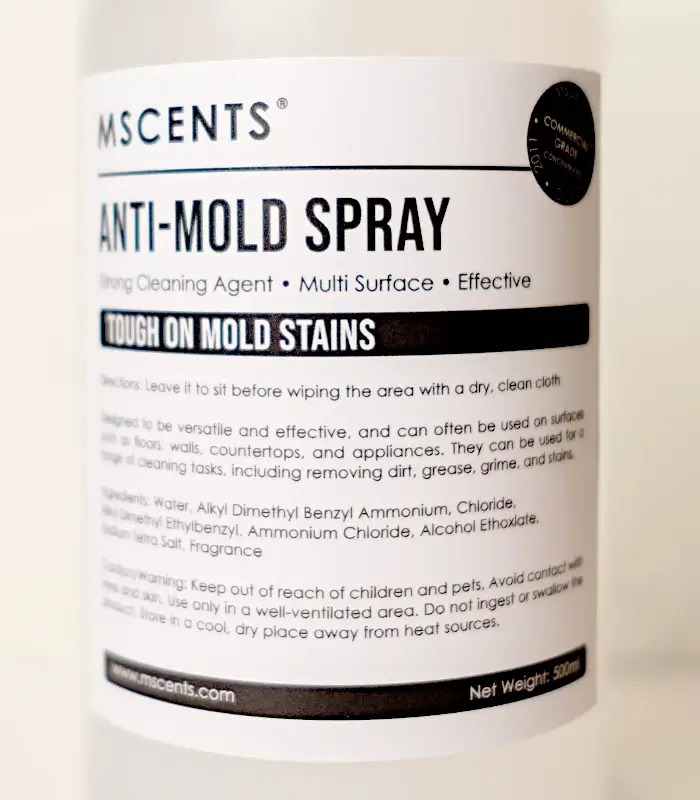
For an antimicrobial claim, the EPA registration number identifies the registered product. Its approved label lists the organisms, permitted use locations and surfaces, and directions such as contact time where applicable. Those conditions set the scope of the claim. The EPA’s Safer Choice mark covers a separate cleaner-screening program. A registered antimicrobial mold-killing claim requires the appropriate EPA registration and label.
Detergent, bleach, vinegar, or peroxide?
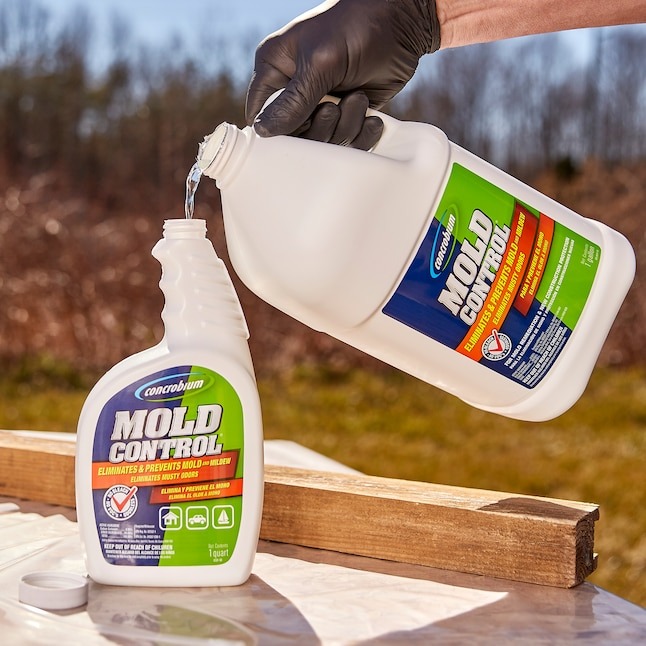
For suitable hard surfaces, the EPA’s basic approach is detergent and water: scrub off the mold and dry the surface completely.
The EPA’s bleach guidance does not recommend bleach or other biocides as a routine mold-cleanup measure. Killing mold leaves material that still needs scrubbing off.
The CDC permits household bleach or dish detergent in applicable household cleanup. Its general bleach guidance sets a maximum of one cup per gallon of water and requires attention to ventilation and chemical incompatibility. That ceiling doesn’t override the directions on a formulated retail product. For the product-by-product comparison, see bleach vs. vinegar for mold cleanup.
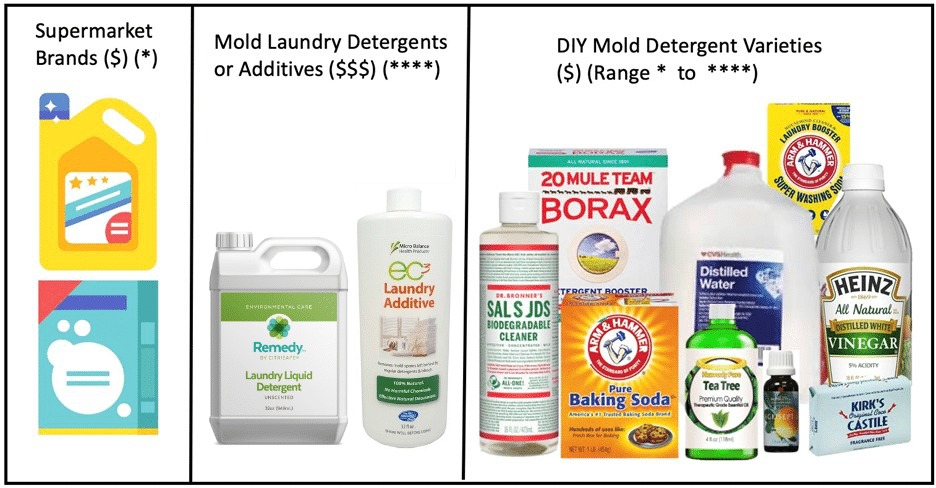
Vinegar and hydrogen peroxide have no reliable performance ranking across materials. Concentration, finish, product directions, and the condition of the material decide whether a particular use is acceptable. A commercial fungicide has its own approved use sites and safety instructions, and professional applications don’t automatically translate into a safe household method. Whichever product you pick, the DIY cleanup guide starts with the moisture source.
Check the finish and the label’s exclusions before application

A single bathroom can contain ceramic tile, porous grout, silicone, glass, metal, acrylic, fiberglass, stone, and a refinished coating. Check compatibility against the actual material and the specific cleaner.
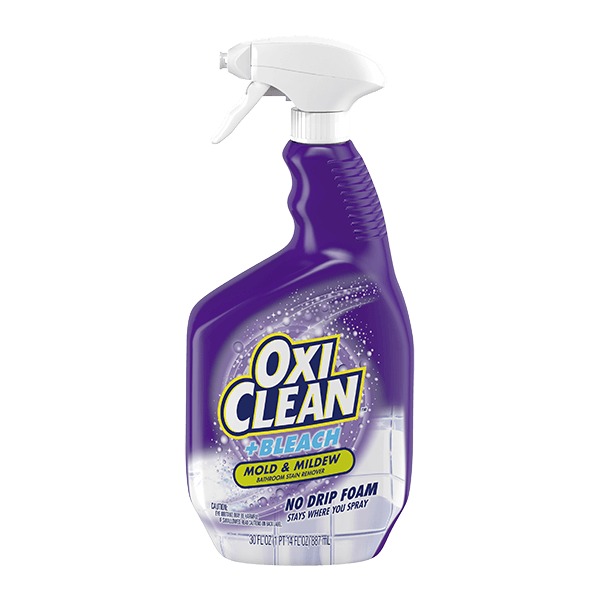
For example, Clorox Plus Tilex Mold & Mildew Remover lists uses including glazed ceramic tile, grout, tubs, fiberglass, glass shower doors, vinyl shower curtains, sinks, and no-wax floors. Its manufacturer also warns against wood, painted surfaces, aluminum, fabric, carpet, and paper, with product-specific exceptions.
For this formulation, the manufacturer directs prompt rinsing after contact with rubber, plastic, or vinyl and cautions against prolonged contact with metal or old porcelain.
The manufacturer gives separate directions for stain removal and for disinfecting or killing mold with its 32-fluid-ounce Clorox Plus Tilex Mold & Mildew Remover with Bleach spray (product code 044600011950). To disinfect or kill mold on hard, nonporous surfaces, fully wet the area, keep it wet for five minutes, then rinse. For stain removal, rinse when the spots disappear.
My bathtub now has bleach stains. What can I do to fix this?
EDIT: cleaner said they use bleach in all of their houses and have never had issues. They said it’s because my tub is not ceramic and offered to proceed with whatever we want to do about the tub.
Read these five parts of the label and the fixture’s care instructions before using a specialty cleaner:
- Identity and use site: The exact formulation and where it’s permitted.
- Materials: Allowed and excluded materials, coatings, and finishes.
- Application: Contact time, rinsing, and any permitted test-area procedure.
- Hazards: Chemical incompatibilities and required protective measures.
- Surroundings: Where drips, runoff, or overspray might reach a different finish.
Test a concealed spot only if the maker permits it. A test patch can’t override an explicit material exclusion.
Choose an application format that suits the area
- Liquid spray: Convenient for accessible hard surfaces, but droplets and runoff can reach adjacent finishes.
- Foam: Some products cling to vertical surfaces, which makes controlled application easier.
- Gel: A thicker formulation suits a narrow, label-approved target where staying in place matters.
- Wipe or manual application: Gives more controlled contact on an accessible small area when the directions permit it.
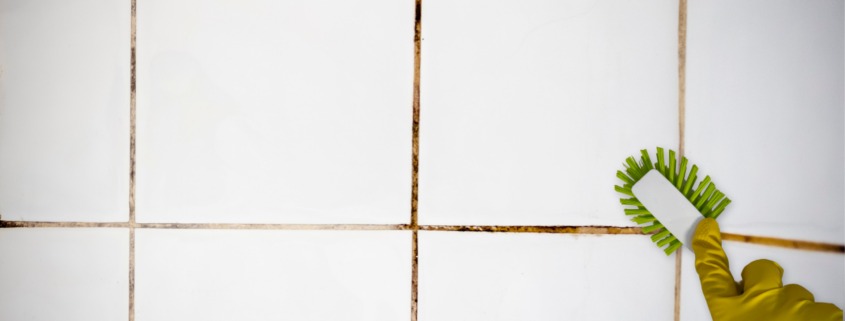
We have the very large shower that is a pain in the butt to clean and gets that pink mold in a bunch of places in the grout. The back wall has very tiny grout lines that are difficult to scrub. I have an electric scrub brush and I’ve been using wet and forget shower cleaner in a pump spray bottle, but it seems the pink mold is back in a few days.
Some of the bleach cleaners are effective, but they only come in regular spray bottles so I almost go through an entire bottle in one clean, plus there not much ventilation so I can’t do the whole shower in one go. Is there a bulk cleaner that would be more effective (meaning the least amount of scrubbing possible), while also not killing me in the process?
A product that clings to a vertical surface can reduce the effort of application, but it can’t make unsafe exposure conditions acceptable. On a vertical joint, control runoff. On a broad horizontal tile surface, coverage and access matter more. Overhead spraying increases droplet exposure and can conceal a problem behind the visible finish that needs investigation.
Protect yourself during mold cleaning
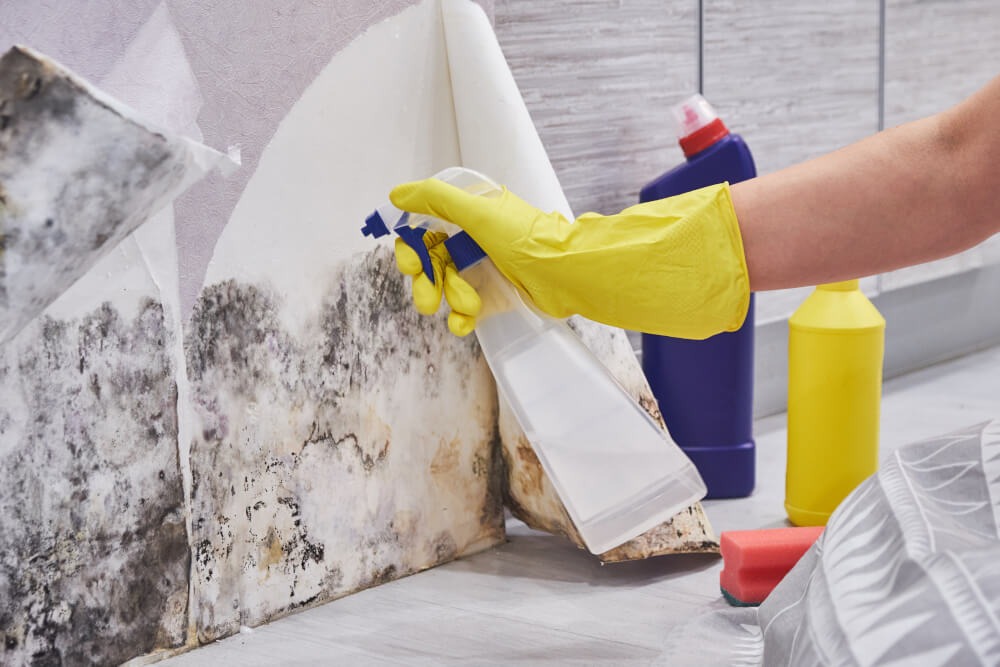
Mold cleanup can stir up particles, and cleaning chemicals add their own exposure hazards. The CDC’s mold-cleanup guidance calls for at least a NIOSH-approved N95 respirator, gloves, and eye protection during typical cleanup. It advises that people with asthma, COPD, immune suppression, certain allergies, or underlying lung disease should not take part in mold cleanup.
An N95 filtering facepiece protects against airborne particles, not chemical gases or vapors. Follow the cleaner’s exposure directions and provide fresh air as instructed. If ventilation is inadequate, don’t do the job yourself.
Never mix cleaning products. Don’t combine bleach with vinegar, ammonia, toilet-bowl cleaner, acids, or other cleansers. Hazardous gases can result.
Keep higher-risk occupants away from the cleanup area. Extensive removal or demolition calls for containment and protective measures beyond ordinary household cleaning. If you suspect chemical exposure, contact poison control or emergency services, and don’t improvise household remedies.
Check the result and the moisture source
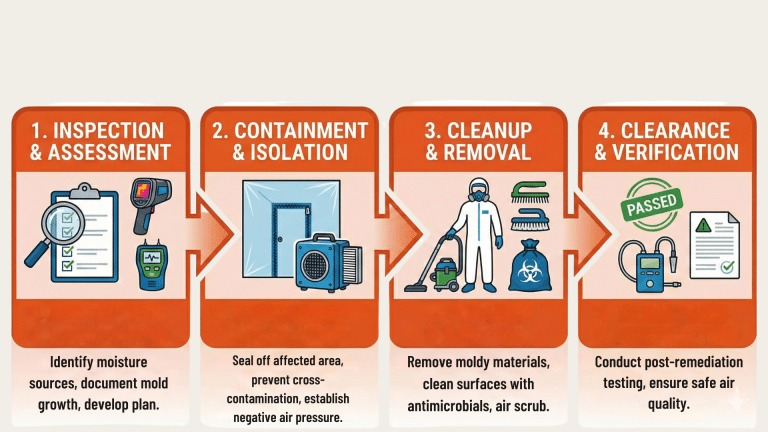
A product can lighten staining without addressing contaminated material, and the EPA notes that cosmetic marks sometimes remain after appropriate cleaning.
- Material condition: The retained surface is firm, with no softening, crumbling, or other deterioration.
- Removal: Visible growth and associated material are cleaned away where surface cleaning was appropriate.
- Dryness: The affected material is fully dry.
- Moisture source: The leak, condensation, or humidity problem is fixed.
- Afterward: Fresh growth, spreading discoloration, persistent dampness, or new damage means you reassess.
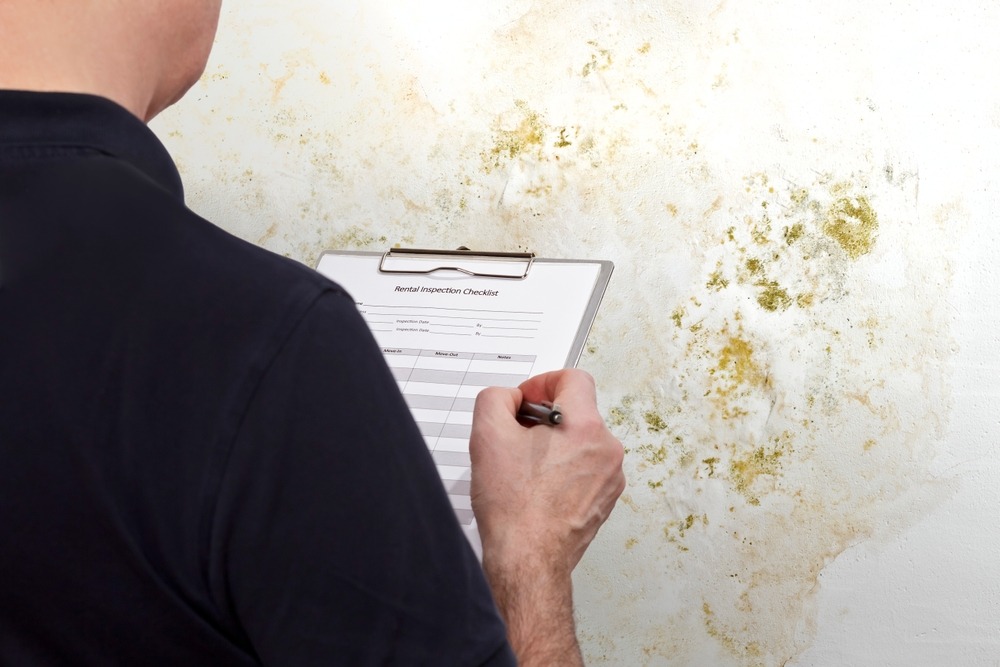
Repeated discoloration at grout, failed caulk, or painted wallboard can point to moisture behind the surface. Cleaning the surface won’t firm up a soft board or seal a leaking joint.