
How to Prevent Mold From Coming Back: Fix the Moisture, Then Check the Result
Fix the source of moisture before you count on cleaning, paint, fans, or a dehumidifier to keep mold away. Clean up the mold that is already there, then check that the area stays dry in the weather or routine that wet it. Extensive, hidden, sewage-related, or HVAC-related contamination, or higher-risk occupants, call for a qualified professional. Start by working out whether you have a leak, condensation, or persistent indoor humidity.
First, Decide Whether You Need Cleanup or Prevention
If you can already see mold, you have two jobs: deal with the growth and stop the moisture that feeds it. Better ventilation or drier air helps prevent a new outbreak, but neither removes mold already on a wall, ceiling, or other material. A small, uncomplicated patch is manageable with ordinary homeowner cleanup. Substantial, concealed, or contaminated damage needs a closer assessment.
Shower steam condenses on cold surfaces, so an exhaust fan that vents outdoors cuts the moisture at its source, which is why improving bathroom ventilation limits recurring mold.
A dehumidifier lowers room humidity but does not clean existing growth. Use it to keep the room at the humidity level that helps prevent new mold growth.
Follow the Water: Leak, Humidity, or Condensation?
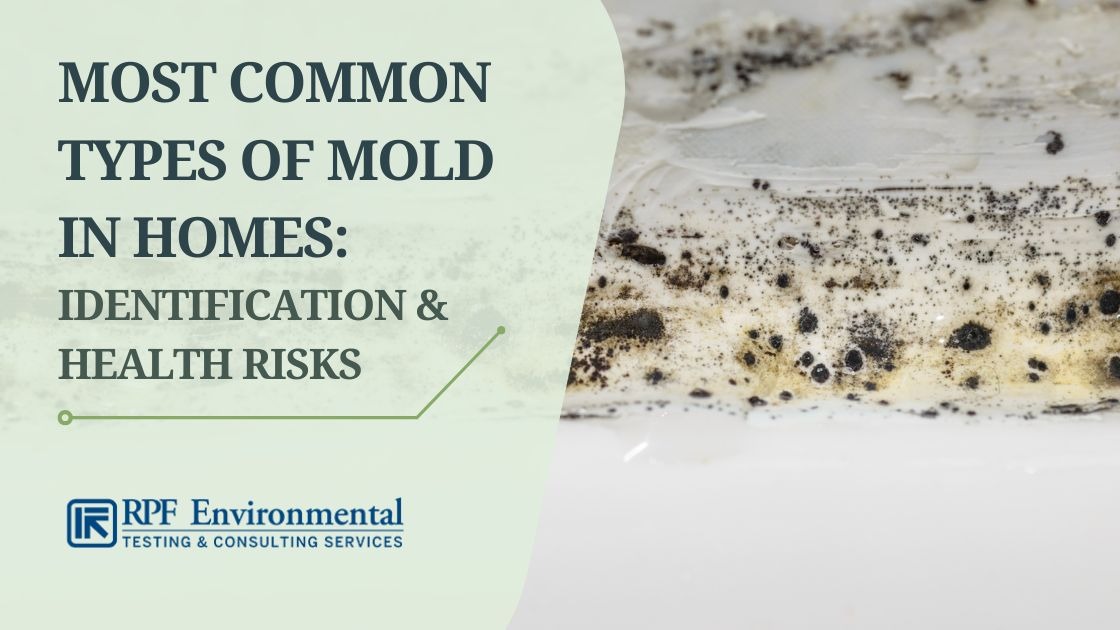
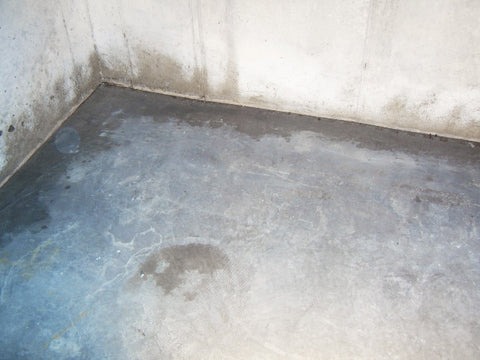
Where and when moisture shows up tells you more than the mold itself. A cabinet floor that gets wet when the sink runs points to plumbing. A bedroom window covered in condensation on cold mornings points to humid air meeting cold glass. A basement wall that darkens after heavy rain suggests water arriving by another path entirely.
There are three basic sources: liquid water entering where it shouldn’t, moisture building up in room air, and humid air condensing on a cold surface. One house can have more than one.
| What you notice | Possible moisture source | First check | Likely correction | Evidence of improvement |
|---|---|---|---|---|
| Wet cabinet or wall near plumbing | Leaking pipe, connection, or drain | Does it get wet during normal water use? | Repair the plumbing and check the materials it wet. | No new wetness during similar use |
| Basement dampness or stains after rain | Groundwater or water getting in through the building envelope | Look for overflowing gutters, downspouts discharging near the foundation, or water draining toward the house. | Find and fix the drainage, foundation, roof, or window problem. | No new water after similar rainfall |
| Water on windows, pipes, or cold walls | Surface condensation | Does it appear when those surfaces are cold? | Cut indoor moisture. Fix cold surfaces or air leaks where you find them. | Condensation stops under similar conditions |
| Bathroom stays damp after showering | The room makes more moisture than the fan removes | Is the exhaust carrying moist air outdoors? | Get the exhaust working and cut the moisture going into the room. | The room dries out after use |
| Several rooms stay damp or show high relative humidity | Too much moisture in the indoor air | Do the high readings persist? | Control the moisture sources, then ventilate or dehumidify. | Lower readings and fewer damp rooms |
| Mold returns after cleaning or repainting | Moisture never fixed, material not fully treated, or both | What caused the original wetness? | Recheck the source and the material. | No new visible growth, dampness, or musty odor |
Start with the event most closely tied to the dampness. Rain stains call for a different investigation than a bathroom that stays wet after every shower. For mold that has already returned, the main guide’s recurrence section helps you decide on next steps.
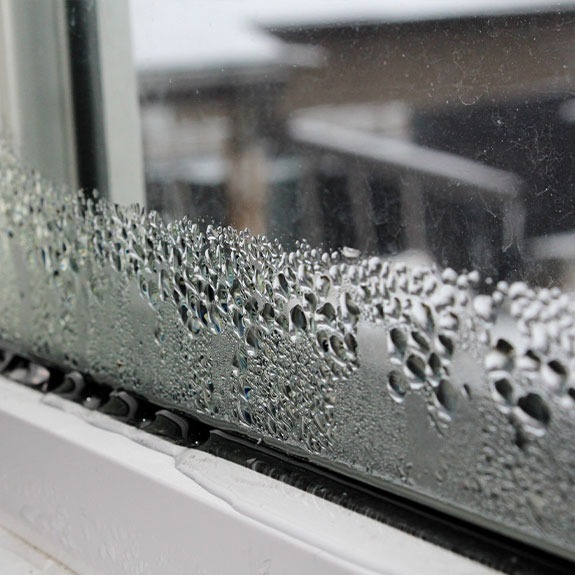
Condensation depends on two things: how much moisture is in the air and how cold a surface is. Moist air condenses on cold glass, pipes, or poorly insulated wall areas. Air leaks can also carry moisture into wall cavities, where the colder surfaces cause condensation.
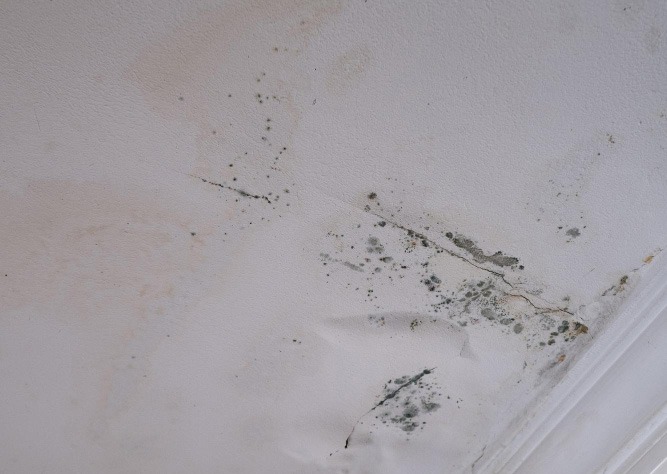
A dry-looking finish can hide damp material. If staining, an odor, or growth keeps coming back after a repair, look beneath the surface. Check whether the original wetting ever stopped; mold that comes back after you wipe it away usually means it did not.
Fix Leaks and Dry Water-Damaged Materials Promptly
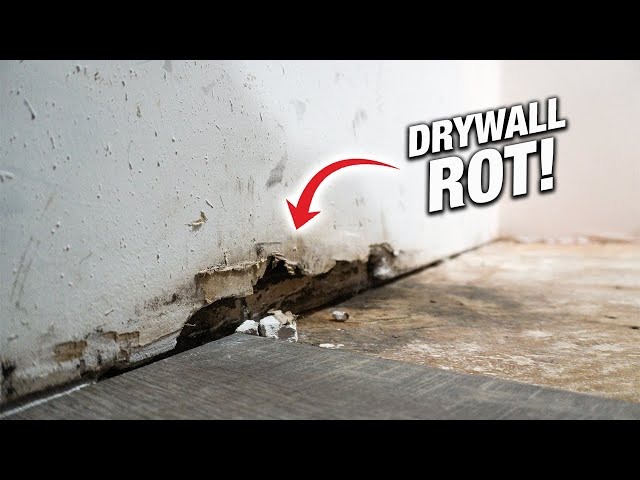
A continuing leak keeps feeding mold even when the room air feels comfortable. Plumbing, roof penetrations, windows, drainage, and foundation problems each need a repair that matches how the water gets in.
When water reaches building materials, speed matters. The EPA’s homeowner mold guide recommends drying wet materials within 24 to 48 hours when possible.
A dripping supply connection under a sink can wet the cabinet base and the materials next to it. Fixing the connection stops new water, but anything still wet needs drying and a check.
Water coming through a roof or window works the same way. Repair the defect, then deal with the ceiling, wall, insulation, or finish according to its condition.
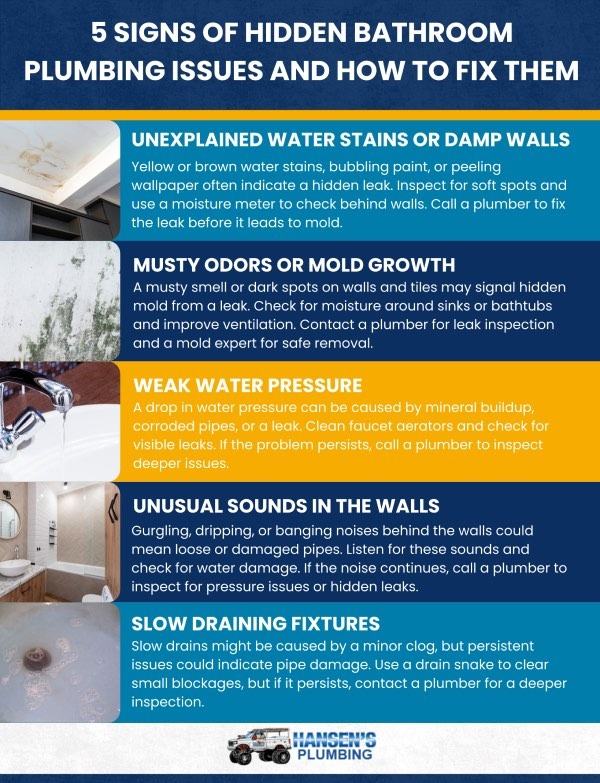
Material type changes the recovery. Hard surfaces can be cleaned with detergent and water, then dried thoroughly. Soaked or mold-contaminated porous materials, including some wallboard and carpeting, may need removal or replacement when cleaning can’t fix the damage.
A small clean-water leak is a different hazard from a sewage backup or contaminated floodwater, which need specialized assessment and handling.
Manage Room Humidity Without Relying on One Number
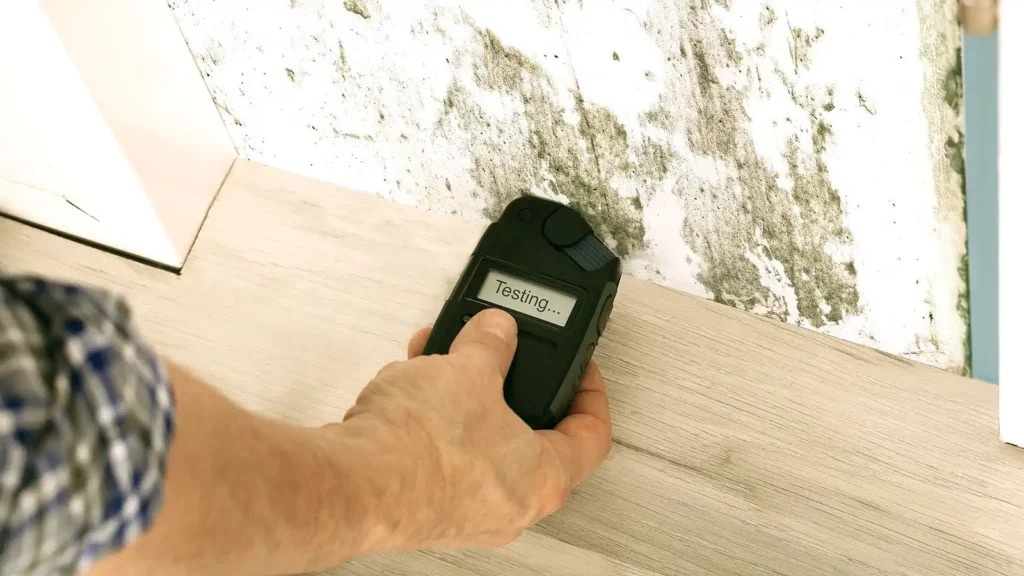
Indoor relative humidity, or RH, measures how much water vapor the air holds compared with its capacity at that temperature. A hygrometer lets you track room-air conditions over time.
EPA and CDC express their recommended humidity levels somewhat differently:
- EPA: Keep indoor RH below 60%, ideally between 30% and 50% where feasible.
- CDC: Keep household humidity no higher than 50% for mold prevention.
The CDC’s mold guidance places humidity control alongside leak repairs and outdoor-vented exhaust in kitchens and bathrooms.
Condensation can form on a cold surface even when the room’s average RH looks acceptable, and a hygrometer can’t measure moisture hidden inside wall materials.
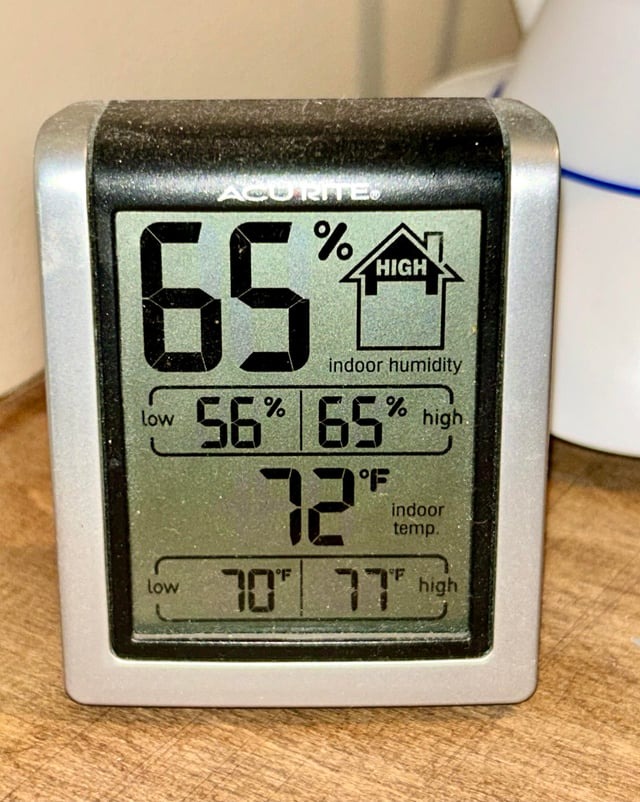
Watch how a reading behaves in ordinary conditions. Bathing, cooking, laundry, humidifiers, and humid outdoor air all affect it. A bathroom that gets steamy during use and dries afterward behaves differently from one that stays damp for long stretches.
Measure where you want to understand conditions, then compare the readings with visible signs of moisture. A wet cabinet under a leaking sink needs plumbing work even if the nearby hygrometer shows an ordinary reading.
Make Sure Ventilation Removes Moisture Outdoors
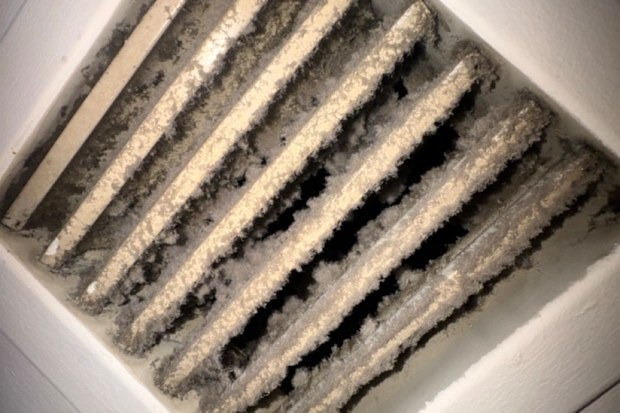
A bathroom fan has to carry moist air out of the building. A motor that runs and makes noise can still sit on a poor exhaust path or move too little air.
Bathrooms and kitchens produce moisture in short, concentrated periods, and outdoor exhaust carries that humid air away. An obstructed grille, failed fan, poorly arranged duct, or improper termination undermines the result.
For a bathroom that stays damp, start with what you can see: does the fan run, does anything block it, and does the exhaust route end outside? If you can’t judge the duct, can’t reach the components, or find electrical defects, call a qualified professional.
There is also a simpler problem: people forget to turn the fan on.
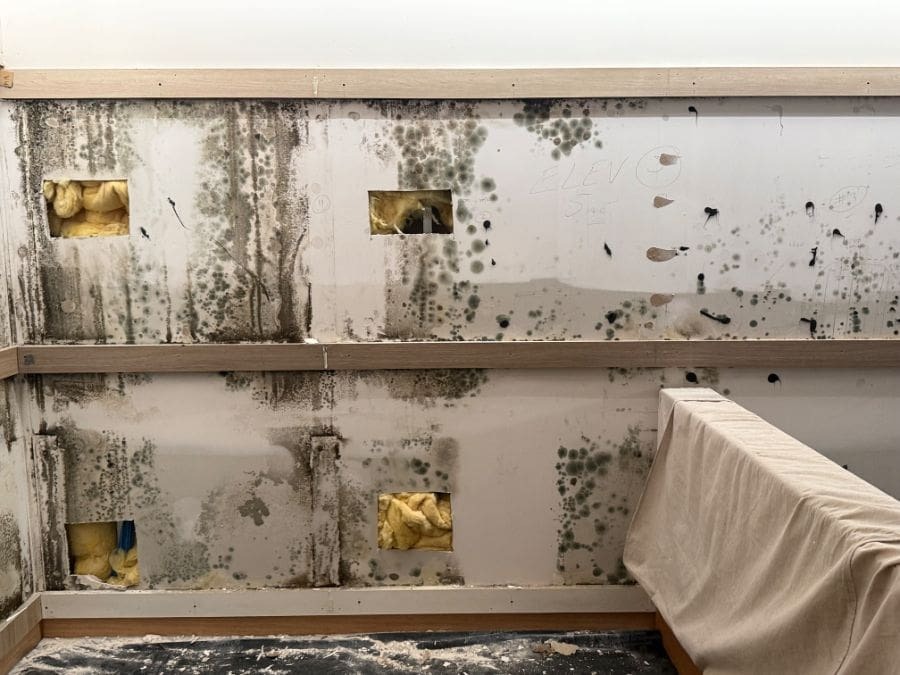
When my kids were young, I couldn’t get them to run the fan when they showered, so I wound up with mildew like this. I solved it by wiring the fan and light to one switch. Since they never turned off the light after using the bathroom, it worked perfectly.
The fan has to run whenever the bathroom produces moisture. Have an electrician handle any change to the switch wiring.
The U.S. Department of Energy’s 2021 Consumer Guide to Home Ventilation explains how uncontrolled air movement can carry moisture into concealed building cavities, where it can condense.
An exhaust duct that ends in an attic dumps moisture into an enclosed space that was never meant to receive it. When you investigate ventilation, follow the whole exhaust route, including the outdoor termination.
Know When a Dehumidifier Helps and When It Cannot

A dehumidifier removes moisture from room air. It helps when persistently high humidity is part of the problem, especially when bringing warm, humid outdoor air inside would add to the moisture load.
| Intervention | What it changes | What remains outside its job |
|---|---|---|
| Dehumidifier | Reduces moisture in room air | Active plumbing or roof leaks; materials already contaminated |
| Outdoor-vented exhaust | Removes humid air produced in that room | Water entering through building defects |
| Plumbing or roof repair | Stops one liquid-water source | Moisture produced inside rooms |
| Insulation or air-leakage correction, where needed | Changes cold-surface and condensation conditions | An ongoing independent leak |
| Mold cleanup | Removes existing growth from materials that can be cleaned | The underlying moisture source |
Match the fix to the condition your source check found. A dehumidifier next to a leaking cabinet leaves the plumbing problem in place, and effective outdoor exhaust solves a different kind of moisture problem.
Yes check the fan. You want roughly 1cfm per sq ft and most builder grade fans are 50cfm. I spent 3 years dealing with this issue, spending hundreds of dollars on dehumidifiers and they all failed after a year. Finally did more research and found the fan was severely undersized. I upgraded to the panasonic whisper choice fan with a built in humidity sensor and it has been a dream!
Why Mold Can Return After Cleaning, Painting, or Replacing a Surface
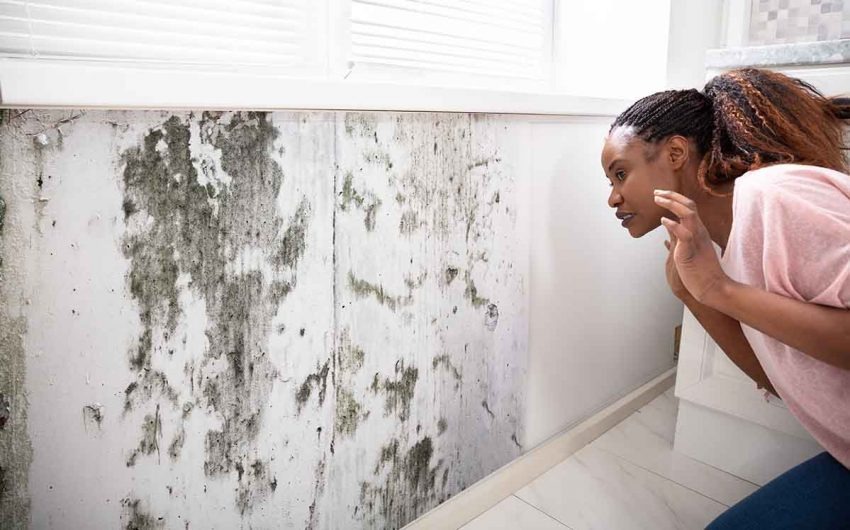
A cleaned surface can look normal while the conditions that fed the mold stay the same. Repeated spraying and scrubbing only improves the appearance for a while.
Painting over it fails the same way. EPA advises against painting or caulking over mold. Clean or remediate the affected material first, and let it dry before refinishing.
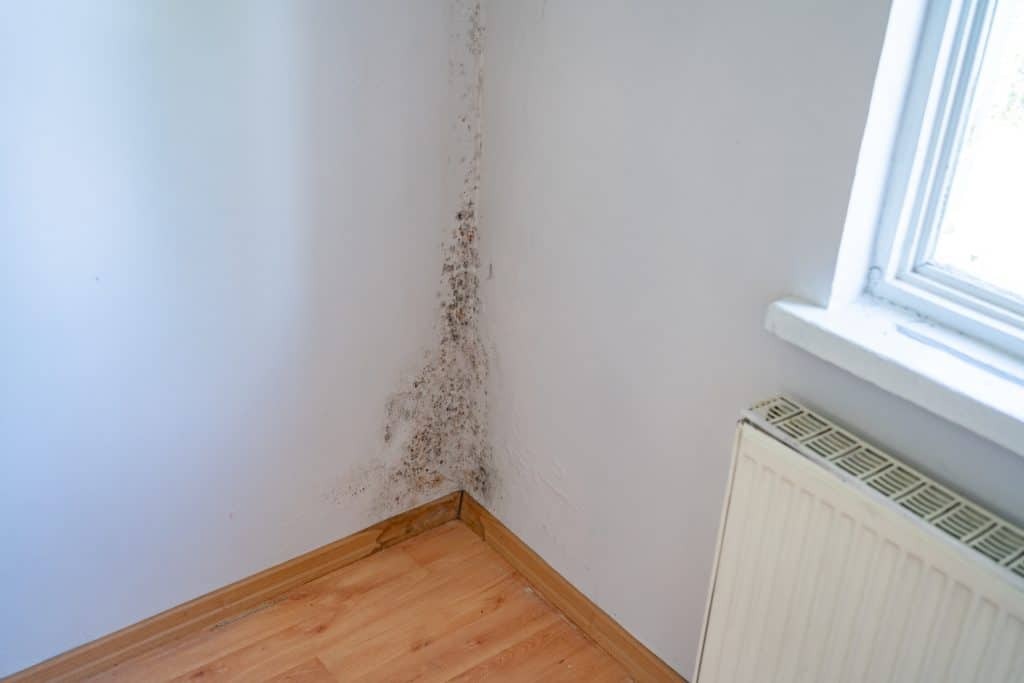
Hi everyone. I’m looking for advice because I feel like I’m losing a battle with mold in my bathroom. There’s a spot on the wall that keeps growing mold even though I clean it every couple of weeks. I’ve tried scrubbing it off with bathroom cleaner and bleach and it looks fine for a bit but then it always comes back.
The bathroom gets pretty steamy and I’m not sure if the ventilation is the issue or if I’m using the wrong products. I’m wondering if there’s something I should be doing differently or if there’s a more permanent solution to stop it from returning. Any tips or product recommendations would be really appreciated.
Replacing a finish gets expensive when the cause is still active. New drywall, caulk, or paint can’t repair a leaking pipe or change condensation conditions throughout the affected assembly.
Before you refinish or replace a damaged surface, confirm that the moisture source is fixed and the material has been checked. If growth may extend behind the surface, bring in a qualified professional.
Check Whether the Fix Worked

A fix is convincing when the problem doesn’t return under similar use or weather. Watch a repaired pipe during ordinary water use. Check a roof stain after similar rainfall. Revisit a condensation problem when room and outdoor conditions resemble those that first produced it. A single look at a freshly repaired surface tells you little, since a roof can appear dry between storms.
The EPA’s remediation evaluation guidance emphasizes correcting the moisture problem and looking for remaining visible mold, dampness, and odors.
NIOSH’s Dampness and Mold Assessment Tool also uses observations such as water damage, wetness, visible mold, and musty odor. You can use the same categories to keep a simple record. It is not a formal clearance test.
A fix-and-check observation log
For each affected location, note the date, the conditions that produced the problem, the visible evidence, the corrective work, and the next comparable chance to observe the result.
| Location | Trigger or conditions | Earlier sign | Work performed | Follow-up observation |
|---|---|---|---|---|
| Under-sink cabinet | Ordinary plumbing use | Wet cabinet base | Leak repaired; materials checked | Fresh moisture, or still dry after similar use |
| Window area | Cold morning | Condensation on glass or frame | Moisture and cold-surface causes addressed | Whether condensation returns in similar weather |
| Basement wall | Rainfall | Dampness or new staining | Water source found and repaired | Whether moisture returns after similar rain |
Add an RH reading to the log when room humidity helps explain the event.
If wetness, visible growth, or a persistent musty odor returns, treat the fix as incomplete: look for an unresolved or second moisture source, or for materials that still need work.
A consumer moisture-meter result or a negative air sample can’t prove that every concealed material is dry. Visible mold generally makes routine sampling unnecessary, and EPA sets no universal federal acceptable airborne mold-spore threshold.
Areas with complex damage that professionals remediated need a more detailed post-remediation assessment than a household log.
Keep a Prevention Routine That Matches Your Home
A prevention routine works best when it matches your home’s known moisture problems and the events that bring them back.
- After significant rain: Check areas with a history of roof, window, foundation, or drainage leaks.
- After moisture-producing activities: Run bathroom and kitchen exhaust as intended.
- During humid weather: Watch damp-prone rooms and humidity trends.
- During cold weather: Look for recurring condensation on windows, pipes, and other cold surfaces.
- When a new stain or damp patch appears: Record where it appeared and the conditions around it while you still remember them.
In a humid climate, opening windows can bring in more moisture under some conditions, so outdoor air isn’t automatically a drying solution.
Know When to Stop DIY Prevention and Get Help
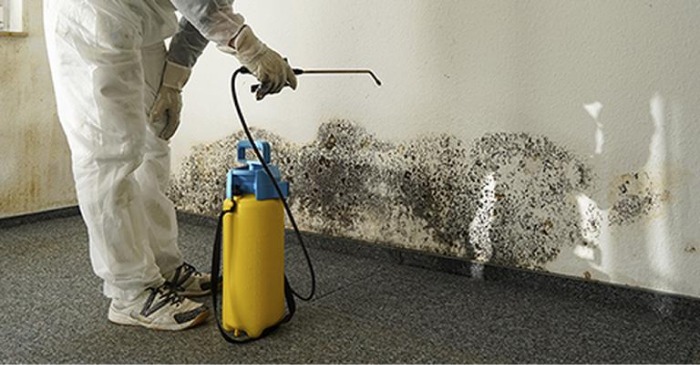
Before you continue on your own, ask three questions: has the moisture stopped, can you see and reach all of the affected material, and did the problem start with sewage, floodwater or an HVAC system?
EPA commonly uses an affected area of approximately 10 square feet as a rule of thumb for small, uncomplicated DIY mold cleanup.
Get a professional assessment in these cases:
- Extensive or concealed growth: Damage can reach behind walls, into insulation, beneath flooring, or into other inaccessible materials.
- Sewage or contaminated water: Cleanup carries hazards beyond those of an ordinary clean-water leak.
- Suspected HVAC contamination: If you know or suspect mold in the HVAC system itself, do not run it. Get an assessment from someone who works on those systems.
- Higher-risk occupants: Existing health vulnerabilities can affect whether someone should take part in cleanup.
- An unresolved source: If wetness continues after basic, noninvasive checks, call a plumber, roofer, ventilation specialist, building professional, or remediation contractor, depending on the defect.
If you rent and can’t arrange building repairs, document what you can see and report it to your building management.
Match the contact to the problem. A recurring roof stain calls for tracing the water entry and the damaged materials. A ventilation problem calls for an inspection of the exhaust system. Suspected hidden mold calls for an assessment of the source and extent before anyone starts intrusive work.