
What Indoor Humidity Prevents Mold? How to Measure and Control It
For most homes, aim for 30 to 50% indoor relative humidity (RH) and use a hygrometer to check the rooms that get damp. If condensation, wet materials, or visible mold persist at that reading, fix the moisture source and confirm the area stays dry.
What indoor humidity level helps prevent mold?
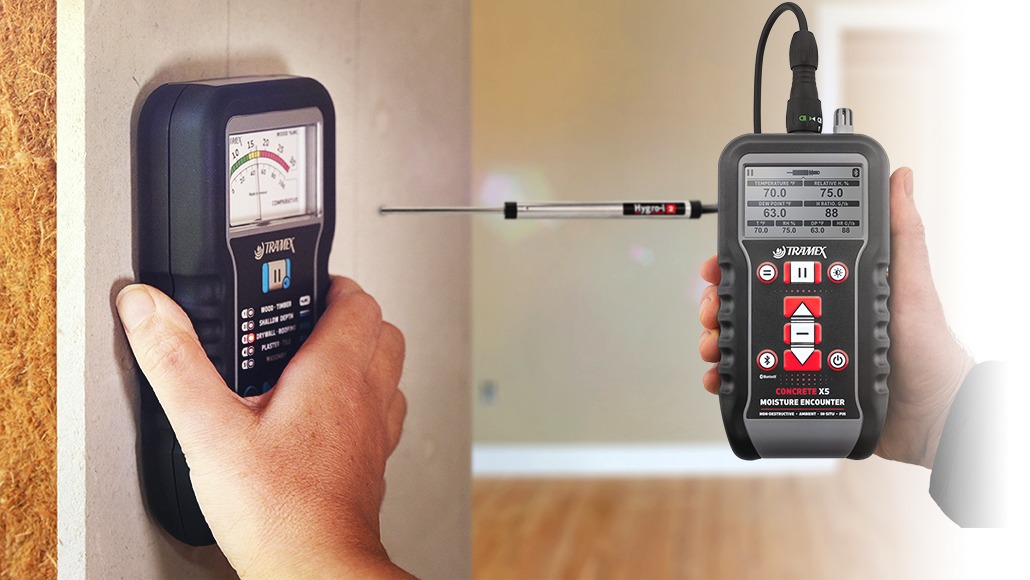
The Environmental Protection Agency (EPA) recommends indoor relative humidity below 60% if possible, ideally between 30 and 50%. The Centers for Disease Control and Prevention (CDC) sets a tighter mold-prevention target: no higher than 50% throughout the day.
Mold growth also depends on how wet a surface gets and how long it stays wet.
| Indoor RH reading | Meaning | What to do |
|---|---|---|
| Below 30% | Below EPA’s ideal range | Check for comfort problems and winter condensation before adding moisture |
| 30 to 50% | EPA’s ideal range and within CDC’s limit | Your standard target. Watch for any visible dampness |
| Above 50%, below 60% | Above the CDC limit, under EPA’s 60% guidance | Check how long the reading lasts and whether surfaces are wet |
| 60% or higher | Above both recommendations | Find the source of the sustained moisture and reduce it |
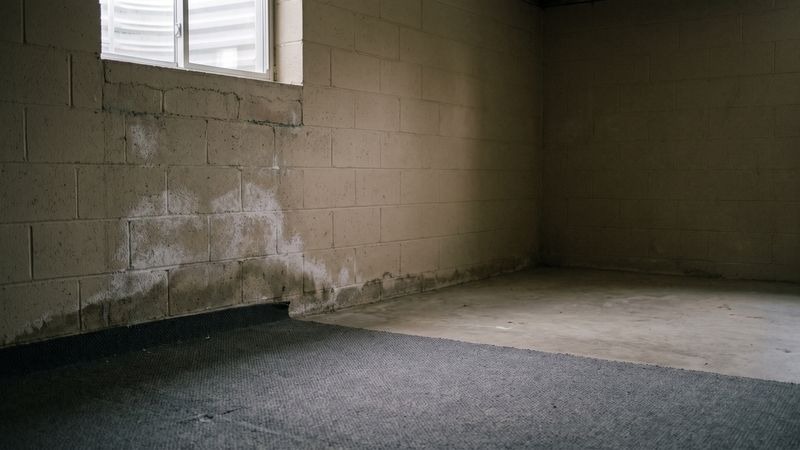
One basement owner reported readings that swung between 45 and 60%, averaging about 55%, with higher humidity after rain and no visible mold. The rise after rain points to the weather and to the ways water gets into the building. A brief spike after a shower matters less than a room that stays damp for days.
University of Minnesota Extension gives a seasonal example: about 25% humidity in winter and 50% in summer. Cold-window condensation can call for an even lower winter setting.
How to measure humidity without trusting one number
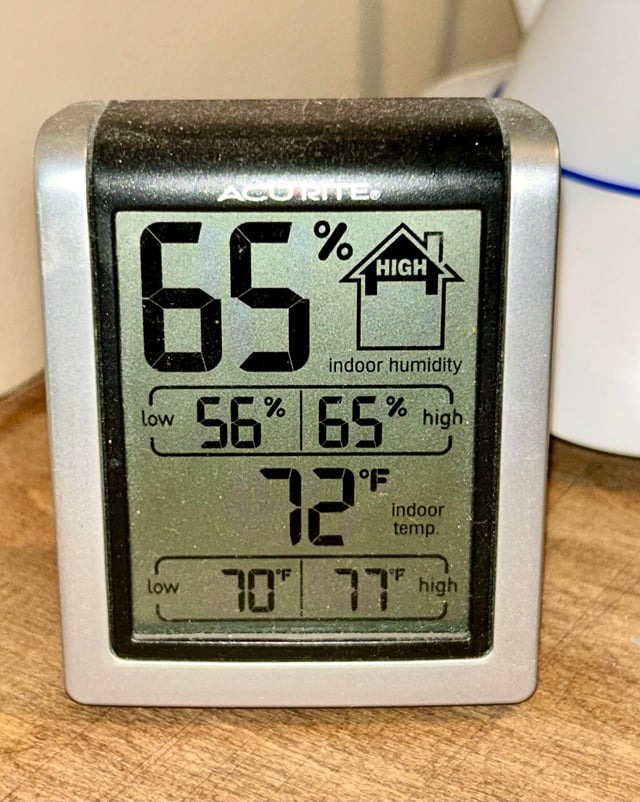
A hygrometer measures the humidity of the air around it. A humidistat is the control that switches equipment on and off. A closet or another floor needs its own reading.
RH shifts with air temperature, so record the temperature with each reading, along with where you took it. A thermostat in a central hallway can miss a damp basement corner or a colder bedroom wall.
Put one meter in a representative spot in the room, away from shower steam, an open window, heating or cooling registers and humidifiers. Take a second reading near the problem area. Compare morning and evening readings for three to seven days, and add readings after rain, showers or equipment changes.
Keep a log with one row per reading. The example below tracks a basement.
| When and where | Temp and RH | Conditions and equipment | Surface and comparison |
|---|---|---|---|
| Baseline: Nov 3, 7:30 am, basement, 3 ft from the north wall | 62°F, 55% | Dry day, dehumidifier off | Wall dry. Keep as baseline |
| Event: Nov 4, 8:00 am, same spot | 64°F, 62% | After heavy rain, dehumidifier off | Damp patch on the wall. Higher than baseline |
| Follow-up: Nov 8, 8:00 am, same spot | 63°F, 50% | Dehumidifier running | Wall dry. Better than the event reading |
Some homes have markedly different conditions on different floors.
I’m in the bizarre situation of needing to run a humidifier in our upstairs bedroom (winter only) and a dehumidifier in the basement. I empty it less often in the winter but I still feel like a crazy person sometimes when I am filling a humidifier on one floor and emptying a dehumidifier on the floor above it.
Our house was built in 1948 so we’ve just learned to accept it.
Why a room can read 45% humidity while a window stays wet
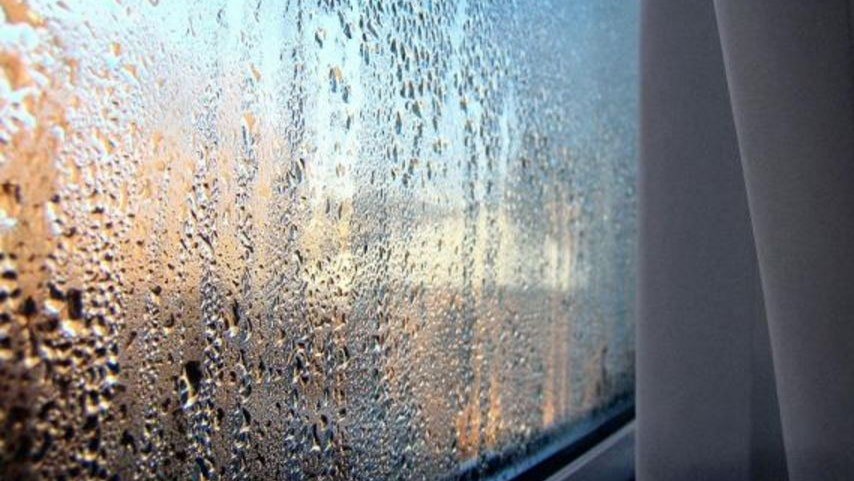
Picture a bedroom hygrometer showing 45% RH while drops form on the window. The glass can be cold enough for water vapor to condense even though the room air sits within the usual target range.
The National Weather Service defines dew point as the temperature to which air must cool to become saturated. Glass, a pipe or part of an exterior wall can get that cold while the rest of the room stays warmer.
The same thing explains moisture behind furniture pushed against an exterior wall or in a poorly ventilated closet. Surface temperature and air movement there differ from conditions at the thermostat.
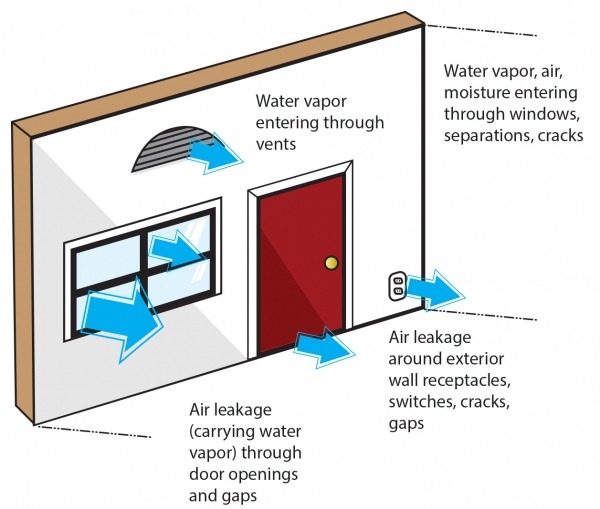
A pipe or roof leak is another route to a wet surface. Liquid water can reach a wall cavity or ceiling without any change in the RH on your display.
- Windows and sills: Look for recurring droplets, wet trim, and stains.
- Exterior-wall corners: Watch for discolored, damp, or peeling finishes.
- Accessible space behind furniture: Check whether the wall feels damp or has recurring marks.
- Visible pipes: Examine droplets and staining near the pipe and the surrounding material.
Where and when the water appears tells you whether it is condensation or a leak. Staining or dampness that keeps returning means a concealed cavity may need an assessment.
Find the moisture source before choosing a machine
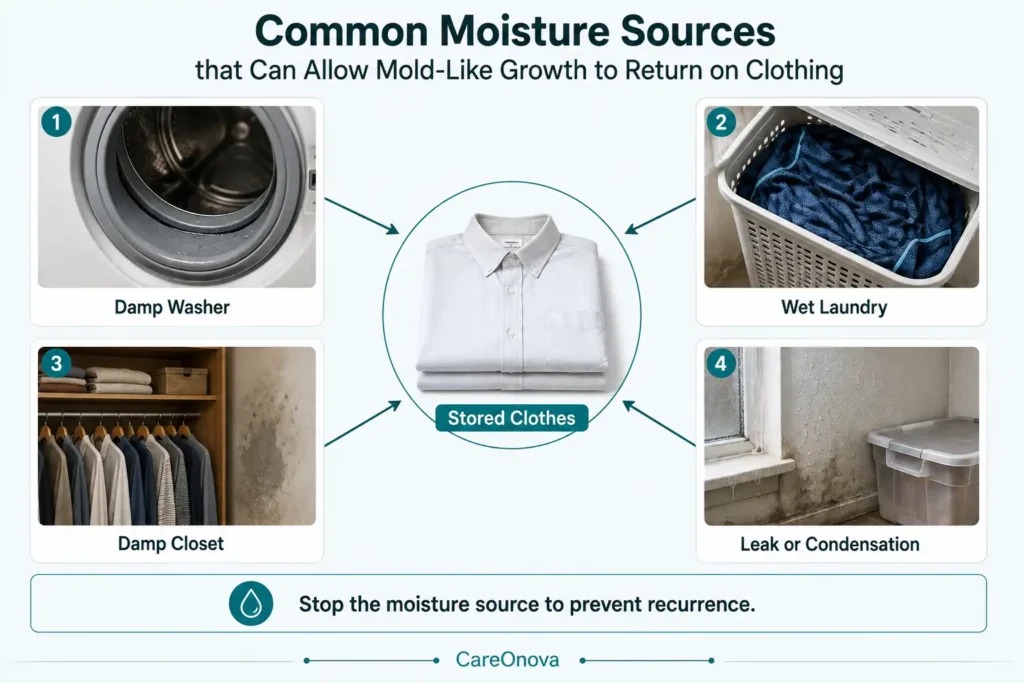
Moisture enters a room as water vapor from daily activity or as liquid water from a failing building component. Find out which one you have before you pick a fix.
Cooking, showers, laundry dried indoors and humidifier use add airborne moisture. Weak or recirculating ventilation leaves that vapor in the home.
A roof, pipe, window joint, or poorly drained foundation can wet building materials directly. If basement humidity jumps after heavy rain, check for water coming in, outside drainage trouble, and humid outdoor air. At windows, a leak and condensation can look alike, so find out which one you have before you clean window mold.
- Indoor activities: Note whether the increase follows showers, cooking, or humidifier operation.
- Rain and exterior drainage: Look for gutter problems, standing water, or signs of entry near the affected wall.
- Plumbing: Check wet cabinet floors, pipe connections, and stains. EPA’s interactive Mold House includes an example of leakage under a kitchen sink.
- Appliances: Watch for water collecting near humidifier connections or another moisture-producing unit.
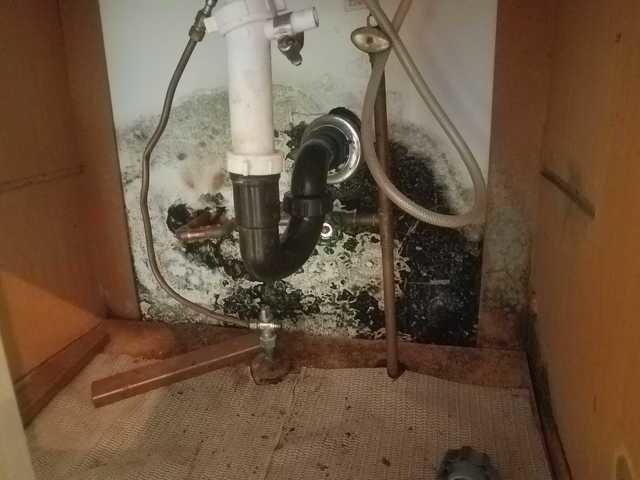
A leaking humidifier turns a dry-winter-air fix into a water problem. Fix the leaking connection or drain, even if the humidity setting looks right.
Renters should document wet areas and report persistent plumbing or building leaks promptly to the owner or property manager. A record of location and history gives them something specific to investigate.
Match the moisture problem to the right remedy
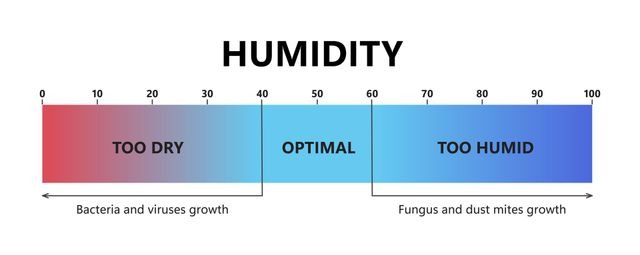
Removing shower steam, lowering persistent room humidity, warming a cold surface, and repairing a leaking pipe are different jobs.
| What you notice | Likely cause | What to do first |
|---|---|---|
| Humidity climbs during a shower or cooking | Water vapor added indoors | Use outdoor-vented kitchen or bathroom exhaust. A recirculating fan or leftover wet material limits the result |
| RH stays high without an evident leak | Persistent airborne moisture | Reduce moisture sources and use AC moisture removal or a dehumidifier. Recheck if the equipment stops or moisture keeps entering |
| Droplets appear on a cold window or pipe | Surface condensation | Cut indoor vapor and, where it fits, add insulation or air circulation. If water persists, look for a physical leak |
| Wall becomes wet after rain or plumbing failure | Liquid water intrusion | Repair the entry path and dry the affected material. Hidden or extensive saturation needs a specialist assessment |
| Open windows seem to increase dampness | Outdoor air adding moisture | Compare indoor and outdoor moisture conditions before ventilating. Outdoor weather, temperature, and safety conditions also matter |
| Humidifier coincides with wet windows or a wet floor | Excess added vapor or an equipment leak | Correct humidifier operation and fix any leak. Condensation that continues at lower settings needs a second look |
Ventilation and outdoor air
Bathroom and kitchen exhaust that vents outdoors removes vapor where it is generated. A recirculating fan moves air around the room and leaves the moisture inside.
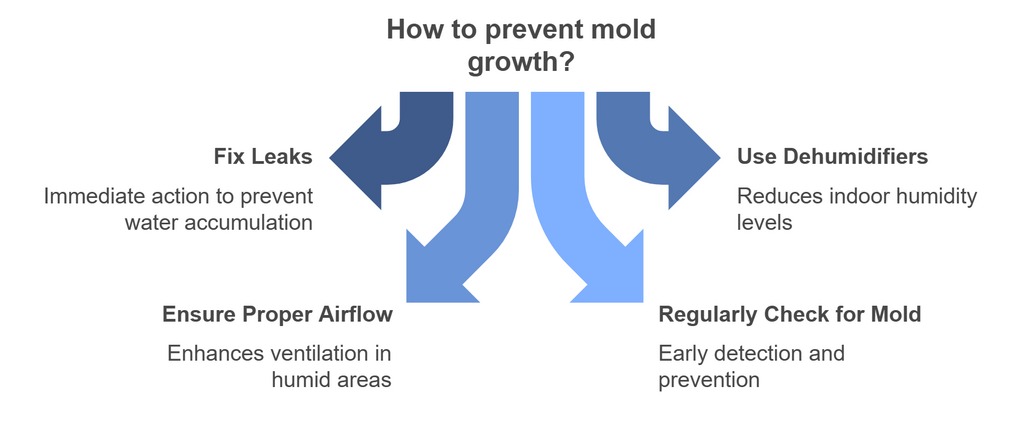
Before opening a window, compare indoor and outdoor dew points as well as temperatures. A lower outdoor dew point means less water vapor in the incoming air; a higher one adds moisture. Open windows only when weather, ventilation conditions, and personal safety allow.
Air conditioning, dehumidification, and winter humidifiers
Air conditioning removes moisture while cooling, though how much depends on the equipment and operating conditions. A dedicated dehumidifier helps when a basement or other room stays damp. Capacity is rated in pints of water removed per 24 hours, and the right size depends on the room and how damp it is.
In dry winter weather, a humidifier makes indoor air more comfortable. If you see condensation on cold windows or moisture near the unit, adjust how you use it.
Why the AC or dehumidifier may not be keeping humidity down
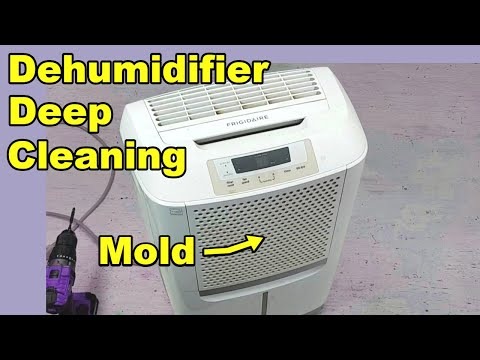
Portable dehumidifiers commonly stop when their collection buckets fill. Some models drain continuously, which cuts down on emptying, but you still need to inspect the hose and unit now and then.
Just chiming in to add…I took this advice, and I rarely go into my basement. So imagine my surprise when I went down there and the dehumidifier wasn’t running because the bin was completely full, despite it being hooked up to a drain. Turns out, the drain hose completely clogged with mold somehow. So my advice is to just check on it every now and again.
Check the bucket, the hose, the drain path, and the unit’s operating indicators, and follow the manual. A tank that keeps filling or a unit that shuts off unexpectedly needs attention before you trust its humidity setting.
ENERGY STAR describes capacity and drainage options. A space below roughly 65°F calls for a unit designed for lower-temperature operation, depending on the model.
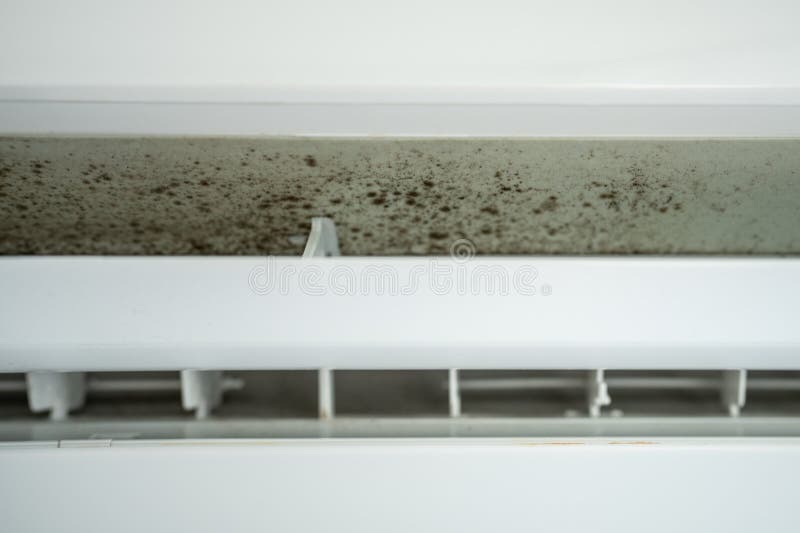
When the AC cools but the room stays humid
Cooling and moisture removal are separate jobs, and turning the thermostat lower can make a home uncomfortably cold before the humidity improves.
Settings:
Constant fan on low
Temp on 75 = high humidity 70s-80s
Temp on 72 = lower humidity 60sSomeone here helped me before when my new AC was installed by explaining my humidity was high because my AC’s fan was on auto. So, I turned it on low and it’s been months without an issue. Low, perfect humidity.
It’s getting a little hotter and more humid outside, but the house is weatherproofed well. I have not had this problem in the 4 years I lived here–JUST since this new AC unit.
It seems I can get the humidity to drop a little if I run the AC at a lower temperature, but then I’m freezing. I prefer to keep it at 75, but it only drops to the 60’s percentage range in humidity if I run it at 72. Expensive and cold. At 75, the humidity is 75-80%.
What is happening? I brought in a small dehumidifier and it’s still so humid. Thanks in advance.
If ordinary operating checks do not explain persistent humidity, a qualified HVAC professional can assess fan settings, controls, condensate drainage, and moisture-removal performance. Leave electrical, blower, compressor, and refrigerant work to them.
How to tell whether your humidity-control change worked
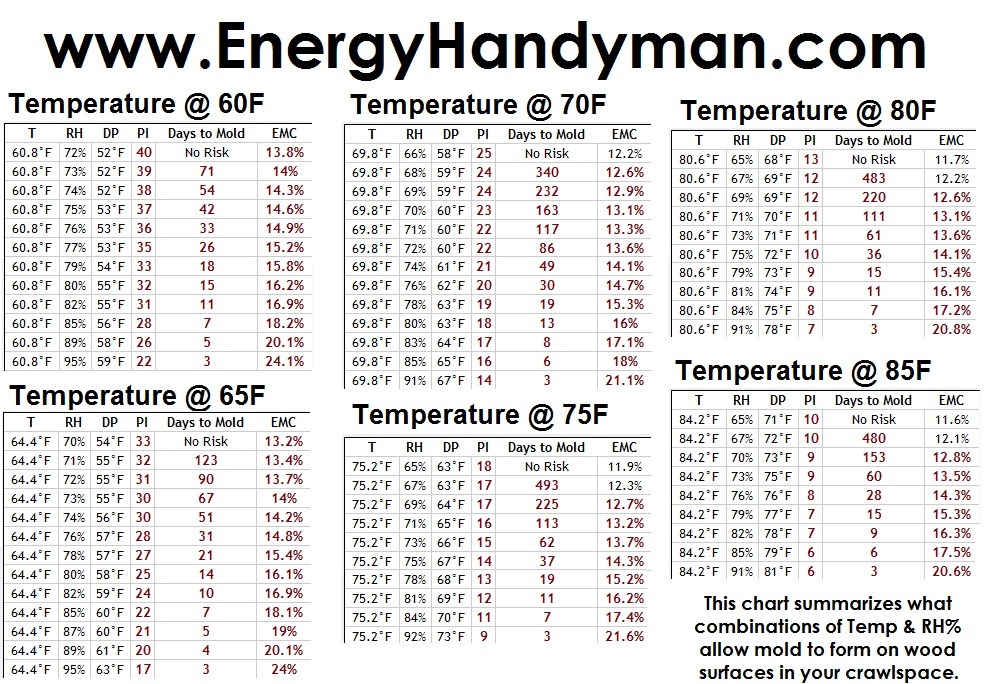
Compare the follow-up entries in your log with the baseline, at similar times and under similar conditions. Check the affected surface for fresh condensation, recurring stains, or damp material as well as the RH reading. If humidity improves but the same spot keeps getting wet, go back to the moisture source or get it investigated.
When humidity control is not enough
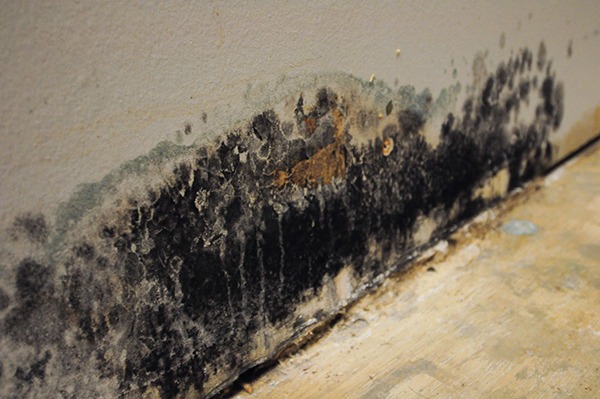
Lower humidity helps prevent further dampness but does not remove growth that is already there. Aim for the humidity level that helps prevent new mold growth, and treat existing growth separately.
Water from a roof leak, burst pipe, or flood needs prompt attention. EPA advises drying affected areas and materials within roughly 24 to 48 hours after a leak or spill to help prevent mold.
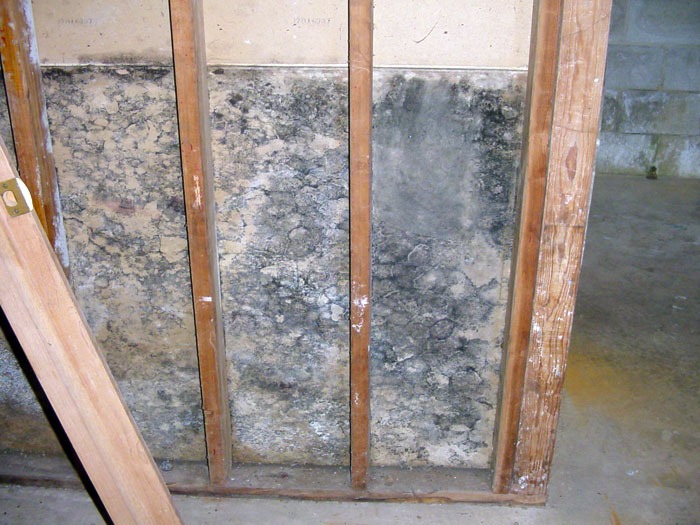
A ceiling stain that returns after rain, water behind a wall finish, or growth around HVAC components calls for assessment beyond routine moisture control. Sewage contamination, extensive hidden damage, and people at increased health risk change how cleanup should be handled. Don’t open damaged ceilings or concealed cavities casually.