
Bathroom Ventilation That Helps Keep Mold From Coming Back
To keep bathroom mold from returning, run a properly ducted exhaust fan during and after showers, allow replacement air into the room, and dry surfaces that stay wet. If the fan runs but dampness persists or mold returns, check the airflow path and look for a separate water source before buying a larger fan. Fix the cause, then confirm that humidity recovers and surfaces dry. Call qualified help for concealed ductwork, electrical problems or suspected water damage.
Make sure ventilation removes moisture outdoors before you rely on the fan.
A bathroom fan can hum through an entire shower while the mirror stays fogged and beads of water collect on the ceiling. Where is all that moisture going?
The answer depends on the whole system: where the air leaves the building, how much air the fan moves and what happens to the water left on surfaces.
Why bathroom ventilation matters when mold keeps coming back
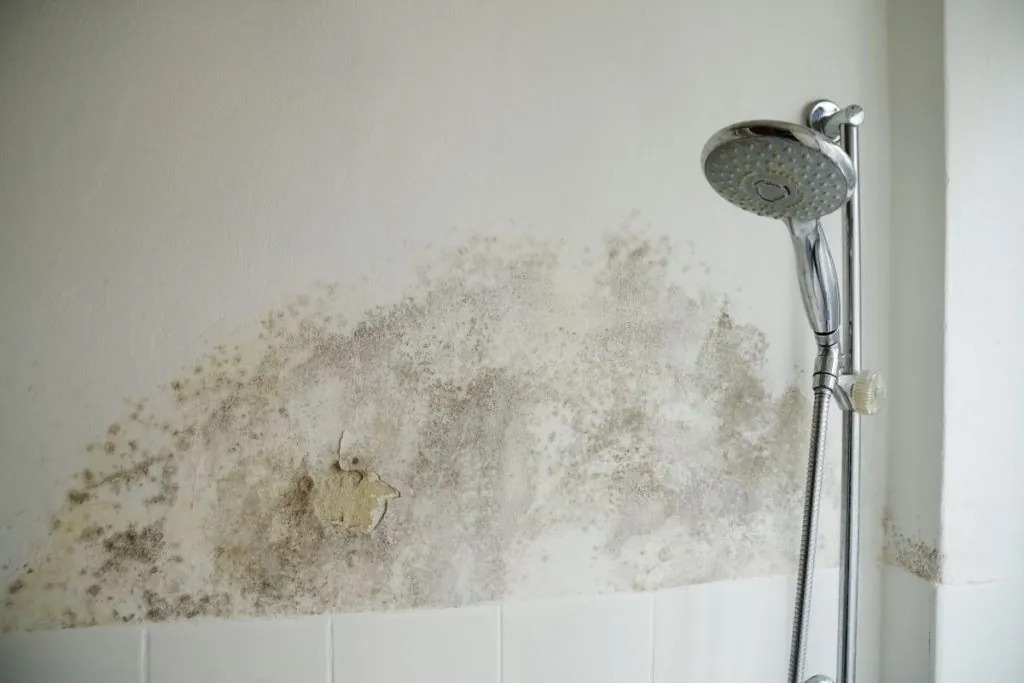
A shower releases water vapor. When humid air meets a cooler ceiling, window or painted wall, some of it condenses into liquid. Surfaces that stay damp day after day give mold the conditions it needs.
A properly installed exhaust fan pushes humid air outdoors while fresh replacement air enters the room.
Three observations help narrow the cause:
- Brief fogging: The mirror clouds during the shower and clears as the room recovers. That is normal.
- Lingering dampness: Walls or ceilings stay wet well after bathing. Look at moisture removal and surface drying.
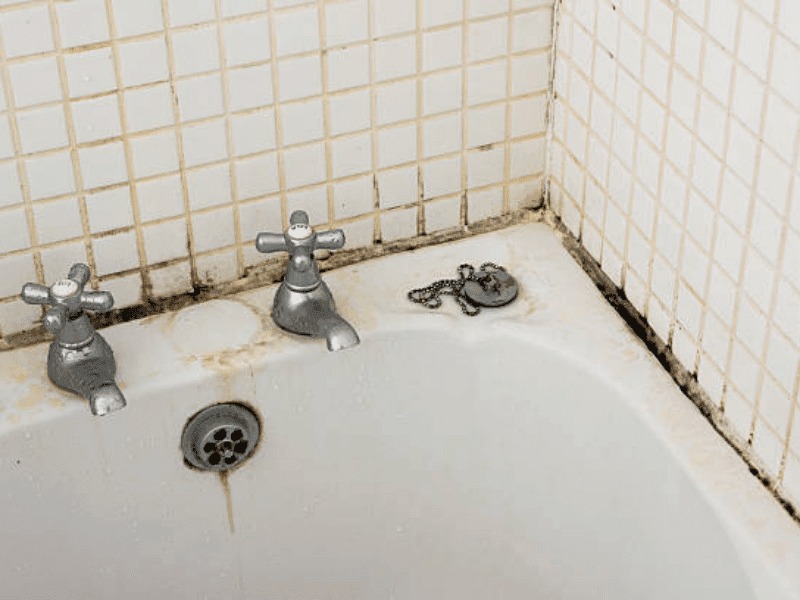
- Recurring spots or water damage: Discoloration, damaged finishes or patches that return after cleaning point to persistent moisture, existing mold or a leak.
The Environmental Protection Agency’s guidance on mold and moisture names moisture control as the key to preventing recurring growth. For bathrooms where mold keeps appearing, EPA recommends more ventilation and more frequent cleaning.
How long to run the bathroom exhaust fan after a shower
Turn the fan on when you start bathing and leave it running afterward. How long depends on how much steam you make and how quickly the room dries.
The Home Ventilating Institute recommends controls that keep the fan running at least 20 minutes after use. The Department of Energy’s Building America guidance recommends running it for one hour after a shower.
A long, hot shower puts out more moisture than a quick one, and two similar bathrooms can have very different airflow.
If you switch the fan off with the light right after bathing, you stop ventilation just when the room needs it most. A delayed-off timer handles this automatically.
The fan runs, but the bathroom stays wet: check its draw
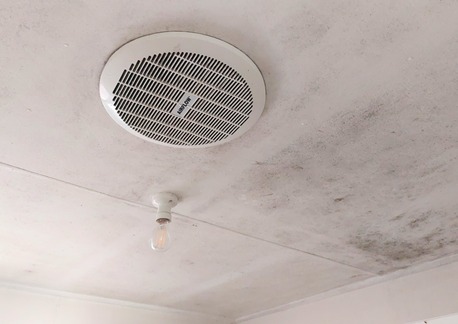
A humming motor only proves the fan has power. Check how much air it pulls at the grille.
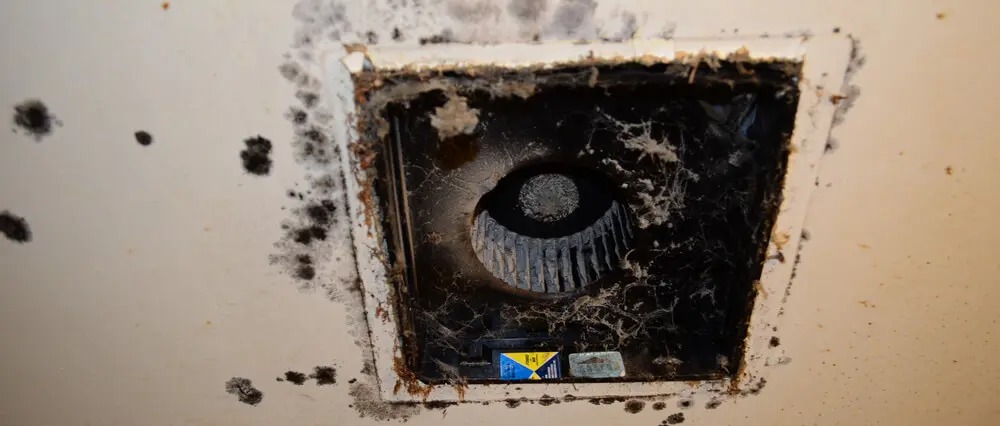
Dust and lint build up on the grille and fan parts. The Department of Energy’s Building America program notes that buildup restricts airflow, increases noise and contributes to wear.
Hold a piece of tissue against the grille while the fan runs. A healthy fan holds it in place. If the tissue barely moves, the draw is weak.
What the tissue check shows: It shows suction at the grille only. It does not measure cubic feet per minute (CFM) or confirm that the exhaust reaches outdoors.
Switch off the fan circuit at the breaker before you remove the cover or clean accessible interior parts. Follow the manufacturer’s instructions for cleaning and reassembly before you restore power. The Department of Energy has a bath-fan cleaning guide for this. Leave concealed wiring, duct connections and inaccessible motor parts to qualified personnel.

| What you notice | What it points to | What to do |
|---|---|---|
| Fan hums, tissue barely moves | Weak draw, dirt buildup or a restriction | Clean accessible parts; investigate further if nothing changes |
| Fan has become unusually noisy | Debris or mechanical wear | Follow the maintenance guidance for your fan |
| Fan draws air, but walls stay wet | Heavy moisture load, cold surfaces or too little exhaust reaching outdoors | Continue to the air-path and recovery checks |
| Water drips from the fan grille | Duct condensation or another water source | Get it inspected if you can’t find the source |
Just wanted to add in that my bathroom also looks like this after about 10 minutes of a reasonably (but not excessively) hot shower.
I had the fan replaced and verified that it vented unobstructed to the outside. The fan is way overpowered for the size of my bathroom and it’s working fine. Still, my walls look like this.
Let me know if you find a solution and I will do the same! For now I just wiped down the walls with a towel after my shower and keep the fan running for like an hour.
Even with a clear exhaust, delivered airflow, vapor output and cooler surfaces can leave walls wet.
Make sure the exhaust goes outdoors
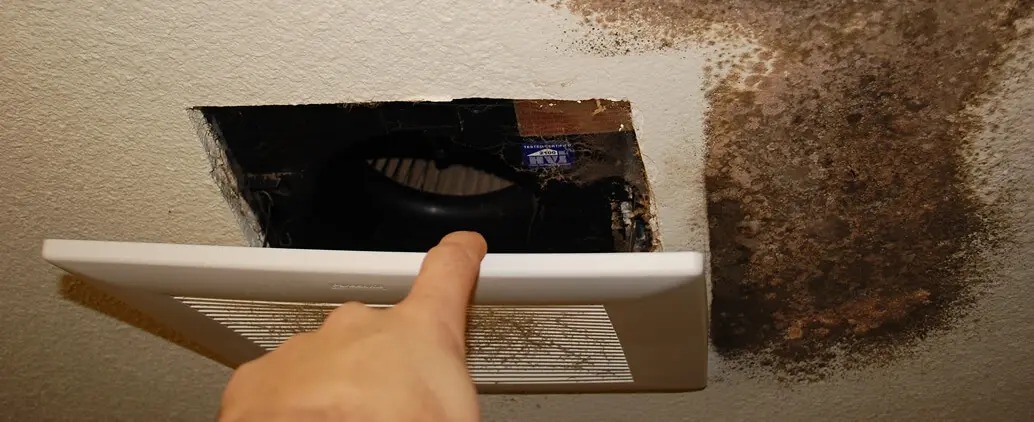
The duct matters as much as the motor. Humid bathroom air needs a continuous path to an exterior outlet.
According to the Department of Energy’s bathroom exhaust guidance, bathroom fans should discharge directly outdoors. Attics, crawlspaces, garages, wall cavities and enclosed ceiling spaces are not acceptable termination points. A duct that dumps shower moisture into an attic moves the problem into the building structure.
Common faults:
- Disconnected duct: Air leaving the fan housing escapes into a concealed space.
- Stuck backdraft damper: The flap that should open during exhaust stays closed or partly blocked.
- Restrictive duct routing: Sharp bends, crushed flexible duct or an incorrectly sized run cut airflow.
- Blocked exterior outlet: Debris or an obstruction at the outlet stops the exhaust.
- Condensation inside ductwork: Poorly configured or underprotected ducting collects water under some conditions.
DOE recommends short, direct duct runs, correctly sized connections, sealed joints and insulation where condensation is a concern.
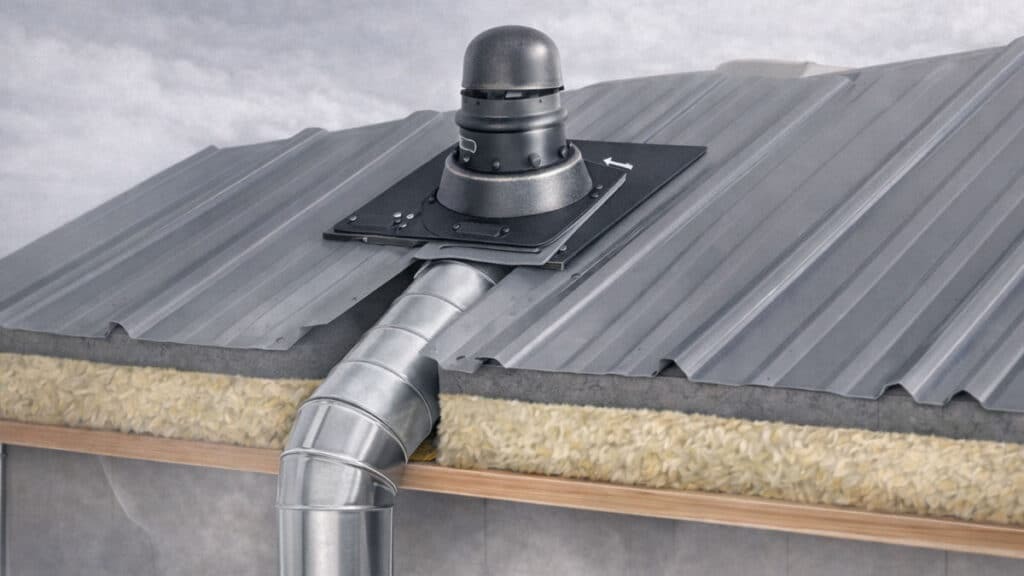
I had this issue. Whoever had installed the fan didn’t take the packing tape off the flap and it took me forever to figure out why we kept having mold issues on the ceiling. The bathroom is on an outside wall, so checking that the duct was clear was easy. The fan worked, turns out it just wasn’t venting anywhere.
DOE’s installation guidance includes checking that packaging tape has been removed from dampers. A small obstruction defeats the exhaust route even when the motor runs.
The room also needs replacement air. In an effectively sealed room, the fan struggles to pull enough air through.
HVI’s ventilation guidance specifies at least 3/4 inch of clearance between the bathroom door and finished floor for makeup air. Treat it as a design guideline, and pay attention to the installation before you alter a door or ventilation components.
If the exterior outlet is safely visible from the ground and has movable flaps or louvers, check that they open while the fan runs and close when it stops. Do not climb onto a roof or open concealed ductwork for this check. If the outlet is out of reach, the damper is blocked or you suspect a disconnected duct, call a qualified ventilation contractor to check the exhaust destination and the condition of the duct and outlet.
Is the fan large enough, and is a timer or humidity sensor worth it?
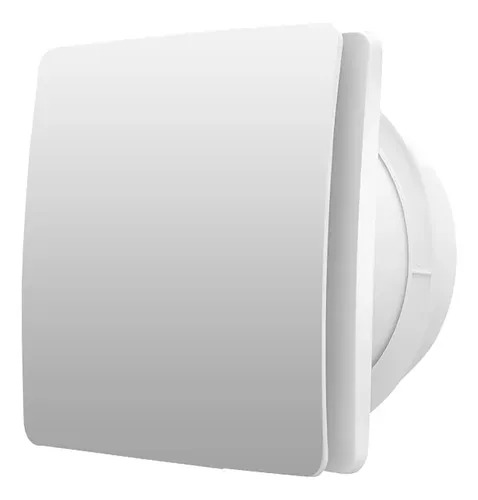
For intermittent bathroom ventilation, HVI recommends roughly 1 CFM per square foot for bathrooms smaller than 100 square feet, with a minimum capacity of 50 CFM.
An 80-square-foot bathroom therefore needs about 80 CFM of rated intermittent capacity under this guideline.
For bathrooms larger than 100 square feet, HVI uses fixture-based allowances: 50 CFM each for a toilet, shower and standard bathtub, and 100 CFM for a jetted tub.
A separate DOE/PNNL reference lists local exhaust rates of at least 50 CFM intermittently or 20 CFM continuously in its cited ASHRAE 62.2 (2010) and IRC 2021 contexts. These figures serve a different purpose from HVI’s room-sizing guidance, and local building requirements can differ.
Rated airflow and delivered airflow are different things. A fan marked 80 CFM can deliver less once installed because of duct length, bends and outlet resistance.
Sound ratings, often given in sones, describe noise. ENERGY STAR also distinguishes airflow and energy efficiency.
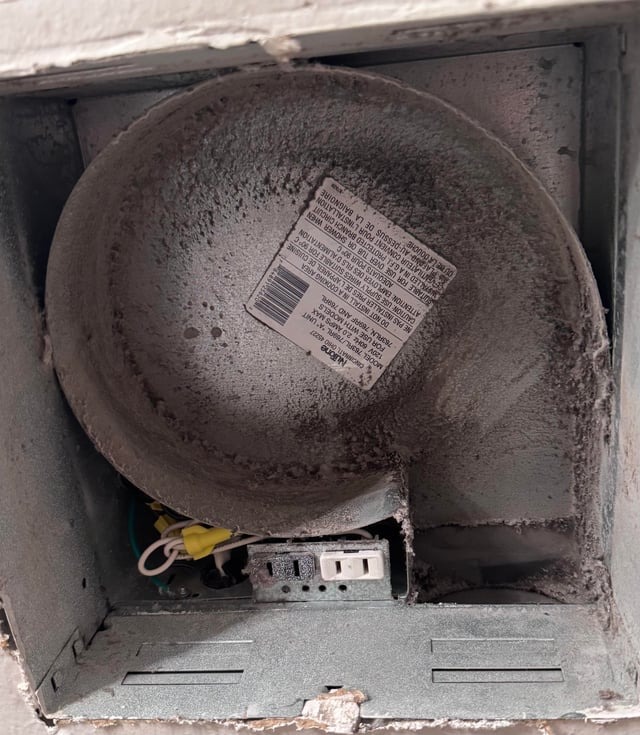
Choosing the control
| Control | Where it fits | Main trade-off |
|---|---|---|
| Manual switch | A household that reliably runs the fan during and after bathing | Relies on someone remembering to leave it on |
| Delayed-off timer | A household that switches the fan off too early | Runs for a preset time, regardless of moisture |
| Humidity-sensing control | A household that wants automatic response to moisture | Results depend on sensor design, placement, settings and a working exhaust system |
A humidity sensor reacts to a rise in moisture or a set humidity level, depending on its design. It cannot overcome a blocked duct.
Broan-NuTone documents bathroom ventilation controls, including humidity-responsive ones that run the fan automatically.
To decide on a replacement, compare the bathroom’s floor area with the sizing guidance, then look at the existing fan’s condition, the installed air path and your habits. If the fan is the right size and ventilation works, a different control may help more than another motor.
What if the bathroom has no exhaust fan or only a window?
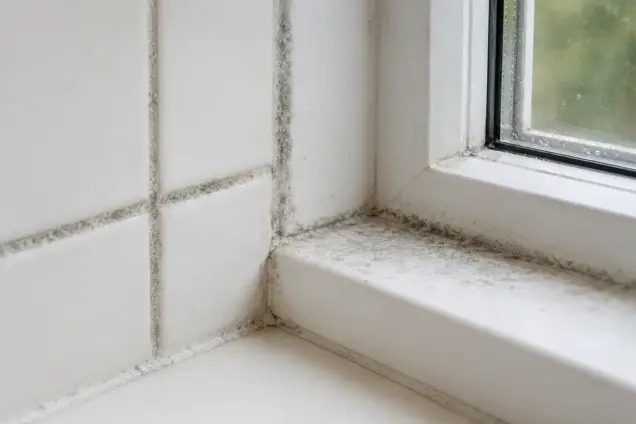
An open window can remove shower moisture when outdoor conditions suit. EPA notes that outdoor humidity, temperature and air quality decide whether outside air helps. A window works on a dry day and does little on a hot, humid one, and DOE cautions that operable windows are not a dependable way to exhaust a bathroom consistently.
Without a mechanical fan, use whatever suitable ventilation you have as a temporary measure while you consider a fan ducted outdoors. Renters may need owner or manager approval for structural changes.
What ventilation cannot fix: wet shower surfaces, leaks and existing mold
Even with good ventilation, liquid water stays on the shower enclosure, tile joints and nearby surfaces. Droplets on cool surfaces take longer to dry.
Wipe shower walls and other accessible wet surfaces with a squeegee or towel. That leaves less liquid water to evaporate into the room.
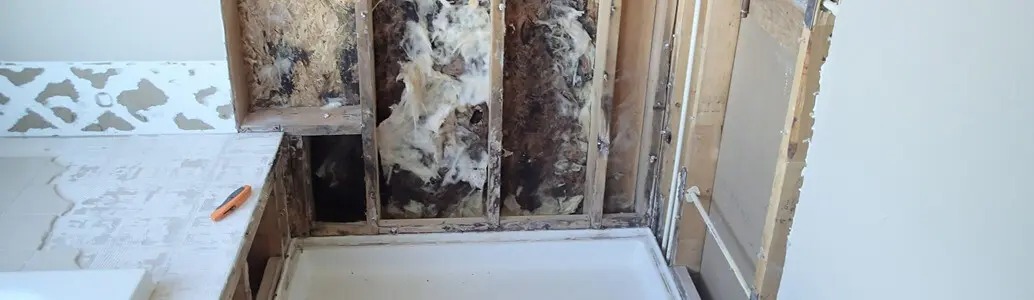
Consider a wall beside a shower with deteriorated caulk. If water repeatedly enters through a failed joint, longer fan operation leaves that pathway unchanged. A plumbing leak, or water entering through a roof or building-envelope defect, works the same way.
Recurring stains after repainting need closer investigation. Discoloration does not identify its cause, and condensation, a separate leak and established mold each need their own response.
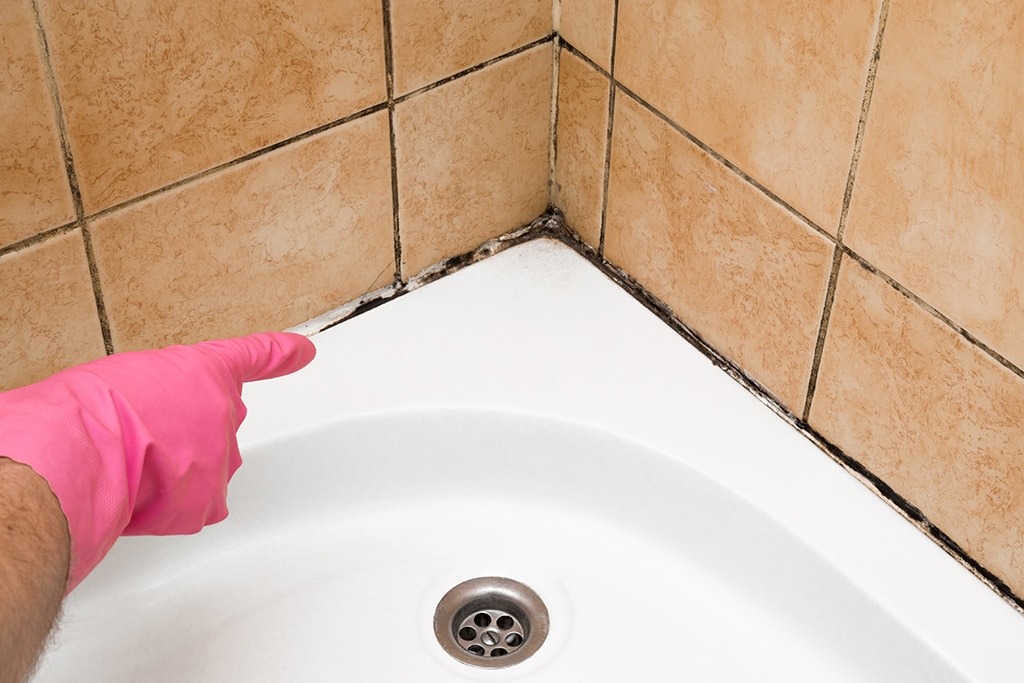
Existing mold needs cleanup, and water-damaged materials may need repair or replacement. EPA’s mold guidance says to correct the moisture problem as part of cleanup. Painting over visible growth or repeatedly applying cleaner leaves the water source in place.
If a wet patch persists regardless of shower use, or water damage appears behind finishes, find the source and get repair or remediation help. Detailed mold cleaning and caulk replacement have their own material-specific procedures.
How to tell whether the bathroom is drying and when to call a pro
A small hygrometer shows how the room recovers after a shower. Place it in the same spot each time, away from direct spray, and compare readings across similar showers.
EPA generally recommends keeping indoor relative humidity below 60%, ideally around 30 to 50% where feasible. A temporary spike during a hot shower is not, by itself, evidence of mold or a failed exhaust system. Meter readings make sense once you measure and control indoor humidity the same way each time.
| Observation point | Relative humidity | Surface condition | Note |
|---|---|---|---|
| Before shower | ______ % | ______ | Room baseline |
| Immediately after shower | ______ % | ______ | Shower duration; fan operating |
| During recovery | ______ % | ______ | Comparable interval; control state |
| Later in recovery | ______ % | ______ | Areas still damp, if any |
Compare the same bathroom under similar conditions. No standard recovery time or pass/fail percentage exists for this method.
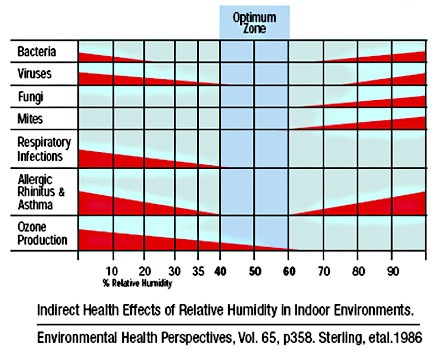
Use the readings to pick the next step:
- Moisture clears with consistent fan use: Keep your routine and watch for changes.
- The exhaust stays weak or the duct route is unclear: A qualified installer can measure delivered airflow with equipment such as a flow hood and evaluate the duct system.
- Water damage, unexplained damp patches or visible growth persist: Find the moisture source and the affected materials, with professional assessment where required.