
Types of Household Mold: What Changes Cleanup?
The name or color of household mold rarely changes your first move. Find the moisture source, check which material is affected and how far the problem spreads, then clean it or call a professional. Cladosporium, Penicillium, and Aspergillus are common indoor molds, but the name seldom decides the treatment. Species identification pays off only when a qualified investigator can tell you which decision the result would change.
What types of mold are commonly found in homes?
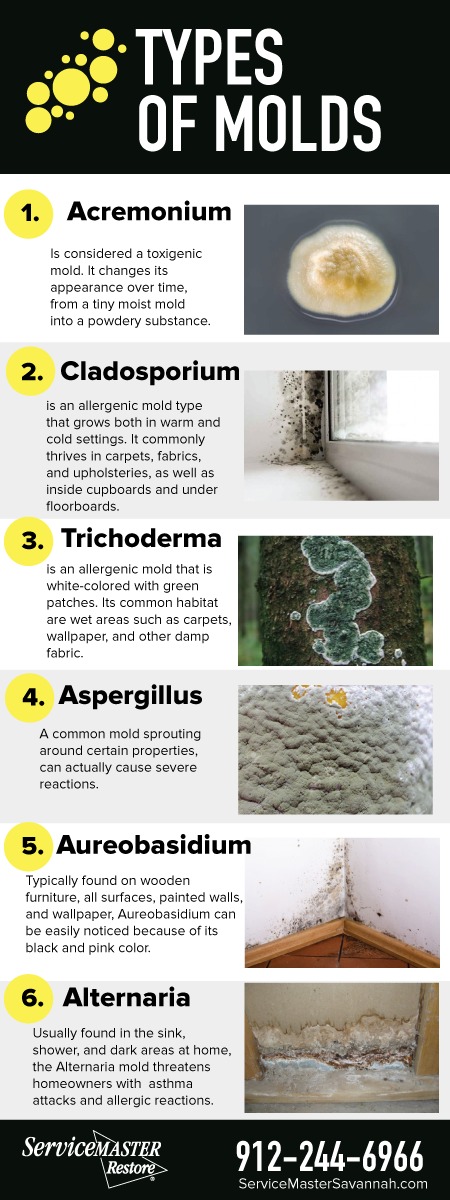
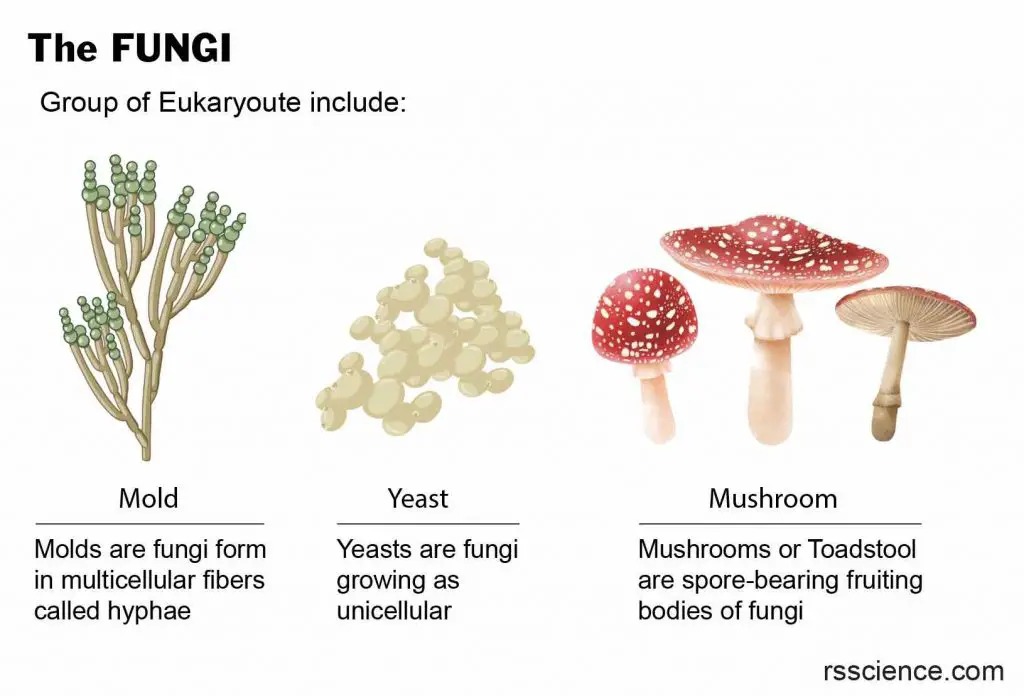
Lists of home mold types mix two levels of identification. A genus is a group of related species. A species is the more specific designation. A report that names Aspergillus has identified a genus, not necessarily a species.
The Centers for Disease Control and Prevention lists Cladosporium, Penicillium, and Aspergillus among common indoor molds. The National Institute of Environmental Health Sciences adds Alternaria to its information about common indoor molds.
| Name | What the source says | What it means for you |
|---|---|---|
| Cladosporium | A common indoor mold genus named by CDC. | It names a fungal group. The affected material still decides how you clean. |
| Penicillium | Another common indoor genus named by CDC. | Direct microscopy reports may group its spores with Aspergillus-like spores. |
| Aspergillus | A common indoor genus containing multiple species. | A genus-level report leaves the species unidentified. |
| Alternaria | A genus included in NIEHS information on common indoor molds. | It goes beyond the three genera CDC lists. |
| Stachybotrys chartarum | A species CDC associates with constantly wet, cellulose-containing materials. | The full two-part name marks a species. Continually damp wallboard or paper is a clue about the building. |
Stachybotrys chartarum is the mold people usually mean by “black mold.” CDC describes it as greenish-black growth on continuously damp, cellulose-rich materials, including gypsum board, fiberboard, and paper.
You’ll also see the word mildew in home-maintenance advice. EPA uses it as a general term for certain kinds of mold or fungal growth, often with a flatter appearance. It describes how growth looks. The moisture and the material still matter more.
Can you identify mold, or tell how dangerous it is, by its color?
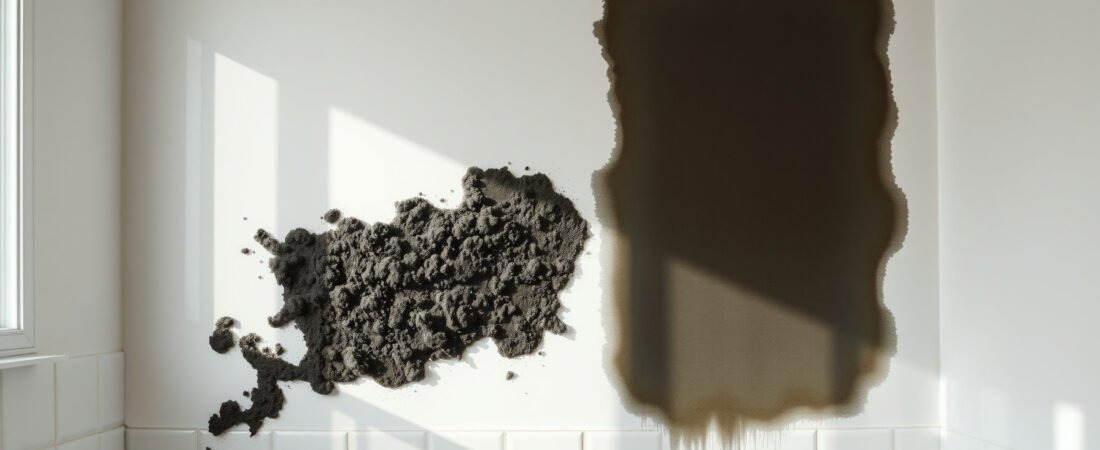
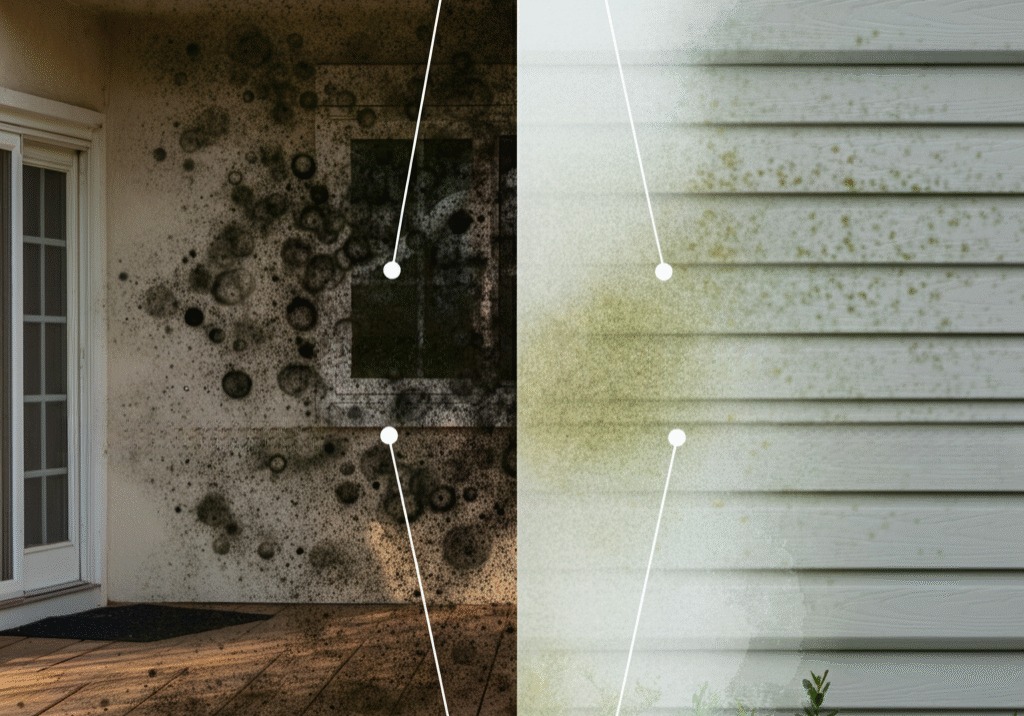
Black, green, gray, and white describe how a stain looks. Color can’t reliably identify a mold species or tell you how risky it is. NIOSH explains that molds occur in many colors and that a darker shade doesn’t necessarily mean greater danger. Stachybotrys chartarum can look greenish-black, but appearance alone can’t confirm it’s there. A note such as “dark growth on water-damaged gypsum board” records the material and the moisture without claiming to identify the organism.
Calling a dark patch “black mold” describes its appearance only. What black mold means for your home depends on the moisture and the material behind it.
What looks like mold but might be something else?
A white crust on a garage wall can be mineral efflorescence. A pink or reddish film around shower grout can be bacterial growth. You can’t tell which by looking.
Efflorescence forms when water carries soluble salts through masonry and leaves them on the surface. If you see it, water is moving through the material. In bathrooms, damp surfaces support pigmented bacterial films that people often call “pink mold.”
| Appearance and surface | Could be | What it tells you |
|---|---|---|
| White, powdery or crusty material on concrete or masonry | Mineral efflorescence | Water is moving through or across the material. |
| Pink, orange or reddish film around damp shower surfaces | A pigmented bacterial film, possibly involving Serratia marcescens | Surfaces are wet repeatedly and stay damp. |
| Dark streaks or patches on a finished surface | Dirt, soot, staining or microbial growth | Check the surface finish and the history of moisture or staining. |
A white crust on a garage wall
Purchased this home less than a year ago (roughly 9 months) and I have limited home improvement experience. I’m getting ready to install a workbench along one of the walls in my garage, when I noticed this mold-looking coat covering the concrete ledge along the wall.
I used Google lens to find out more and it pointed to Efflorescence, which I’ve never heard of before. All the images of efflorescence I could find look as if the powdery substance is just kind of caked on the surface of the concrete. Where this looks like it developed a crusty outer layer over it.
You can see that it flakes off in semi-large chunks, like it was rust or something. Other spots are purely powdery but with the same discoloration. I used a tool to scrape at it and the top surface is powdery when scraped and the vertical sections act like rust does, where it flakes off in larger chunks. The powdery part is all white. The only discoloration is between the surface layer and the internal powder.
The wall is the barrier to the exterior of the house. The concrete ledge is the continuation of a walkway that runs along the outside, so moisture is almost certainly involved. There is also minor damage to the siding of this wall. We had a carpenter ant colony inside this wall last summer and had them exterminated but I don’t know if that possibly plays a role in this.
It does not run along the entire ledge which makes me concerned it’s mold. Some areas have nearly none of this, where the area in the pictures is about the worst. I have not yet found any mold anywhere else inside the house, so I was hoping someone could identify this for me or point me to a resource that could assist me.
The homeowner later reported that a piece dissolved immediately in water and concluded it was efflorescence. The exterior walkway beside the concrete ledge also pointed to moisture movement.
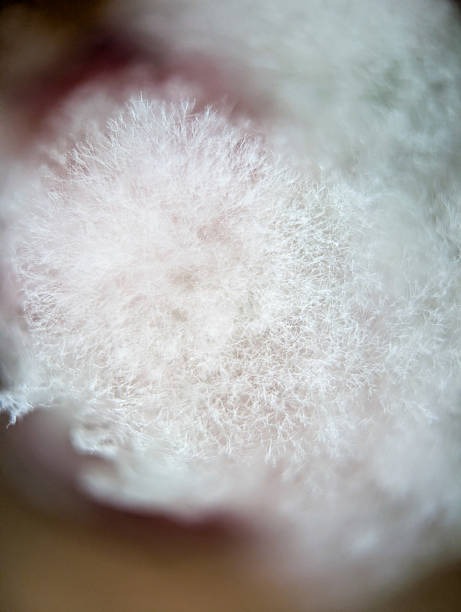
Why a pink film can be bacterial
Some bacteria produce vivid pigments. One example is Serratia marcescens, a bacterium associated with pink, orange, or reddish coloration in damp settings.
A 2019 article in CDC’s journal Emerging Infectious Diseases discusses prodigiosin, the pigment produced by Serratia marcescens. The organism is bacterial, so not every pink bathroom film is a type of mold.
Does the mold type change what you should clean or replace?
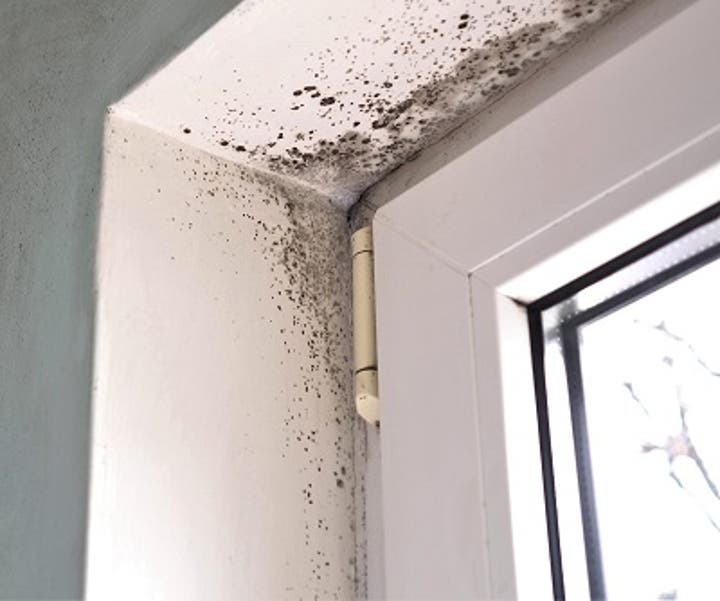
The material and the extent of water damage usually decide how you clean up. A patch you can reach on sound tile is one job. Wet drywall, soaked carpet padding, or growth behind wall finishes is another.
EPA’s basic mold cleanup guidance treats hard surfaces and absorbent materials separately.
| Observed condition | What changes the decision | What to do |
|---|---|---|
| A small, reachable patch on sound tile or another suitable hard surface | You can reach and clean the surface, and the moisture problem is manageable. | Correct the moisture, scrub with detergent and water, and dry completely. |
| Wet drywall, carpet padding, ceiling tile or insulation | Absorbent materials can hold contamination and water beneath the visible surface. | Moldy absorbent materials can be difficult or impossible to clean completely, so removal or replacement may be necessary. |
| Suspected growth behind walls or beneath finished flooring | The visible stain may be only part of the affected area. | Get an assessment of hidden moisture and extent before disturbing concealed materials. |
| Flooding or water that may contain sewage | The water source adds contamination and cleanup hazards. | Use a contaminated-water cleanup route and a professional assessment. |
| Recurring growth with an unknown water source | The moisture may still be active despite surface treatment. | Find the source and check whether concealed or absorbent materials are affected. |
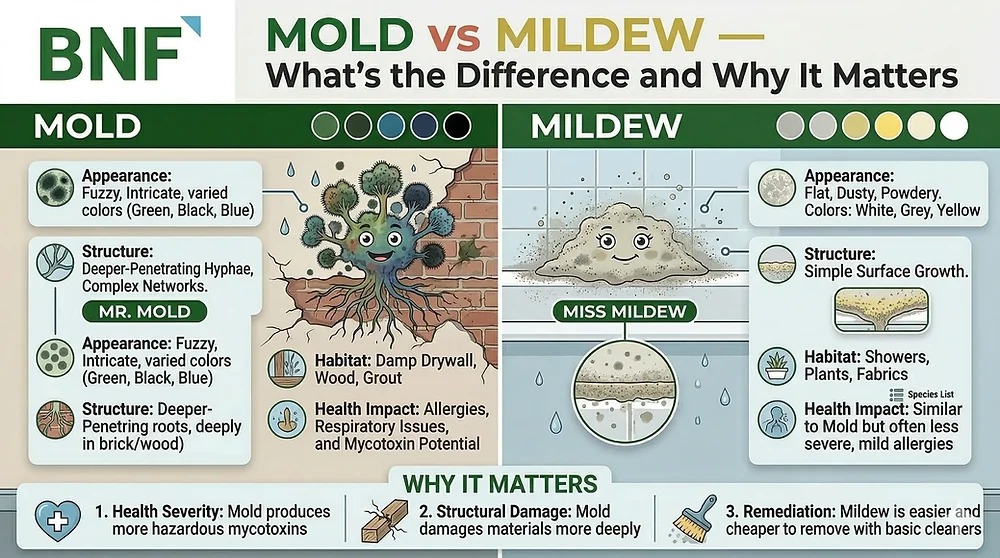
Before you choose an approach, note five things: the location, the affected material, the approximate visible area, the likely water source or history, and any sign that the damage extends behind a finish.
When water appears between the tiles
Hello, I recently closed on my first house two weeks ago. When I was deep cleaning the laundry room I noticed water bubbling up between the tile. So I pulled all the tile flooring out to find a lovely surprise. The washer hookups had been leaking into the wall and now I have black mold and a lot of work needed to be done.
I did get an inspection and this was not in the report. I do have a 2-10 home warranty but I am new to this and I could use some help figuring out the correct language to use with them so I don’t come across as livid as I am with this situation.
Can anyone offer any advice or guidance on a path forward I should take? I have contacted my realtor to alert them of the situation and I have taken a large amount of pictures documenting the situation.
Water coming up through the tile joints and a leak at the washer hookups made this a building-material problem. The homeowner called the dark growth “black mold.”
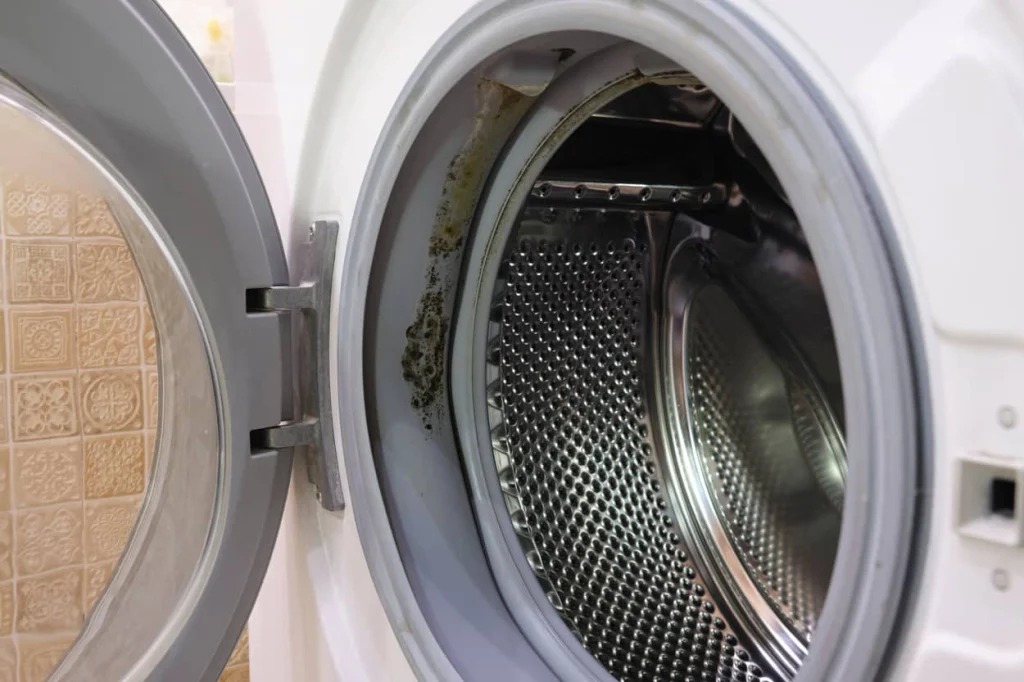
EPA notes that growth can hide behind drywall, wallpaper, paneling and carpet padding.
For newly water-damaged materials, EPA recommends drying within 24 to 48 hours to help prevent mold growth.
When is it worth testing to find the exact mold species?
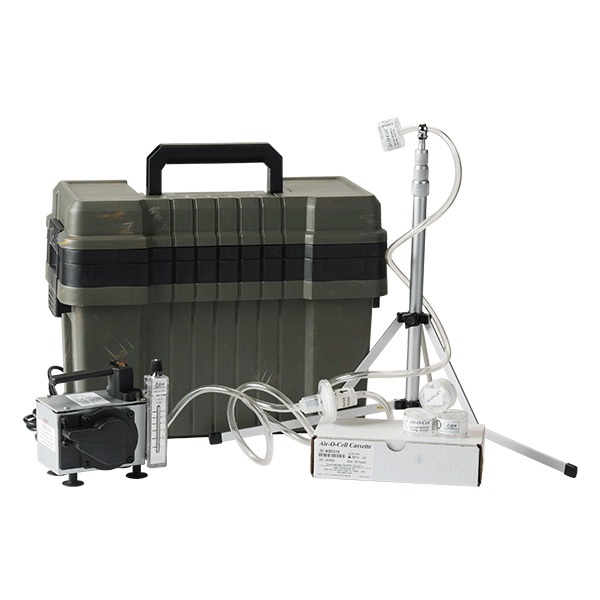
EPA guidance on mold sampling generally doesn’t recommend sampling when mold is already visible and the job is to deal with the moisture and the growth. Testing helps when a qualified investigator can name a specific question the results would settle.
For example, a specialist might look into uncertain concealed contamination or use surface sampling in a specific post-cleanup assessment. A casual home test can’t replace that investigation. That kind of investigation is what a mold assessment provides.
NIOSH discourages routine air sampling as a way to evaluate dampness and mold in buildings. No federal health-based limits exist for indoor mold concentrations, so there’s no universal pass or fail result, and a brief air sample can’t certify that a home is medically safe.
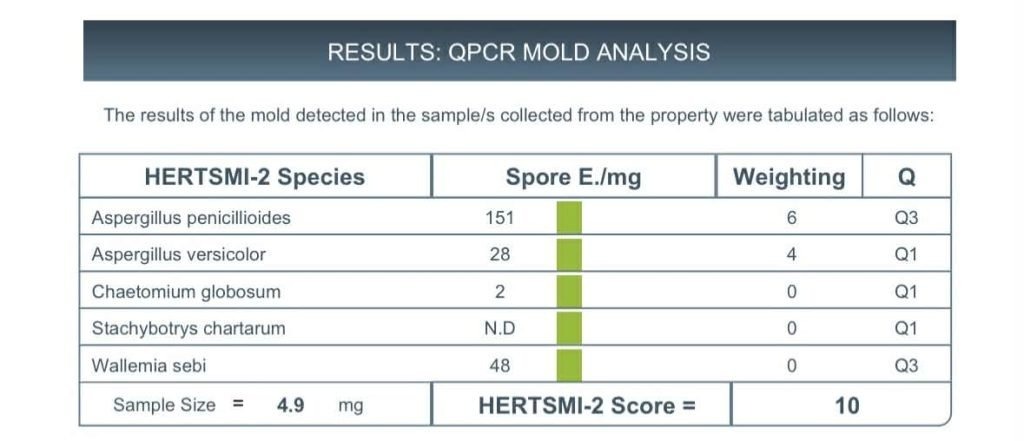
A 2022 literature review by Mendell and Adams looked at airborne spore counts as a way to identify dampness in buildings. Some studies found higher Penicillium/Aspergillus counts in damp buildings than in reference groups. The review found, however, that conventional interpretations hadn’t been adequately validated for deciding whether an individual home was damp.
If your report says “Aspergillus/Penicillium,” that doesn’t mean the room is safe. With direct spore-trap microscopy, Aspergillus and Penicillium spores can look too similar to tell apart reliably, so a laboratory may report an Aspergillus/Penicillium-like group. That’s a group-level observation. Medical safety and concealed water damage need separate evidence.
Before you order a test, ask the investigator which decision it’s meant to change, which sampling method answers that question, and how the possible results would change the next step. If no real decision depends on the result, species identification adds little to an ordinary household cleanup. The guide on when you can skip a mold test works through that question.
Which household mold situations call for extra caution or professional help?
EPA describes mold areas smaller than about 10 square feet as ones a homeowner can often manage under fairly straightforward conditions. That size reference doesn’t clear DIY work involving sewage, extensive or concealed water damage, complex HVAC contamination, or other elevated risks.
These situations call for extra caution:
- Concealed growth: Suspected contamination behind wall finishes, beneath flooring, or inside insulated cavities may need a professional assessment.
- Contaminated water: Sewage and certain floodwater exposures bring hazards beyond routine surface-mold cleaning.
- Extent or material damage: A large affected area, a persistent leak, or substantial water damage to absorbent materials can call for professional remediation.
- HVAC involvement: If you know or suspect the system contains mold, EPA advises against running it, because that could spread contamination. Have the system and its components assessed.
- Cleanup participation: CDC advises people with mold allergies, suppressed immune systems, or underlying lung disease, including asthma or COPD, not to take part in mold cleanup.
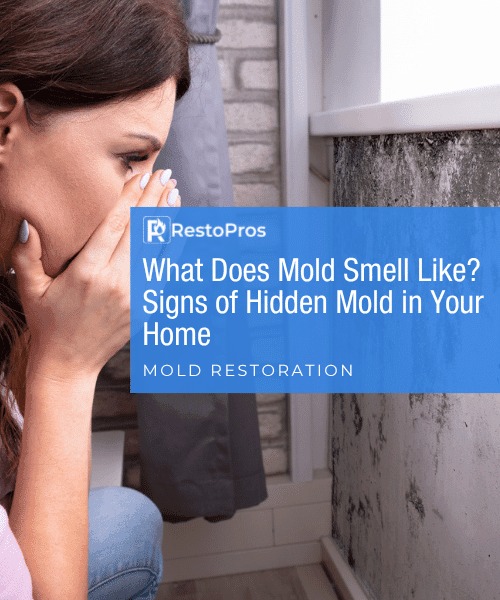
The CDC mold cleanup recommendations call for at least a NIOSH-approved N95 respirator, protective gloves and enclosed eye protection for anyone who can safely do the cleanup. Never mix bleach with ammonia or other cleaning products.
Why does the stain return even after it has been cleaned?
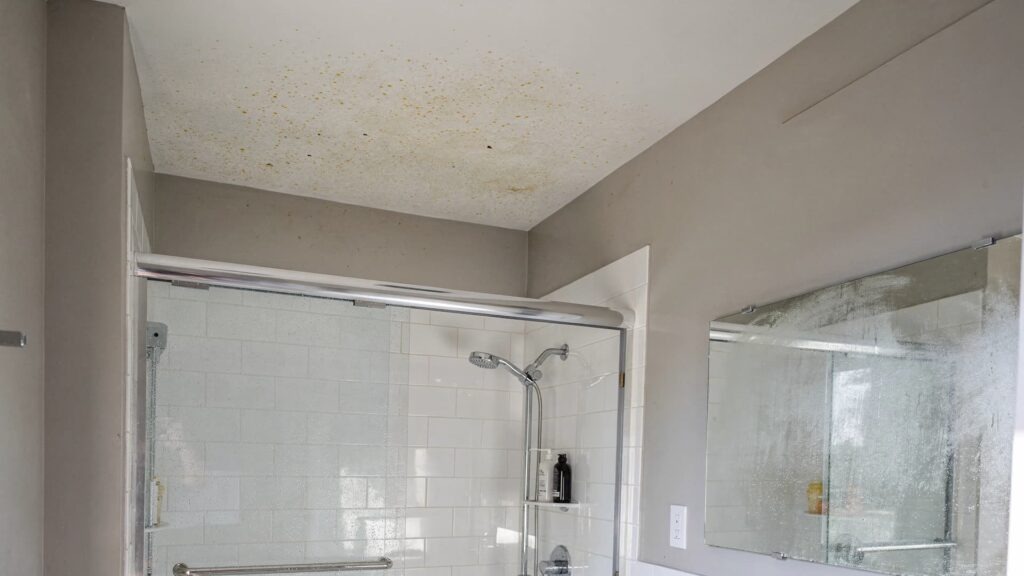
A stain that keeps coming back usually traces to a recurring surface condition. In a bathroom, frequent wetting and poor drying let residue or microbial growth return, even when scrubbing makes the surface look clean for a while.
A huge shower and a problem that returned in days
We have the very large shower that is a pain in the butt to clean and gets that pink mold in a bunch of places in the grout. The back wall has very tiny grout lines that are difficult to scrub. I have an electric scrub brush and I’ve been using wet and forget shower cleaner in a pump spray bottle, but it seems the pink mold is back in a few days.
Some of the bleach cleaners are effective, but they only come in regular spray bottles so I almost go through an entire bottle in one clean, plus there not much ventilation so I can’t do the whole shower in one go. Is there a bulk cleaner that would be more effective (meaning the least amount of scrubbing possible), while also not killing me in the process?
The poster described poor ventilation along with repeated scrubbing. In a damp bathroom, an exhaust fan or an open window helps surfaces dry. Spraying strong chemicals in a poorly ventilated room raises your exposure.
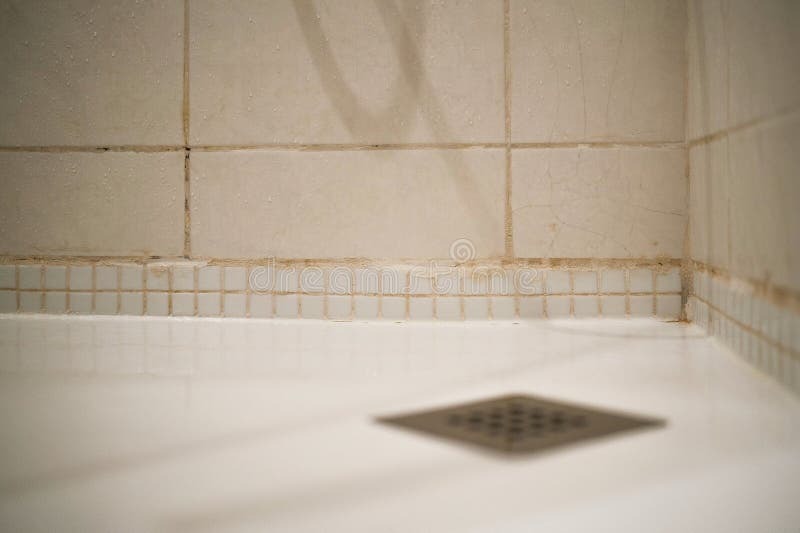
With confirmed fungal growth, recurring leaks, trapped moisture, or incomplete cleanup can bring it back. EPA also advises against painting or caulking over existing mold, because a new finish hides the visible problem while damp or contaminated material stays underneath.
If the discoloration keeps returning, check that the moisture source is fixed and the material has dried. A persistent or unexplained return calls for a closer look at hidden water damage.