
Mold Inside a Dehumidifier: What to Clean and When to Stop
Unplug the dehumidifier and clean only the removable parts your manual allows, using the method it specifies. Dry everything, reassemble and check the unit. If the buildup is inside a fan or electrical compartment you can’t reach, your exact model is recalled, or the problem returns after proper cleaning, stop DIY work and get qualified service or replace the appliance.
Is the Black Stuff in Your Dehumidifier Mold?
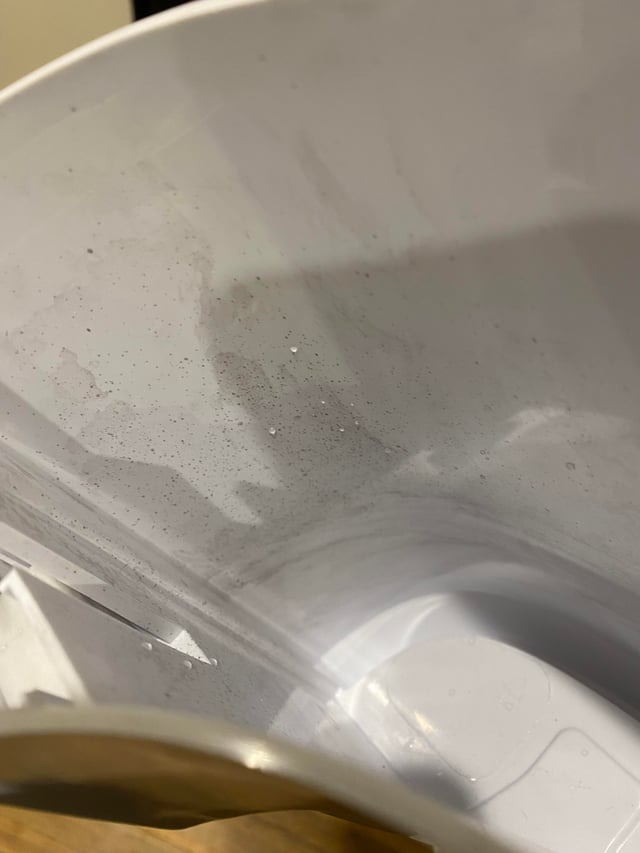
Black film or a musty smell means you should look closer, but neither tells you what the material is. A bucket can collect sediment or slimy buildup, a grille can hold lint, and a coil can collect deposits. The EPA advises using visible conditions and odors to guide further investigation, and appearance alone cannot identify a particular fungus. Before you pick a cleaning method, note where you see the material (bucket, filter, hose, visible coil, fan area or somewhere you can’t reach), what it looks like, and whether the unit smells odd or drains poorly.
Other appliances that collect water, such as those in kitchens and laundry rooms, can develop the same kind of buildup.
Before Cleaning, Check the Manual and Electrical Safety
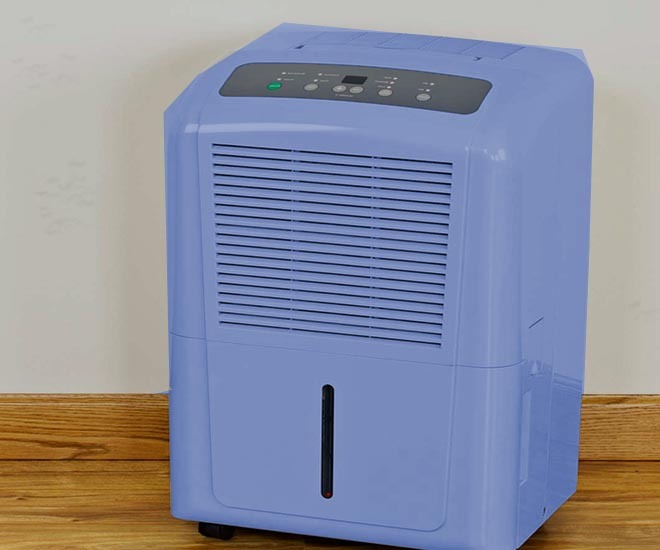
Your manual decides which parts come off, which cleaners are allowed and which jobs need a technician. Unplug the unit first.
Find the manufacturer and model number on the appliance label, then locate the matching manual. Read the sections on the water bucket, air filter, continuous drainage and service access.
Stop using the appliance if you find:
- Electrical damage: A damaged power cord, unusual overheating, a burning or electrical smell, or suspected moisture inside electrical components.
- A recall match: A model and production details that match a CPSC stop-use notice.
- A job outside owner maintenance: Any task that means opening a motor, fan, electrical or refrigeration compartment the manual doesn’t open to users.
An ordinary-looking maintenance problem can come with a fire hazard, so check for recalls. Search the U.S. Consumer Product Safety Commission’s recalls and product-safety warnings using your exact model and manufacturing details.
On August 16, 2023, the CPSC announced a recall of specific Gree-manufactured dehumidifiers because of a fire hazard. Check the listed models and production details, which include units sold under other brand names.
Never mix cleaning chemicals, especially bleach with ammonia or other cleaners. Keep sprays and liquids away from controls, motors, fans and electrical compartments. Advice for cleaning mold on walls doesn’t apply inside the appliance.
Do I need a respirator just to empty the water bucket?
No. The CDC’s stronger protective-equipment advice applies to substantial mold cleanup, not routine emptying of an otherwise clean tank. For that kind of cleanup, the CDC recommends at least a NIOSH-approved N95 respirator, gloves and goggles. People with significant allergies, immune suppression or underlying lung disease should not do it.
How to Clean the Bucket, Filter and Other Accessible Parts
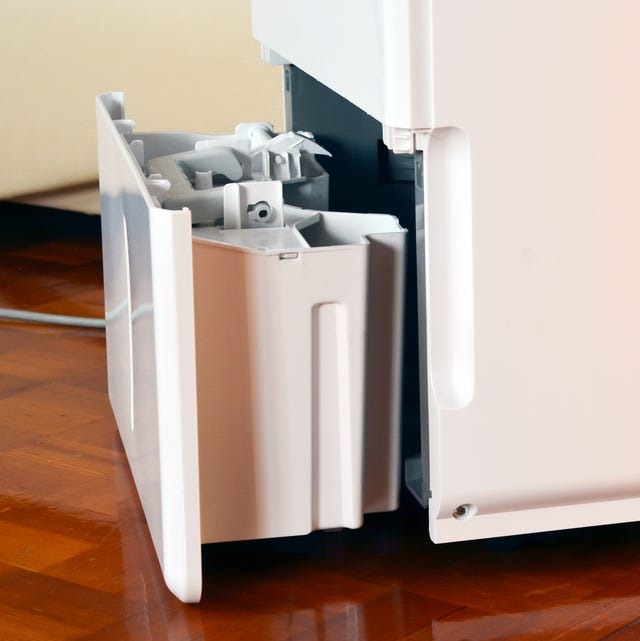
Start with the parts your manual lets you reach. The cleaning sequence below covers the bucket, filter and exterior; the drain hose and the coils and fan area have sections of their own, and deposits that keep returning are dealt with in the recurrence checks.
Follow the cleaning sequence
- Remove the removable parts. With the unit unplugged, take out the water bucket and any filter, handle or splash guard the manual lists as removable.
- Wash the bucket. GE says to use mild detergent and water, then rinse. Frigidaire says mild soap and water, following your model’s instructions for removing and reinstalling parts.
- Care for the filter. Some removable filters can be vacuumed or rinsed; others need replacing. TCL says to let its washable filter dry completely before reinstalling it.
- Wipe the exterior. Use a lightly dampened cloth on the case and a brush or vacuum on the grille. Keep moisture out of openings.
- Reinstall the dry parts. Seat them securely. GE notes that its water bucket must be seated correctly for the unit to run.
Why bleach and vinegar instructions differ
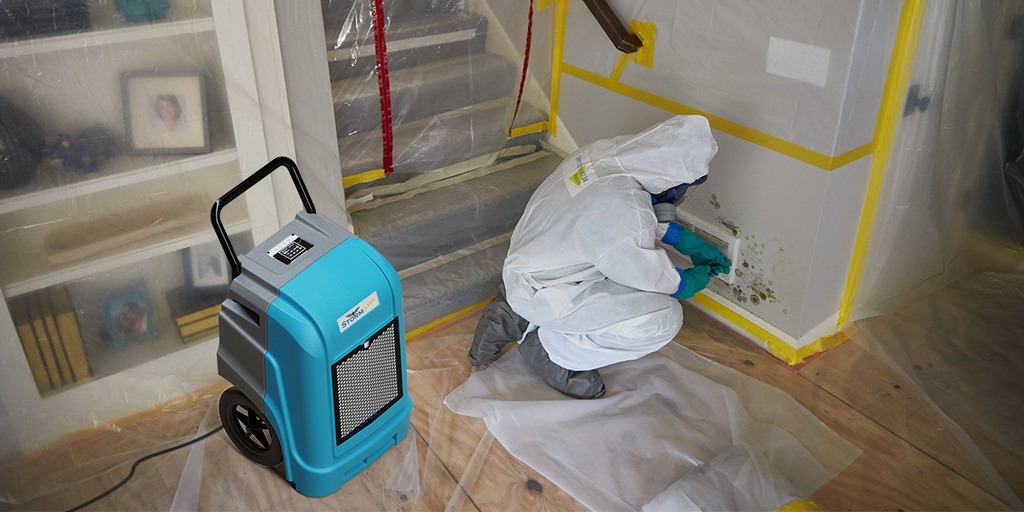
The right cleaner depends on the appliance and the part. GE, for example, allows a bleach mixture in the reservoir but prohibits bleach on the case.
| Manufacturer and part | Cleaning guidance | Notes |
|---|---|---|
| GE removable bucket | Mild detergent and water, then rinse | Removable bucket |
| GE reservoir | Optional mixture of 90% water and 10% bleach | Reservoir only |
| GE exterior case | Mild detergent and a damp cloth | No bleach or abrasives on the case |
| Frigidaire bucket | Mild soap and water | Follow model-specific removal and splash-guard instructions |
| Frigidaire cabinet | Mild soap and a lightly dampened cloth | No bleach or ammonia; keep controls dry |
| TCL tank | Warm soapy water; a warm-water-and-vinegar option is also described | TCL tanks only |
| TCL washable filter | Rinse or vacuum as directed, then dry completely | Some models have replace-only filters |
GE’s dehumidifier cleaning instructions give separate advice for the reservoir and the cabinet. TCL’s maintenance guidance does the same for its tank, filter and coils.
The EPA stresses physically removing mold during cleanup, because chemical treatment alone cannot remove residue from a surface.
What about the coils?
TCL says to gently brush or vacuum dirt from coils you can reach under its instructions. Fins bend easily. Brush or vacuum only, use no wet chemicals, and don’t take anything apart near wiring or refrigeration components.
Why the Drain Hose Keeps Clogging or Leaking
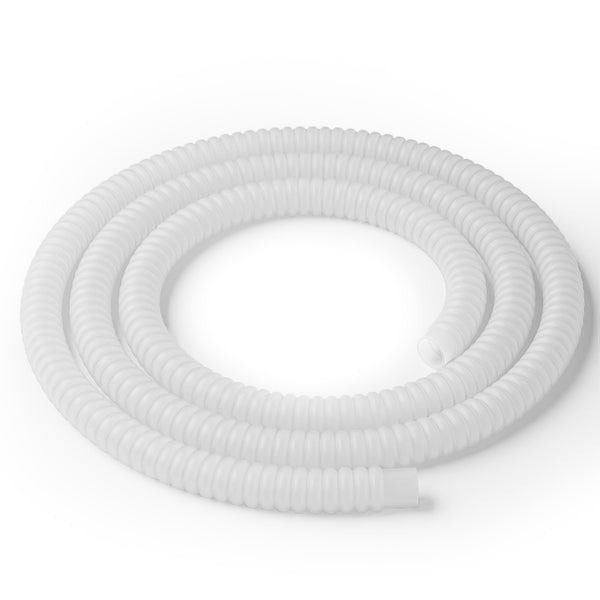
A continuous drain can leak or back up even while the machine keeps collecting water. The cause can be hose routing, buildup inside the hose, or an obstruction at the drain connection.
First work out which of three water-handling setups you have:
| Arrangement | What matters | Likely troubleshooting focus |
|---|---|---|
| Gravity hose | Approved diameter, continuous downhill path, no kinks | Hose position and obstructions |
| Built-in condensate pump | Model-specific pickup, reservoir, pump and hose | Pump operation and fault indicators |
| Collection bucket | Bucket seating, float and full-bucket operation | Bucket placement or a blocked drainage path |
Frigidaire’s dehumidifier drainage guidance specifies a hose at least 1/2 inch in diameter, or an appropriate purpose-built hose, for the setups it describes. The hose must stay below the outlet, with no kinks or blockages.
Frigidaire also explains that dust carried by condensate can contribute to sludge and algae buildup in hoses. A blockage can back water up, trigger a Full Bucket indicator and stop the appliance.
On a gravity-drain unit, check the hose size, route and bends. If your manual allows it, disconnect the hose and flush it with clean water. Inspect the outlet for residue, and don’t force tools or pressurized water into the appliance.
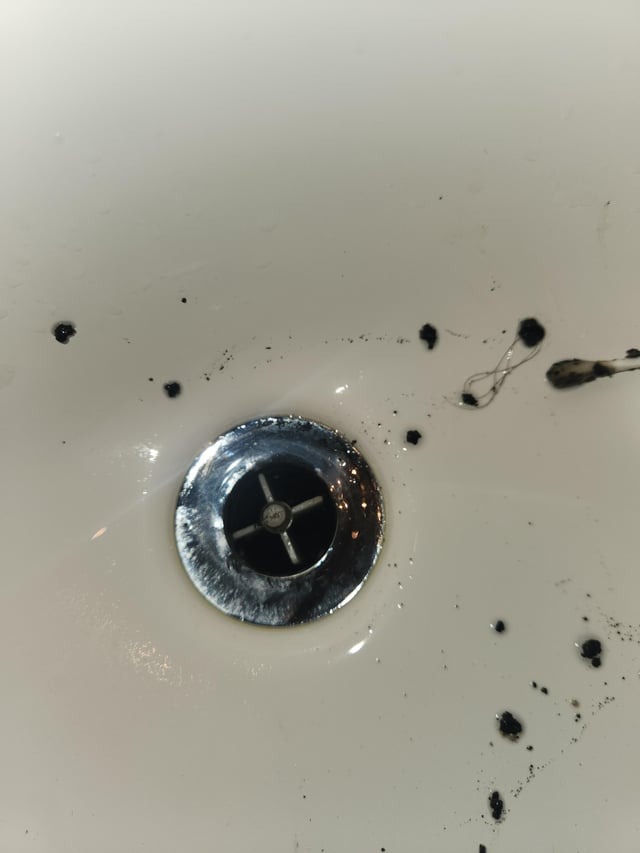
Well, when this hose began leaking again after a couple of months I decided that I was going to figure out wtf was actually going on.
Sparing you a ton of experiments regarding hose length and flow and the pitch of the dehumidifier, I finally had the thought “what if something is physically clogging the hose”. Don’t ask me why I didn’t immediately think of this, probably because I’ve used dehumidifiers for years without issue haha. Anyway, I ran hot water through it and OMG I almost threw up. A ton of slime and sludge came out of the line which I immediately bagged up and threw out. Anyway, I hooked the hose back up and.. it still leaked. I took it off and checked the connection and the ENTIRE INTERNAL CONNECTION was FILLED with what I can only assume is mold / bacteria. I cleaned it out as best I could using a brush which was PROMPTLY discarded.
If a fitting stays blocked after you’ve cleaned everything the manual lets you maintain, follow the manufacturer’s service guidance. On pumped models, use the model-specific pickup, pump and error-code instructions.
What if the Suspected Mold Is Near the Coils or Fan?
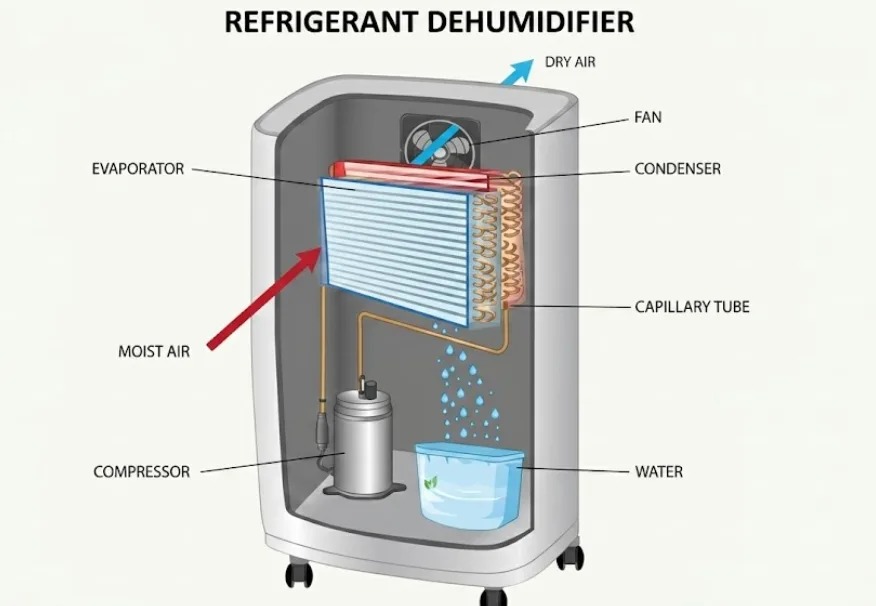
A dusty coil you can reach and suspected contamination inside a fan housing call for different handling. What matters is whether your manual lists that area as something you can service.
Even a clear view through a grille can leave the affected surface out of reach. Don’t force a cover, remove unrelated housing screws, bend fins or spray cleaners toward motors, wiring or refrigeration components.
I just threw out my 4 year old Insignia dehumidifier after it made my allergy symptoms worse and smelling weird. I finally took my flashlight to shine it in where the fan was and could see some mold. It was inaccessible for me to clean it myself, and I just tossed it.
I’m looking for a new model after buying Waykar’s and seeing some gross stuff inside their gravy drain areas. Looks like it didn’t dry out all the way after testing it, so I’m returning it despite really liking everything else about it. Since my last one had mold, I don’t want to risk it and keep this one for the sake of my allergy symptoms
I know to wash the bucket frequently, and the filter. I’m not quite sure how mold began growing in that fan area, but any advice on how to make sure my next one stays clear of that is appreciated!
If there are any good models that are easier to keep clean that you’re aware of, feel free to share. Especially if it’s easy to take apart to clean, though I’m not sure if it’s smart for me to do that at all since I’m not experienced bc ed with that kind of thing haha. Don’t want to f*** it up! 😅
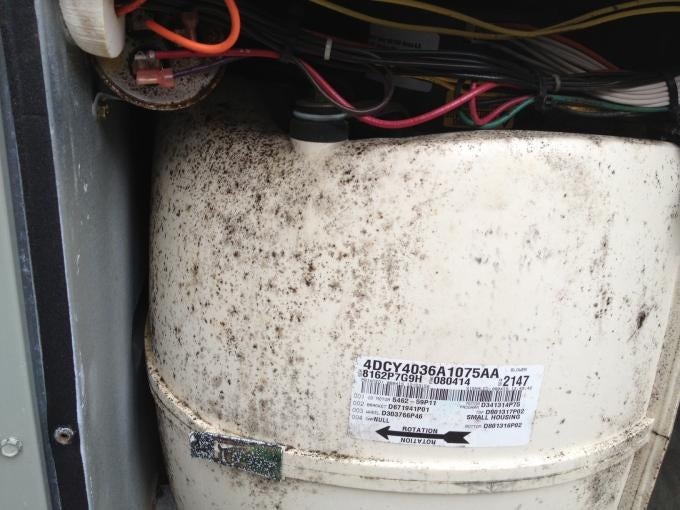
If the material sits beyond what your manual lets you service, leave the fan and motor housing intact. Manufacturer support can tell you whether a safe servicing option exists for your model.
Why Black Sludge or Musty Odors Return After Cleaning
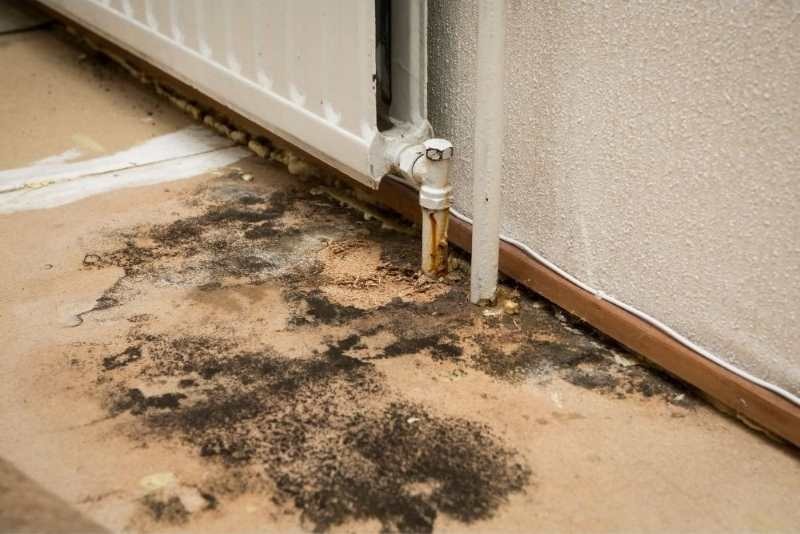
When dark residue returns, find the part where it reappears. Water passes through channels and connections that stay dirty after you wash the bucket, and dust or other deposits can build up again.
Was wondering if I can get some information on this. My dehumidifier had been working fine for past year. This morning when I went to drain the bucket, I noticed it was full of black sludge and what looked like mold. Additionally, looks like the filter screen was filthy black, almost looking like mold as well. May have just been dirty, as I’ve cleaned it before, but don’t think I’ve ever seen it that bad.
I spent the better part of the morning cleaning the dehumidifier bucket, using dawn soap, and had what I think was a bleach cleaning product. I tried cleaning every speck of black out of it. I noticed the dehumidifier itself had some black on the bottom, and around some edges.
I was freaked out so I took it apart and cleaned it as best I could. After letting it run for about 8 hours, I came back and saw that there is black again and what looks like mold growing again in the bucket.
Never seen something like this before. Anyone have any idea what’s going on? Is the whole dehumidifier screwed?
If residue returns, look upstream of the bucket: a dirty condensate channel, internal residue you can’t reach, or new dust entering the water path.
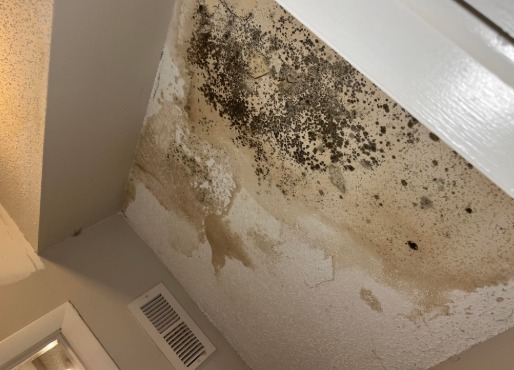
Note which cleaned part shows deposits again, how long it took, and whether the unit drains normally. That tells you whether you have a local maintenance issue or a problem that needs service. Repeated rounds of stronger chemicals can damage components and leave the source untouched.
Should You Clean, Service or Replace the Dehumidifier?
| Observed condition | Decision | Reason |
|---|---|---|
| Residue only in a removable, washable bucket or filter | Clean | Your manual gives a cleaning method |
| Suspected material inside a fan or motor area you can’t reach | Seek service or assess replacement | Outside owner cleaning |
| Odor or deposits persist after proper cleaning | Seek diagnosis, service or replacement | The source may be beyond the parts you cleaned |
| Exact model matches a stop-use recall | Stop using and follow the recall remedy | The recall instructions control |
| Damaged cord, overheating or burning electrical smell | Stop using and seek qualified guidance | Electrical safety comes first |
| Mold remains on basement walls or other building materials | Address the building problem separately | Appliance cleaning doesn’t reach those surfaces |
If the unit can be serviced, weigh the scope of the work, its age, warranty, mechanical condition, parts availability and access to qualified service. A technician or the manufacturer can tell you whether repair is practical.
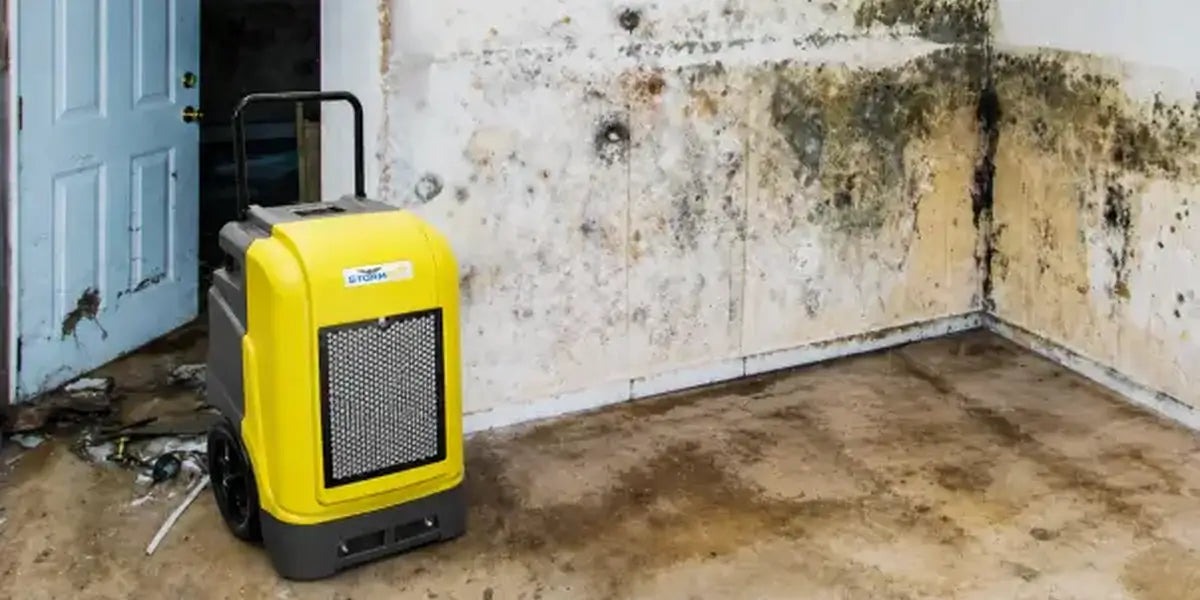
Replacement makes sense when the source is out of reach, cleaning hasn’t solved the problem, and servicing costs too much or isn’t feasible.
How to Prevent Buildup and Check the Result
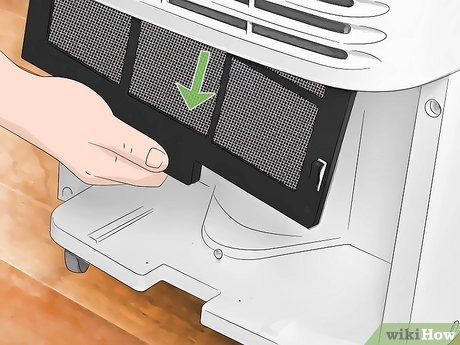
Follow the service interval and storage procedure for your exact model. Schedules differ by manufacturer: older GE guidance mentions checking the filter every two to three weeks, while certain newer units have a 250-hour filter reminder.
For seasonal storage, Frigidaire advises disconnecting hoses and letting components dry for one to two days.
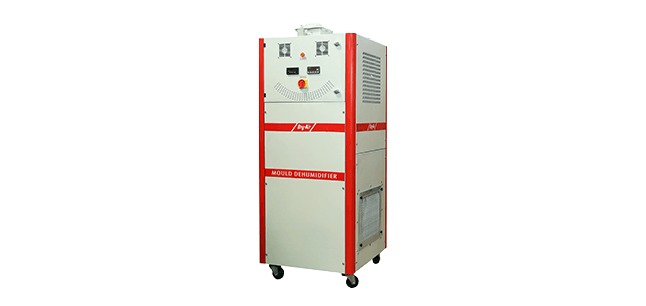
A continuous drain saves you from emptying the bucket, but the hose and outlet still need the maintenance your manual lists. Standing water and residue in unused components can become a recurring problem.
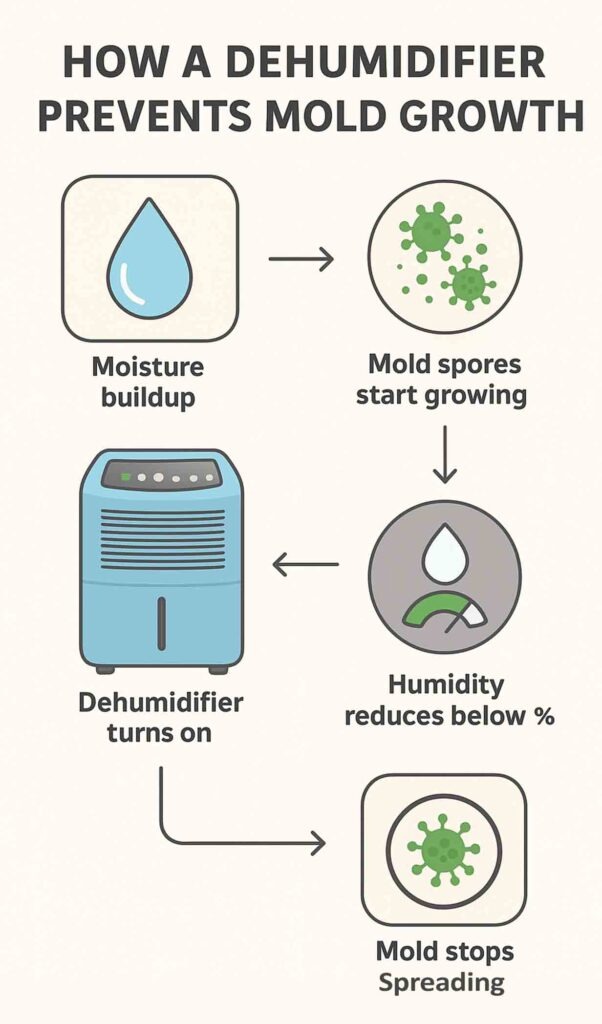
Room humidity matters separately. The EPA advises keeping indoor relative humidity below 60%, ideally between 30% and 50%, to discourage mold growth in the home. For what the machine does for mold, see what a dehumidifier can and cannot do.
Check the appliance after cleaning
Once the parts are washed, dried and reassembled, check the following:
- Dry components: The washed parts are dry where the manual requires it.
- Correct installation: The filter and bucket are seated properly.
- Normal drainage: Water collects or drains through the intended path without backing up.
- Normal electrical behavior: No unusual overheating, burning smell or malfunction.
- No returning residue: Cleaned surfaces stay clear over time. If residue recurs, note it for a service assessment.