
Crawl Space Mold: Removal, Moisture Fixes, and When to Hire Help
If the mold covers a small, safely accessible area and you can find and fix the moisture source, limited DIY cleanup is reasonable. Recurring water, widespread or hidden growth, unsafe access, or possible structural damage means you need a professional. Find where the water comes from first, then match the cleanup and the moisture control to it, and check that the problem is actually fixed. A vapor barrier, a dehumidifier, and encapsulation each do a different job.
Before You Go Under the House: Safety and Stop Signs
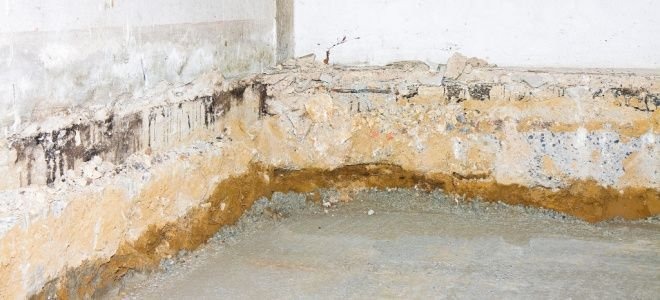
First decide whether the crawl space is safe to enter. Standing water, questionable wiring, damaged supports, contaminated water, and very tight access can make even a short inspection dangerous.
Start at the entrance. From the hatch you may see enough to spot a serious problem without crawling under the house.
Stay out and skip the cleanup if you see any of these:
- Water near electrical equipment: Standing water around wiring, junction boxes, or powered equipment needs a professional’s attention before anyone goes in.
- Possible sewage contamination: A sewer backup or other contaminated water needs a specialist equipped for that type of cleanup.
- Damaged or questionable supports: Sagging framing, displaced posts, or major damage can make the area unsafe.
- Severely restricted access: Very low clearance, poor visibility, or trouble getting back out rules out homeowner cleanup.
- Extensive or inaccessible contamination: Growth behind insulation or across hard-to-reach framing needs professional controls.
The EPA’s homeowner mold guidance treats an area smaller than about 10 square feet, roughly a 3-by-3-foot patch, as a general reference for minor cleanup. The number is conditional. Contaminated water, dangerous access, hidden damage, or any other unsafe circumstance overrides it.
The CDC also advises people with asthma, COPD, underlying lung disease, allergies, or weakened immune systems not to take part in mold cleanup.
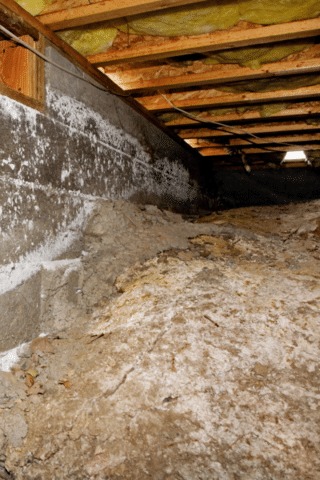
For otherwise suitable work, CDC guidance calls for at least a NIOSH-approved N95 respirator, protective gloves, and goggles that keep particles out of the eyes. Heavier material removal may need stronger protection and professional containment.
What You’re Seeing: Mold, Moisture Damage, and Other Look-Alikes
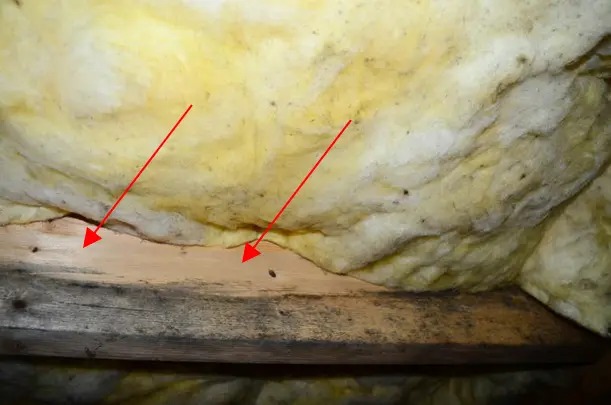
Dark stains, pale fuzzy patches, and musty odors can all point to mold. Appearance alone can’t tell you the mold species, its health effects, or whether a joist is structurally sound.
Look for wet insulation, water stains, rusted metal, damaged ground sheeting, missing or disconnected ducts, and visible changes to framing. White deposits on masonry can be efflorescence, a residue of mineral salts left as moisture evaporates.
So i finally decided to check on my crawl space after watching some youtube video about “”things homeowners forget to inspect.”” I thought I’d feel responsible and adult about it. maybe even smug.
grabbed a flashlight, opened the hatch, got about three feet in and immediately regretted every decision that led me to this moment.
there’s standing water. not like a little puddle. water water. and the plastic sheeting down there looks like someone started a job, took a lunch break, and never came back. half of it is just bunched up in corners doing nothing.
but the part that’s really freaking me out is this white fuzzy stuff growing on the wood. floor joists i think? idk I learned that word today. It looks alive. I swear it looked at me.
[…]
Who’s the right person to even call for this?? mold guy? waterproofing guy? priest?? someone mentioned […] does crawl space stuff but i genuinely dont know where to start.
When you can observe safely, put together a simple record:
- Location: Note whether the affected surface is a floor joist (supports the floor above), rim joist (closes the framing at its perimeter), subfloor (lies across the joists), foundation wall, insulation, or ground covering. Naming the exact part helps a contractor.
- Visible condition: Photograph the material and nearby staining, damaged plastic, rust, or standing water.
- Approximate extent: Record the area of visible growth and where it disappears behind inaccessible materials.
- Timing: Note whether the odor or wetness appears after rain, during humid weather, or while plumbing or equipment is running.
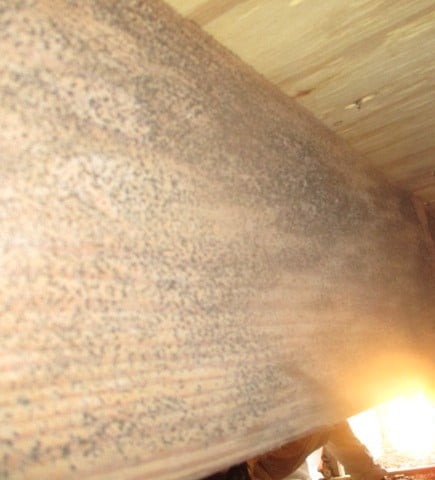
If you can already see mold, you don’t need routine laboratory sampling to decide that cleanup is needed.
Find the Water Source Before Choosing Mold Treatment
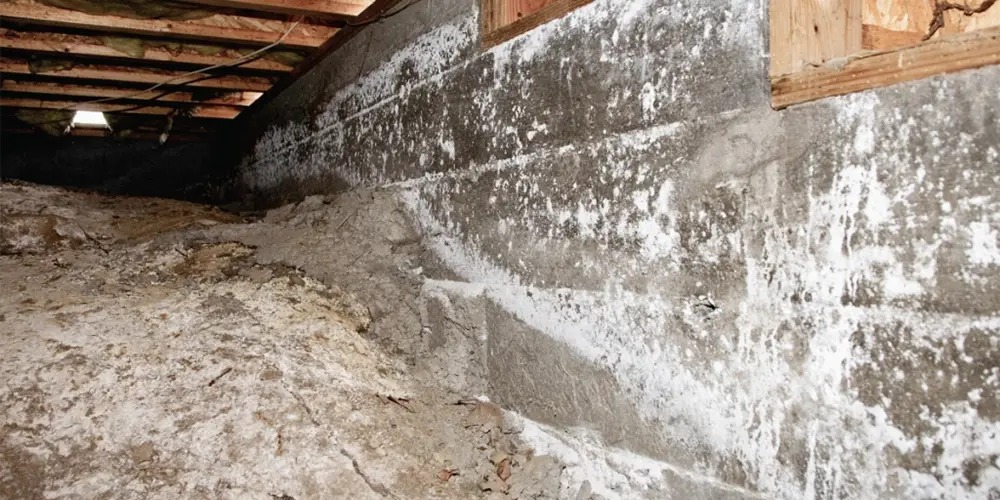
Water can reach a crawl space through several unrelated paths, and a repair works only if you find the active one.
| What you observe | Likely source | What to investigate |
|---|---|---|
| Puddles after rain, especially near a foundation wall | Runoff, grading, groundwater, or drainage failure | Gutters, downspouts, ground slope, drainage and possible pumping |
| Bare soil beneath torn or missing plastic | Ground moisture evaporating into crawl-space air | Continuity and condition of ground vapor protection |
| Dripping below a bathroom, kitchen, or mechanical unit | Plumbing leak or condensate discharge | Pipe connections, shower drainage, equipment drains |
| Damp framing or ducts during humid weather without an obvious leak | Humid air condensing on cooler surfaces | Ventilation conditions, airflow and crawl-space design |
| Musty odor returning after previous work | Persistent or concealed moisture, affected materials, or another source | Earlier diagnosis and adjacent concealed spaces |
The DOE/PNNL crawl-space assessment guidance identifies both exterior and interior moisture sources. Several can operate in the same house.
An expensive mistake is assuming that everything you find under the house started there.
We bought our house in 2021 and the inspection report showed some mold in the crawlspace. We had 3 quotes from encapsulation companies and all 3 said the source of the mold smell is bc it’s not encapsulated and it’d be an easy fix.
We spent 16k to encapsulate our crawlspace (also add a new entry door, dehumidifier, a few structural things). The smell persisted, and started getting stronger.
Then we discovered a leak from our upstairs shower had been covered up by the sellers and the shower had been slowly leaking/draining between 2 walls all the way down to the crawlspace for well over 4 years.
A ground barrier and a shower drain address different paths for water.
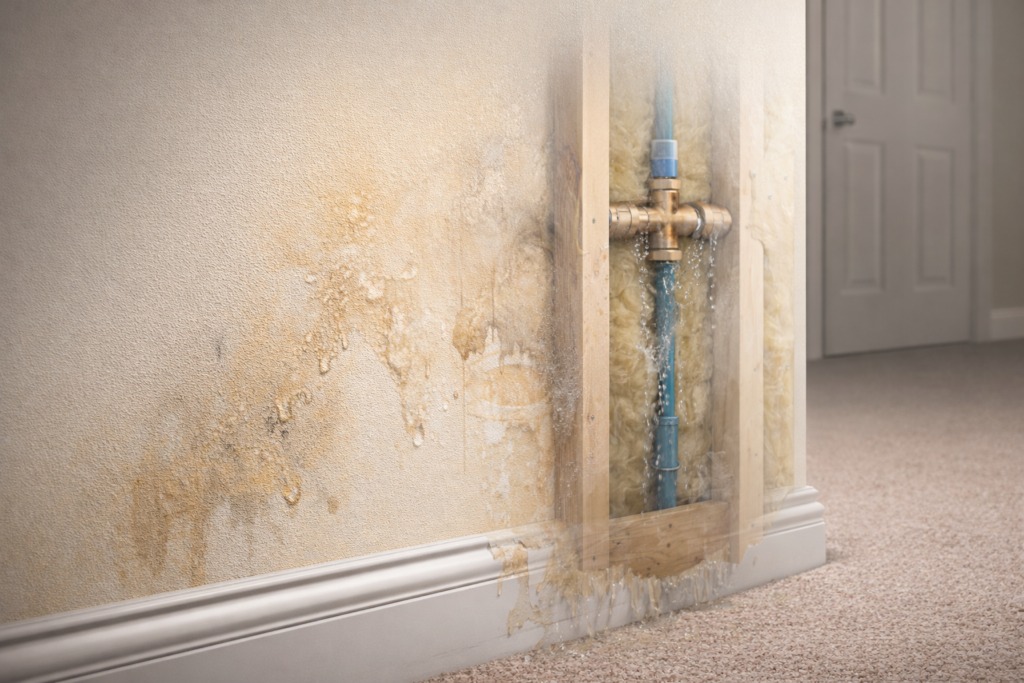
If the evidence points to a hidden source, have a plumbing or building specialist locate it before you choose a treatment.
After a recent leak, EPA guidance recommends drying affected materials within 24 to 48 hours to help prevent mold growth. Don’t assume older or repeatedly wetted materials are clean or undamaged.
DIY or Professional Mold Remediation in a Crawl Space
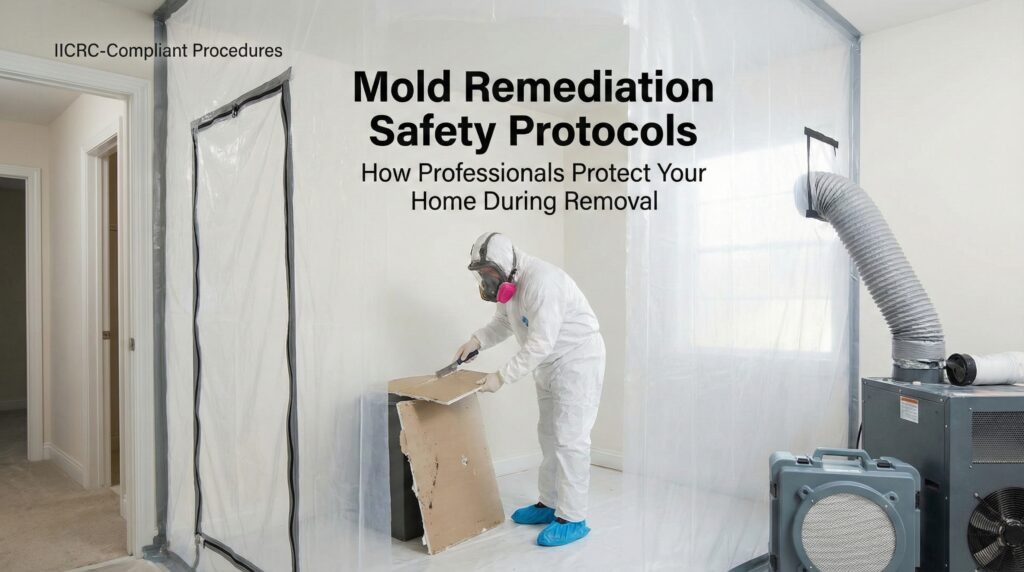
Limited DIY cleanup is possible under favorable conditions. The hard part is judging whether the work under the house is really limited.
A visible patch can be small while damp insulation, inaccessible framing, or recurring water makes the job bigger. Low clearance also makes removal, waste handling, and cleaning much harder than the same task in an open room. Where the water enters decides how big the job gets; see basements and crawl spaces.
| Crawl-space condition | What to do | Reason |
|---|---|---|
| Small visible patch, safe access, cleanable material, identifiable moisture source | Consider limited DIY cleanup | The conditions fit EPA’s general small-area guidance |
| Extensive growth, inaccessible surfaces, or concealed wet materials | Mold remediator | Disturbance and hidden extent complicate cleanup |
| Repeated flooding or persistent water intrusion | Moisture-source specialist, with remediation as needed | Cleaning cannot address continuing bulk water |
| Suspected sewage or contaminated water | Contaminated-water specialist | Added contamination hazards |
| Sagging supports, substantial framing defects, or hazardous utilities | Structural or other safety specialist first | The area can be unsafe before mold work begins |
| Known or suspected mold contamination within an HVAC system | Do not run the affected system; arrange an HVAC assessment | EPA warns that operating a contaminated system may spread mold through the building |
Professional help can involve several trades. A plumber investigates a leaking line, a drainage or foundation specialist evaluates water entry, a mold remediator handles contamination, and a structural engineer assesses questionable load-bearing members. For a split between your own work and a contractor’s, compare DIY cleanup with professional mold removal.
What Effective Crawl-Space Mold Cleanup Includes
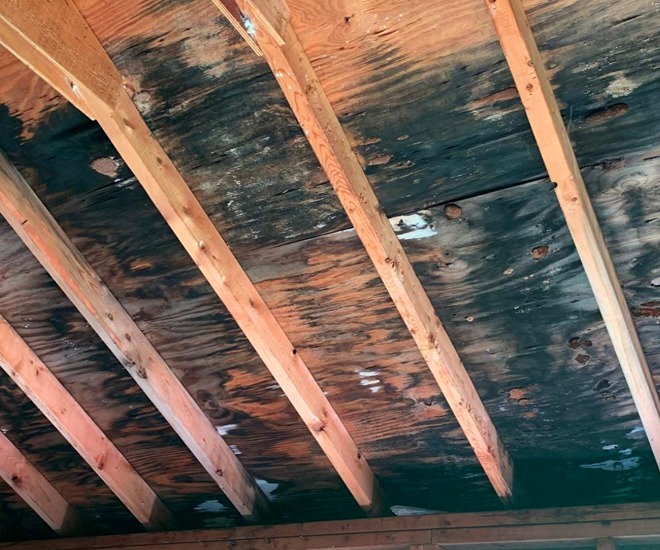
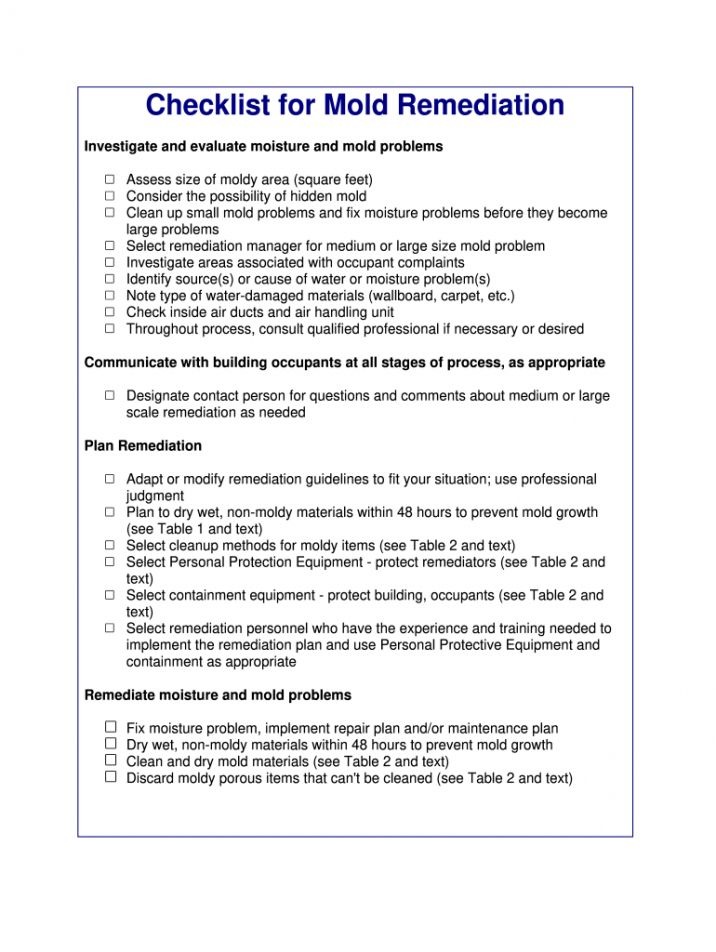
For a minor, accessible case that passes the safety and scope checks above, follow this sequence:
- Fix the water problem. Address the identified leak or moisture path so cleaned materials don’t get wet again right away.
- Decide what you can clean. Wash suitable hard surfaces with detergent and water. Wet or heavily contaminated porous materials may need removal.
- Remove the contamination physically. Clean the affected surface and handle removed material so it doesn’t spread contamination into the living space.
- Dry the cleaned area. Let cleaned surfaces and retained materials dry thoroughly, and deal with remaining damp conditions before covering them.
These steps cover limited cases. Larger projects can require professional containment, controlled waste handling, and HEPA-equipped cleaning methods.
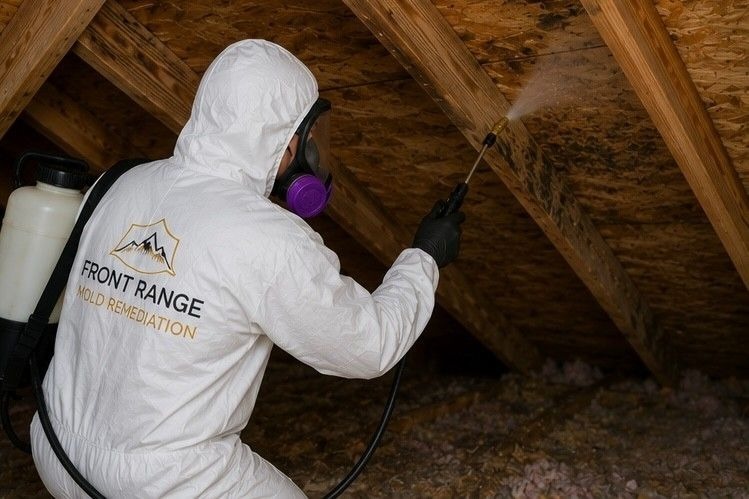
Some paper-backed materials and saturated insulation are hard to clean and may need replacement.
EPA guidance does not recommend routine bleach or other biocides as the default response to mold. Dead mold can still cause allergic reactions, so physical removal matters. CDC guidance allows bleach in certain cleaning situations and warns never to mix it with ammonia or other cleaners.
Keep that in mind when a proposal offers to fog, coat, or paint the underside of the house. It should say which surfaces get physically cleaned, which materials get discarded, and how debris and disturbance will be controlled.
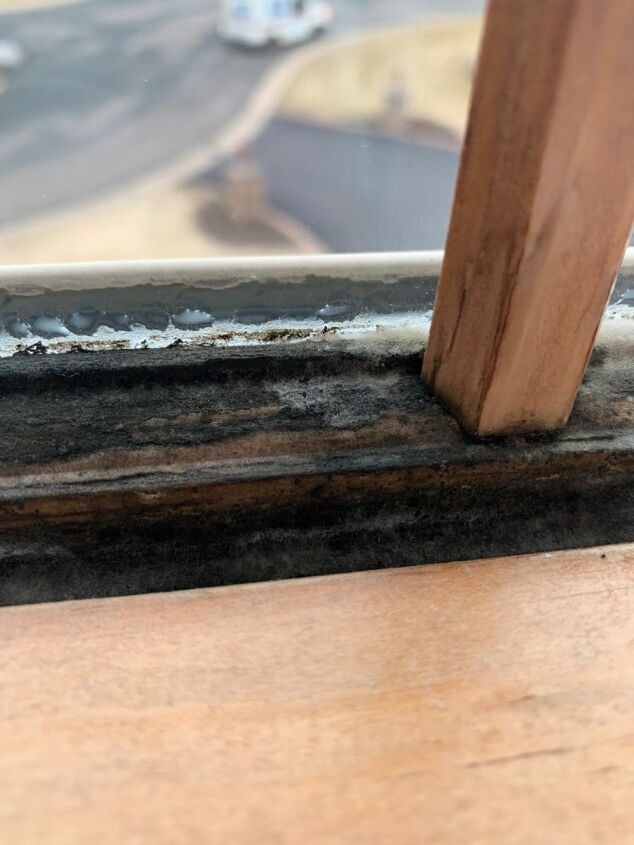
Paint or a coating belongs in the scope only after the affected material has been cleaned and dried. Professional techniques such as HEPA vacuuming or soda blasting should be listed by surface, with the containment needs and the diagnosed moisture-repair scope.
Moldy Joists, Subfloor, and Insulation: Clean, Replace, or Assess?
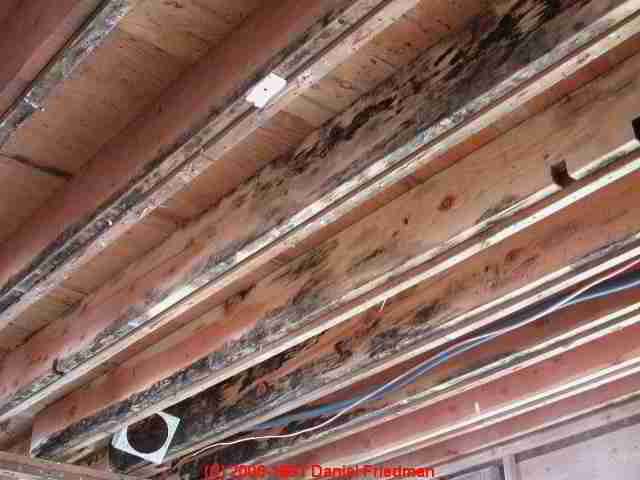
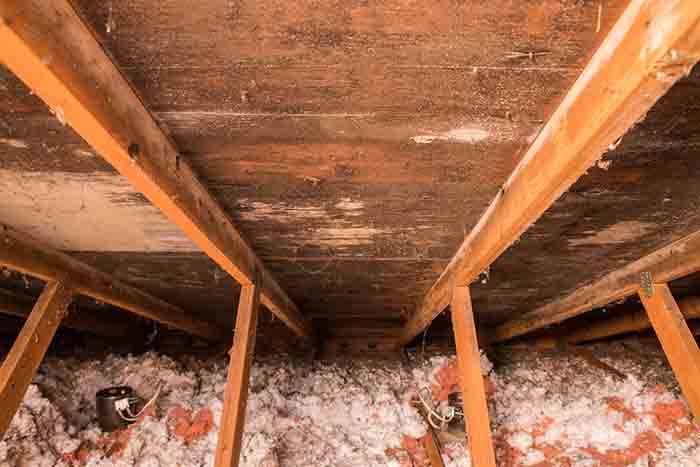
Mold on a joist doesn’t automatically mean the wood has lost its load-bearing strength. Staining alone is no reason to replace every framing member. Sort what you find into three groups: accessible framing you can clean, wet or contaminated insulation to dispose of, and members showing structural deterioration. Get a structural assessment if framing or supports look compromised. PNNL names sagging joists, large wood cracks, and support posts that no longer meet their piers as warning signs.
Vapor Barrier, Drainage, Dehumidifier, or Full Encapsulation?
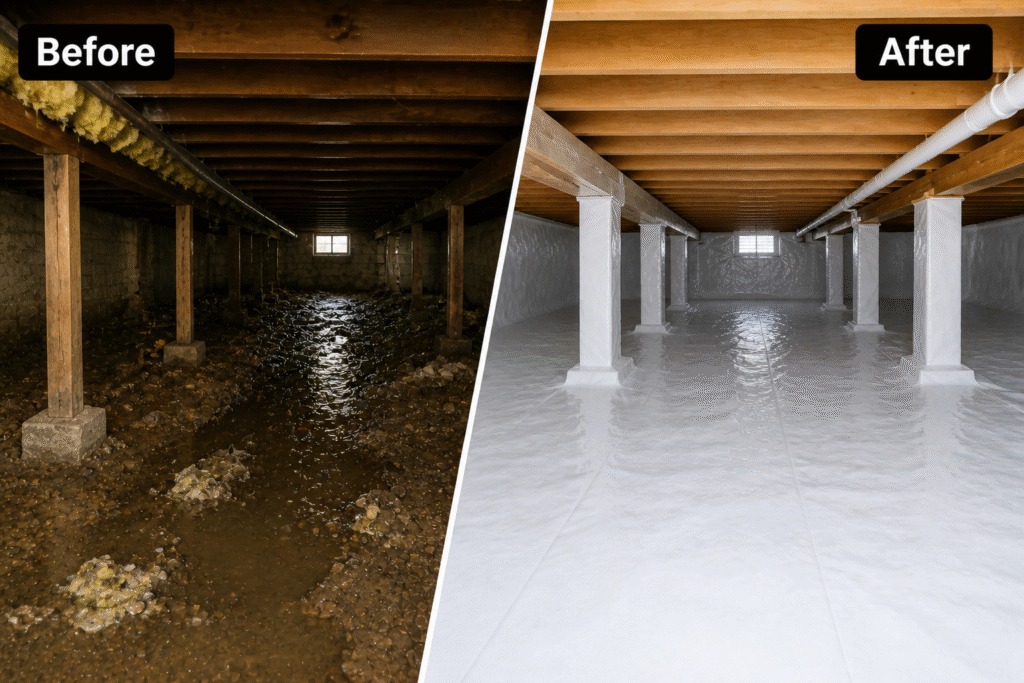
These systems tackle different kinds of moisture, so the right choice follows the source of water and the building’s construction.
| Intervention | Primary job | Limitation |
|---|---|---|
| Plumbing or condensate repair | Stop an internal leak | Existing contamination still needs attention |
| Grading, drainage, downspout improvements, or a sump system | Control bulk water entering or accumulating beneath the house | Does not clean mold already on framing |
| Continuous ground vapor barrier | Reduce moisture migration from exposed soil | Cannot repair a broken pipe or eliminate foundation seepage |
| Dehumidifier or designed drying system | Control moisture in crawl-space air | Cannot remove existing growth or pump away flooding |
| Conditioned crawl-space encapsulation | Coordinate ground and wall vapor control, air sealing, insulation and drying in a suitable building | Needs a system designed for the site |
A ground vapor barrier is usually one component of an overall moisture strategy. Full encapsulation can add wall treatments, air sealing, insulation, and a deliberate method of drying or conditioning the enclosed space.
The Department of Energy describes continuous ground moisture protection for both vented and unvented crawl spaces. Gaps, exposed dirt, poorly handled penetrations, and damaged seams undermine that protection.
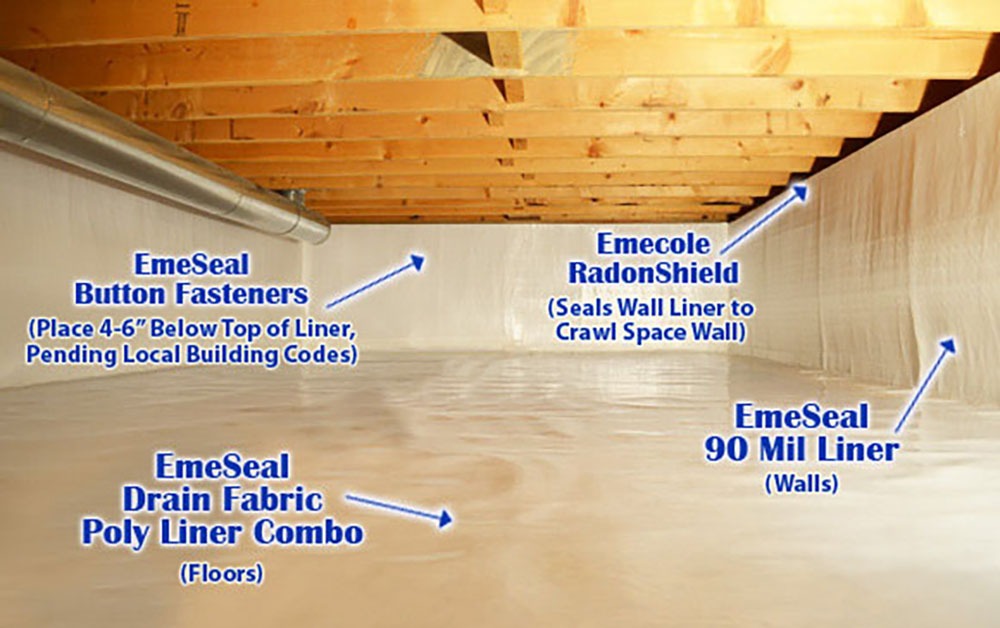
In one DOE crawl-space floor detail, the specified ground material is polyethylene at least 6 mil thick, with 6 to 12 inches of overlap and at least 6 inches carried up walls or piers. Local requirements and the right retrofit can differ.
I was at work one day and received a notification on my doorbell camera that someone was on our porch. I was at work, so I couldn’t answer it and I frankly forgot about. Fast forward a few hours later and those same people are back, putting something on my doorknob, and I heard them say “Merry Christmas” and then leave.
Turns out a pest control company was scheduled to put down a vapor barrier in my neighbors house, but someone put in the wrong address on the work order by mistake. As a result, they replaced OUR vapor barrier instead. The note on the door said that they only realized their mistake after they had removed the old plastic sheeting so they replaced it with a better product for free.
Now I’m not one to “look a gift horse in the mouth” as they saying goes, but I do thorough research on companies that do any home work for me because I want it done correctly. That being said, I have NO idea if it is. I called the owner of the company and he assured me that it was, and he also said he would stand by the product and it’s installation.
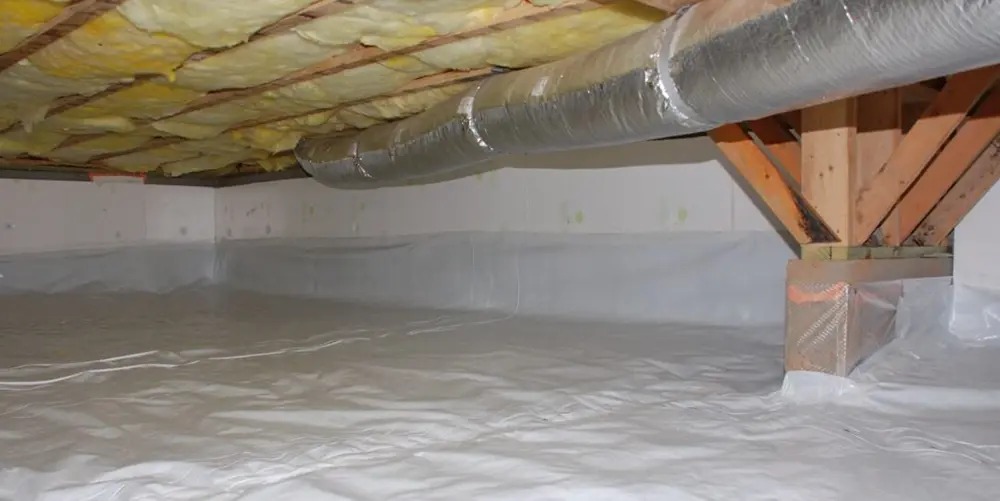
Ventilation needs the same care. In humid weather, outdoor air entering a cooler crawl space can condense on framing or ducts. A well-designed unvented system can help, but combustion equipment, radon, pest inspection access, and local building codes can change the design.
Flood-prone locations need particular attention. DOE/PNNL guidance favors a vented, unconditioned crawl space for flood-prone construction and advises against an unvented, conditioned design there. Flood openings that equalize water pressure serve a different purpose from ordinary ventilation vents, and required openings must stay effective under the applicable flood requirements.
How Much Do Removal and Encapsulation Cost?
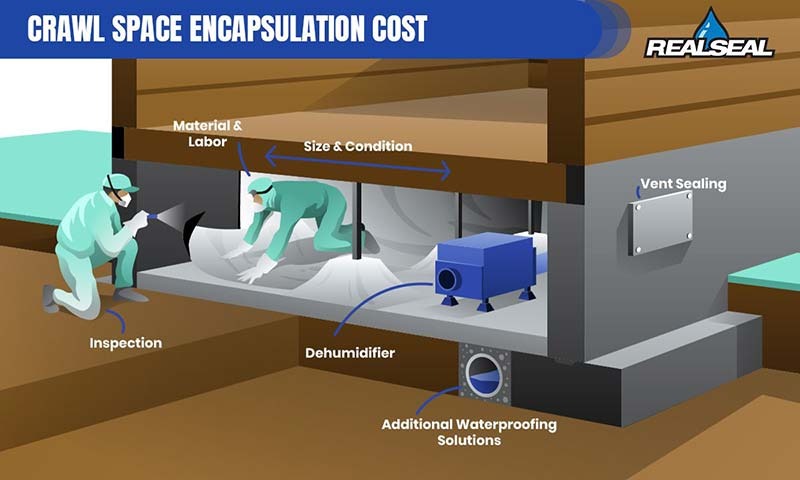
A mold-removal estimate and a crawl-space encapsulation estimate can differ sharply because they cover different work.
Dated national publisher estimates for budgeting:
| Work and source | Published estimate | Scope |
|---|---|---|
| Crawl-space mold removal, HomeGuide, February 2026 | $1,500 to $4,000 | Mold removal, influenced by area and access |
| Crawl-space encapsulation, HomeGuide, January 2026 | $3,000 to $15,000 | System-level encapsulation; also estimated at $3 to $10 per sq ft |
| Professional crawl-space encapsulation, Angi, July 2026 | $5,000 to $15,000 | Encapsulation with cost varying by project conditions |
The HomeGuide mold-removal estimate and Angi encapsulation estimate are secondary publisher estimates from 2026.
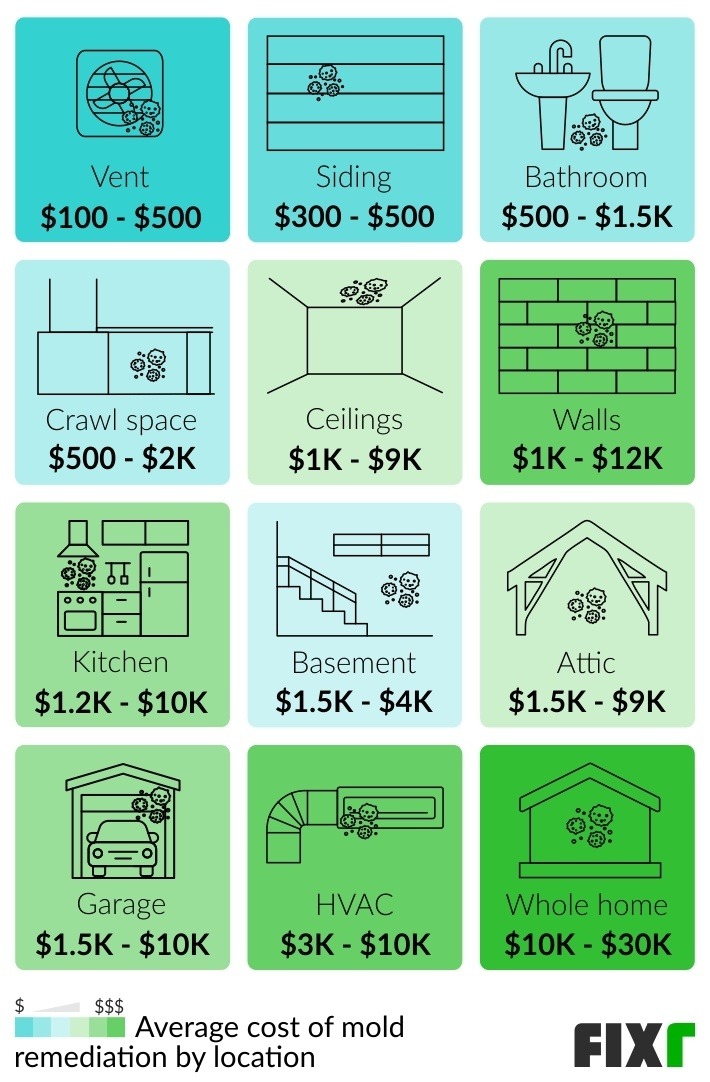
Say you get two proposals. One calls for $3,000 of surface remediation. The other totals $12,000 and includes drainage work, ground protection, and a drying system. The totals tell you little until you separate the scopes.
Sort each amount into the work being bought:
- Investigation and remediation: Identification of affected areas, cleaning, removal, containment, and disposal.
- Water-source correction: Plumbing, drainage, sump or related repairs.
- Environmental control: Ground barrier, air sealing, encapsulation, dehumidification, and appropriate insulation.
- Structure and completion: Framing assessment or repairs, reassembly, and verification.
Sorting this way exposes missing components, overlapping charges, and a low bid that covers only part of the problem.
How to Compare Mold and Encapsulation Contractors
A good proposal describes the problem found, the work to be done, and the evidence that will show it’s finished. An estimate that just says treat crawl-space mold leaves too much undefined. It could mean chemical application, material removal, or a larger remediation project.
The four cost groups above cover the work itself. The written scope should also make these clear:
- Diagnosis: Which areas are affected, what observations support the finding, and what remains uncertain.
- Material work: Which joists, subfloor areas, insulation, or other components will be cleaned, removed, or assessed.
- Moisture repair: What is causing the dampness, which repair addresses it, and which trade is responsible.
- Exclusions: What falls outside the quote, including structural repair, concealed damage, or separate plumbing work.
- Acceptance: What photographs, condition records, and completed-work evidence you’ll receive, plus a written installation specification to compare against the finished work.
ANSI/IICRC S520:2024, the Fourth Edition of the industry standard for professional mold remediation, describes professional procedures. Licensing and building-code obligations depend on the work and jurisdiction.
Hello everyone, I was looking for some advice on how to proceed with an issue that I have been having for a couple of months now. I have a sort of timeline put together of my issue, but the short of it is that I paid a company to come encapsulate my crawlspace here in […]. I ended up paying the deposit and the final amount through my credit card before I actually crawled under to look.
When I did crawl under the house to install a hygrometer, I was appalled at the quality of work done, on top it not actually being “encapsulated.” It seems like a lot of getting the run around, but eventually I filed a chargeback against them. They finally reached out to me today, and I was not sure how to proceed.
How to Tell Whether the Crawl Space Is Fixed
A finished project leaves the moisture problem corrected and the agreed remediation done. The EPA also lists the absence of visible mold or moldy odors, and no renewed growth or water damage at follow-up, as signs of completion.
Check the work itself. Some problems only show after the next storm or after the equipment has run for a while.
Use these completion checks:
- The source repair is documented. Plumbing, drainage, damaged ground covering, or another identified moisture problem has received the agreed correction.
- Affected materials have been addressed. Cleaned surfaces, removed contaminated insulation, and any replacement work match the contracted scope.
- The moisture-control system works. You can inspect the installed drying equipment, ground protection, and drainage components.
- Recheck conditions. A follow-up visit looks for renewed wetness, visible growth, moldy odor, or further damage.
- Bring in a specialist for complex or disputed work. A post-remediation assessment with a defined verification objective can settle it.
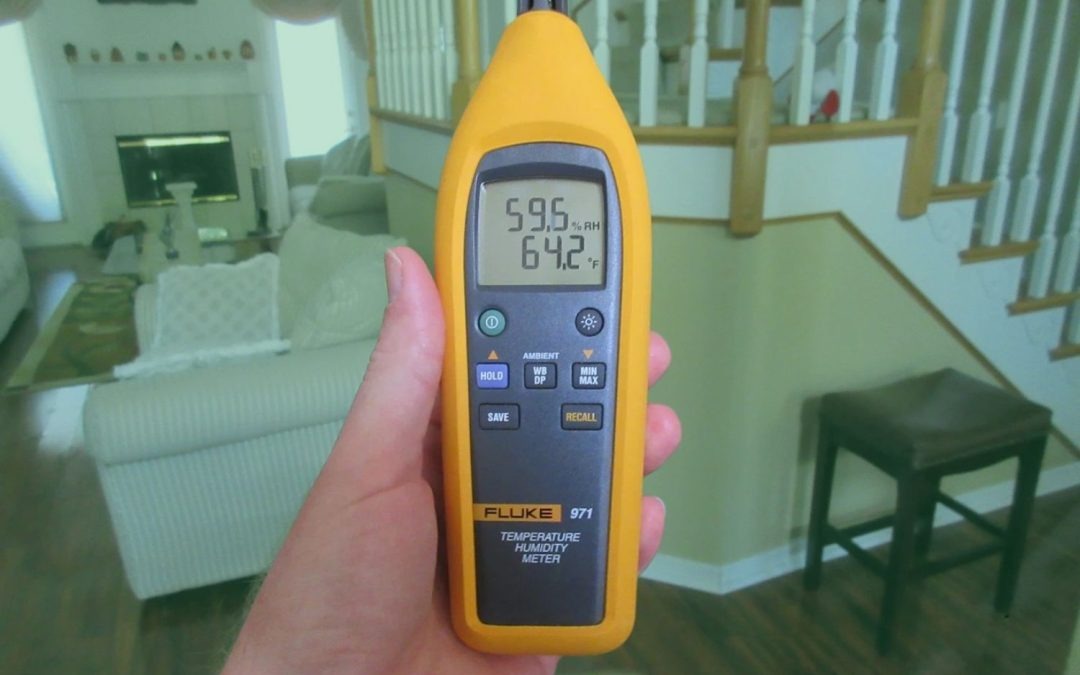
Humidity and wood-moisture measurements can help identify ongoing dampness. In its crawl-space inspection guidance, PNNL treats wood moisture content above approximately 18% and relative humidity above approximately 70% as warning conditions. Use them as inspection warnings alongside the moisture history and material condition.
Measurements, photographs, and professional sampling serve different verification purposes. One good reading or one clean mold test doesn’t prove the house is mold-free for good, and the EPA sets no federal numerical mold-spore threshold for that.
Some staining can remain after proper cleaning. Judge it by the condition of the material and the completed remediation, but visible growth that persists is never acceptable.
If musty odor returns or moisture reappears, revisit the water source and the accessible neighboring spaces. A newly cleaned surface can’t make up for water that keeps entering the structure.