
How to Remove Mold From a Front-Load Washing Machine
Clean the gasket and detergent dispenser, then run your manufacturer’s empty cleaning cycle. If water stays in the drum or draining is slow, check the drain filter if your model has one you can reach. If the gasket is torn, or the smell or buildup comes back after proper cleaning, stop using stronger chemicals and book an appliance service visit or a gasket replacement assessment.
Where Is the Mold-Like Buildup in Your Front-Load Washer?
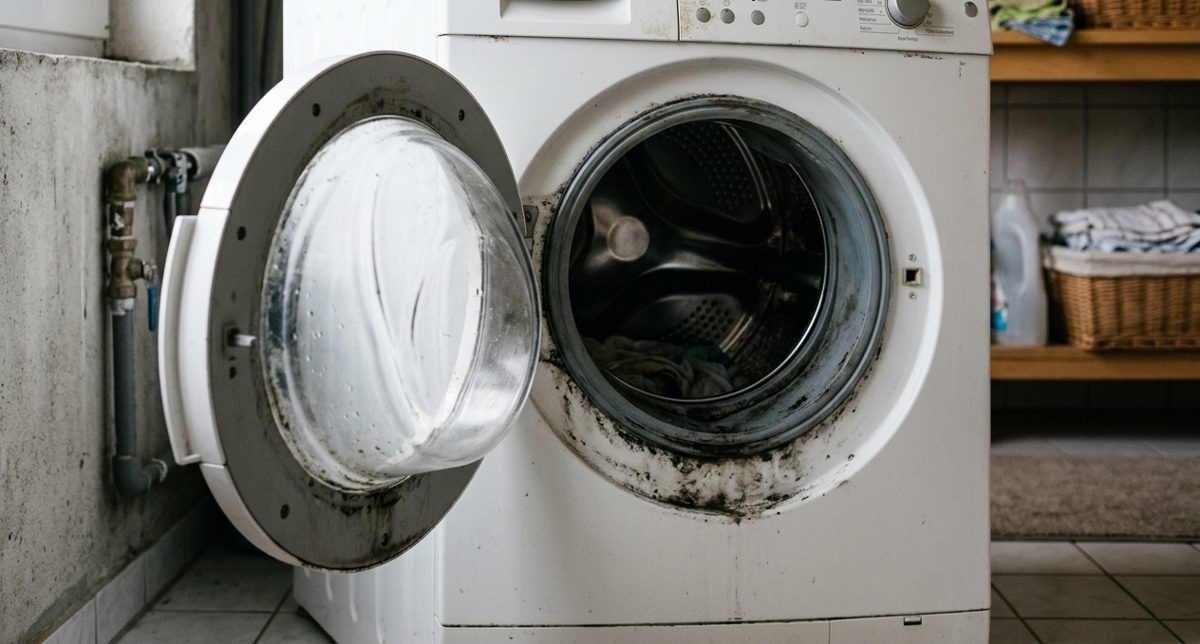
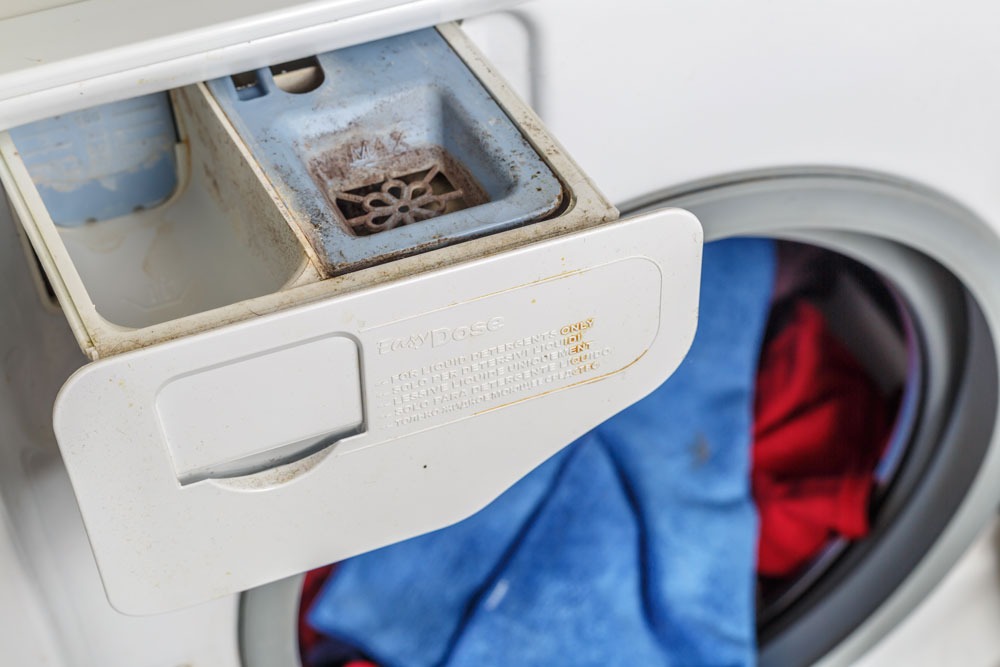
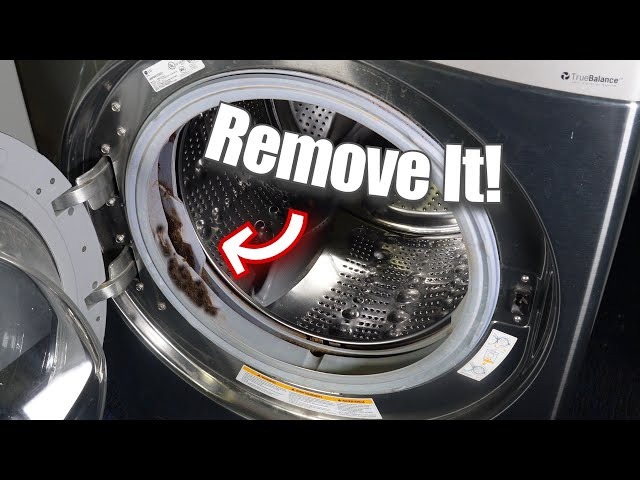
Start with the rubber seal around the door. Pull back the fold gently and look at the bottom, where water, lint, hair, and detergent residue collect. Then check the detergent drawer, the opening behind it, and the drum. Other laundry-room trouble spots are in kitchen and laundry room mold.
The rubber ring is the door boot, also called the gasket. It seals the door opening. The detergent dispenser and the drum do different jobs, so find the affected part first. That tells you which cleaning method to use.
Humidity in the room matters too; measure and control indoor humidity for mold prevention.
| What you notice | Where to look | What it suggests |
|---|---|---|
| Black specks or slippery deposits | Bottom gasket fold | Trapped residue and moisture |
| Crusty or slimy material | Detergent drawer and housing | Detergent or softener buildup |
| Musty smell without a visible patch | Drum and drain areas | Smell with no visible source yet |
| Water left after a wash | Drain system and filter | Drainage problem |
| Black marks that resist wiping | Rubber gasket | Stain in the rubber itself |
| Torn rubber or a leak | Door seal and contact area | Mechanical damage |
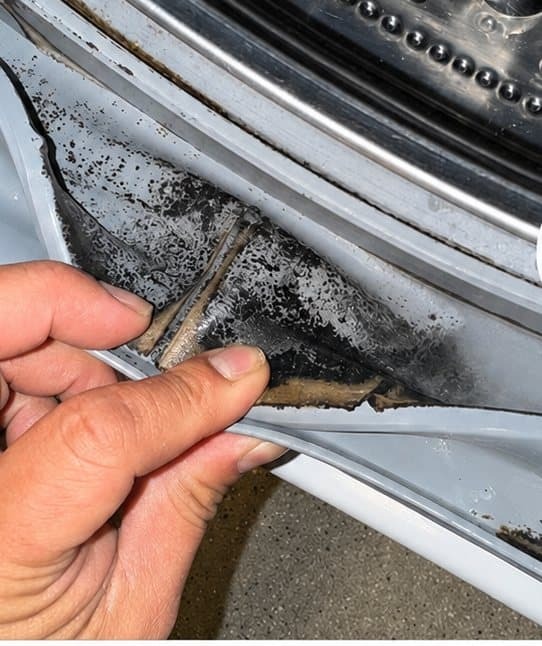
Use a bright light to see inside the folds. Note what comes away on a cloth, where water sits, and whether the rubber is damaged. A black mark or musty smell cannot tell you the mold species or anyone’s health exposure.
Check Your Washer Manual Before Choosing a Cleaner
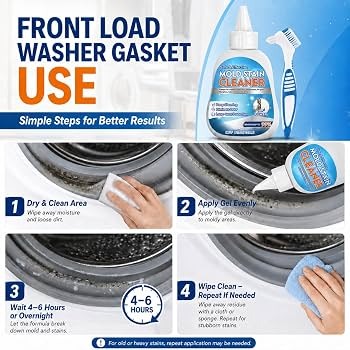
Identify your washer model before you pick a chemical. Manufacturers specify different products and compartments for what sounds like the same mold or mildew problem. A gasket-wiping solution also serves a different purpose than an additive for a tub-cleaning cycle.
| Manufacturer | Documented example | Important condition |
|---|---|---|
| Samsung | Its special procedure for visible mold or mildew odor places liquid chlorine bleach in the detergent compartment. | The detergent compartment, not the bleach compartment. Routine Self Clean works differently. |
| Maytag | Its mildew-odor cleaning guide describes adding an approved cleaner directly to the drum. | Some Maytag front-load models do not recommend chlorine bleach. |
| LG | Separate gasket-care documents describe oxygen-based cleaner, diluted chlorine bleach, or vinegar under different instructions. | Each option has its own instructions. |
Compare Samsung’s mold and mildew troubleshooting instructions with Maytag’s mildew-odor cleaning guidance.
Find your model number and match three details in its instructions: the surface you’re cleaning, the product allowed there, and the compartment or cycle for that product. Follow the cleaner’s label too. Never combine two brands’ procedures into a homemade treatment.
Chemical safety: Never mix bleach with vinegar, ammonia, or other cleaners or disinfectants. Follow label directions for ventilation and protection. If fumes irritate you, stop cleaning and get fresh air.
Do not pour another chemical over the residue. The CDC’s bleach safety guidance explains the mixing hazard.
Clean the Gasket Folds and the Detergent Drawer
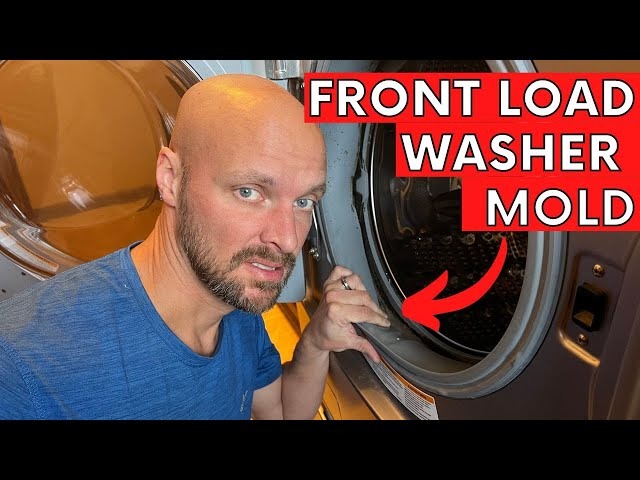
Clean the gasket folds and the removable dispenser parts separately. Neither job requires opening sealed machine parts.
- Start with an empty, idle washer. Gently open the gasket fold. LG names the bottom area around the six o’clock position as a common spot for trapped debris.
- Remove loose material. Pick out lint, hair, or small objects without a sharp tool and without pulling the gasket off its mounting.
- Wipe the gasket and door-contact area. Use a soft cloth and the cleaning method your manual approves. Clean the inner fold and the area that meets the door.
- Clean the dispenser separately. If the manufacturer allows removal, take out the drawer and its inserts. LG describes warm water and a soft brush for the removable parts its instructions cover.
- Finish the housing. Remove deposits from the drawer opening, then reinstall the parts securely.
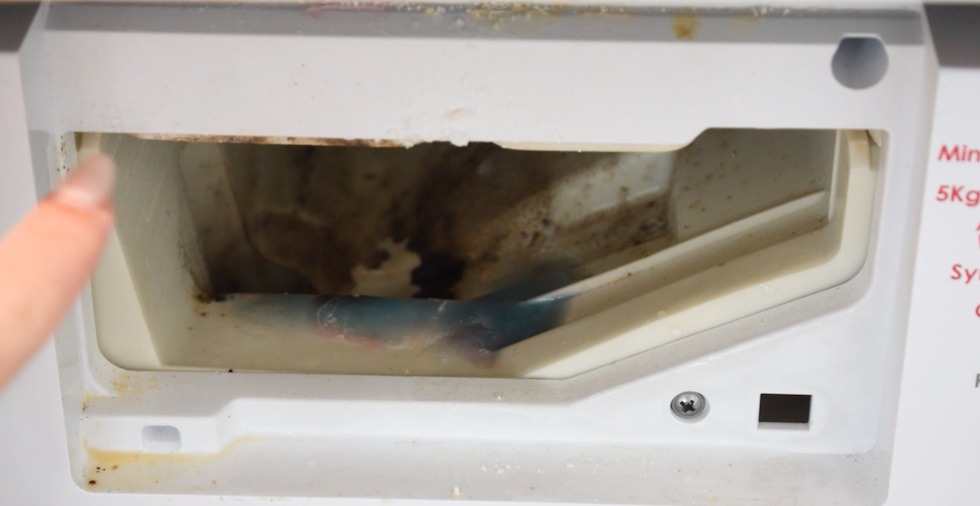
Do not pry apart the rubber seal or force a stuck dispenser. LG specifically advises against putting the dispenser inserts it describes in a dishwasher. Other models use different release mechanisms and cleaning methods.
Remove leftover cleaning solution as directed, then dry the gasket and door-contact surfaces.
Run the Correct Empty Cleaning Cycle and Check Drainage
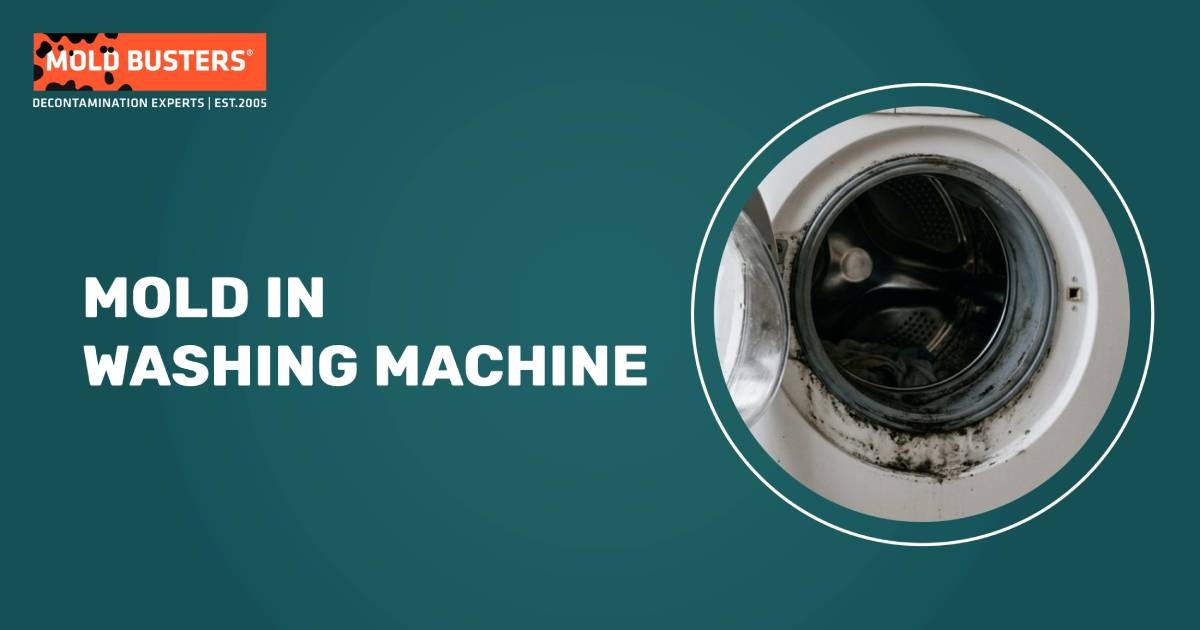
The manufacturer’s empty cleaning cycle cleans internal residue a cloth can’t reach. Depending on the brand, it’s called LG Tub Clean, Samsung Self Clean or Self Clean+, Samsung Pure Cycle, GE BasketClean, or Maytag Clean Washer. Follow the instructions for your own brand.
Samsung gives a specific sequence for washers with visible mold or mildew odor. For the models it covers, the steps are:
- Empty the tub and run Spin-only. Do this before the mold-cleaning treatment.
- Add the specified liquid chlorine bleach. Put it in the detergent compartment, up to the indicated limit.
- Start the designated Self Clean program right after adding the bleach. Use Self Clean, Self Clean+, or Pure Cycle, whichever your model has. Don’t let the bleach sit in the washer.
- Wipe and rinse. Follow Samsung’s wipe-down instruction and run Rinse+Spin.
- Dry the washer and care for the drain filter. Complete the specified drying and drain-filter steps. Seek service if these attempts fail repeatedly.
On the front-load Samsung models in its guidance, a Self Clean cycle takes about four hours. Routine Self Clean does not call for the bleach treatment.
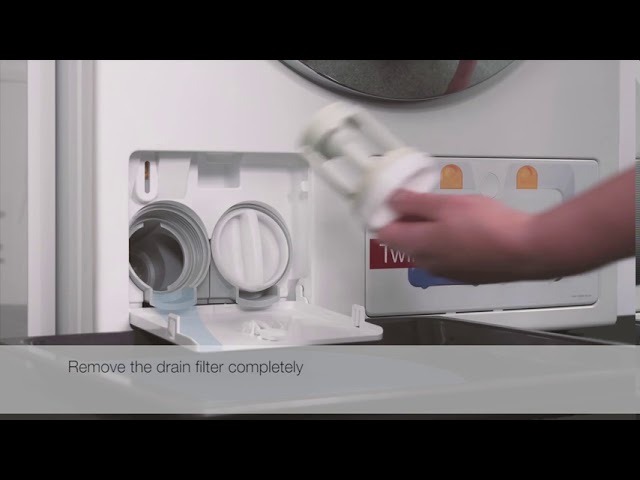
Slow draining, standing water, or an interrupted spin points to a drainage problem. LG and GE name clogged pump filters as a cause.
On LG models with a user-serviceable filter, switch off and unplug the washer before opening the access cover. Follow the instructions for collecting the water left inside, which may be hot. Refit the filter and residual-water hose closures securely. Other machines have their own procedures, since filter access and design vary.
This LG front load washer came with the house we bought in late 2022. Never dawned on me that the filter COULD ACTUALLY fill up and become a problem. “It won’t happen to me” sort of deal.
Well this past week it wouldn’t fully drain and then when it would try to spin, we’d get an unbalanced error.
Sat on a chair to watch was it was doing. “It’s not fully draining. I’ll check the hose”
Sure enough it was just dribbling. “The pump is probably shot. Great excuse to order a new washer” I already hated this machine since it was too small for our king linens and it’s a front load. Not a fan.
So we ordered a new top load 4.5CUFT washer from Costco.
It’ll be here next week.
Tonight came along & I thought I’d google “slow draining LG washing machine”
Came back: most likely clogged hose or filter.
Yup it’s the filter. Machine works fine now. So annoying.
Probably gonna give it away for free on FBMP.
When Black Stains or Musty Odor Remain After Cleaning
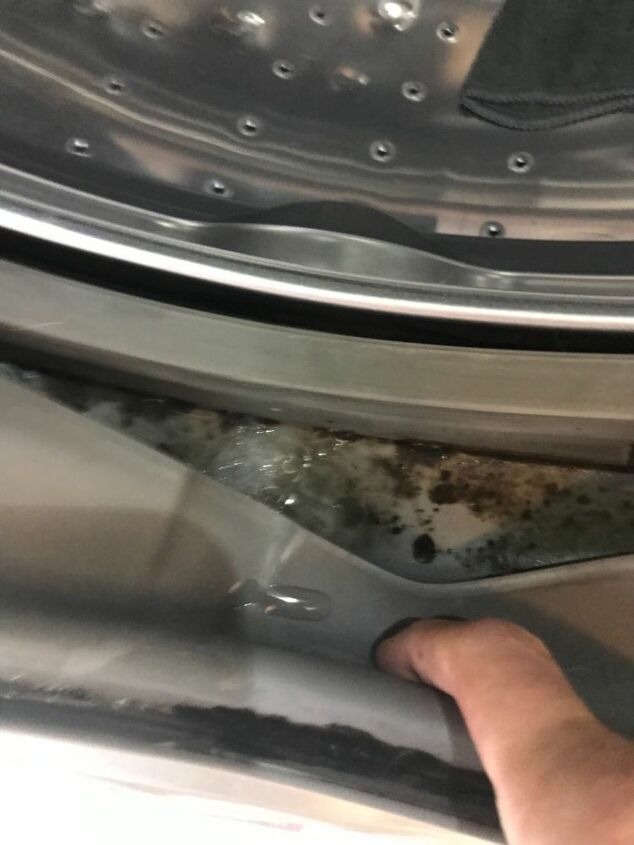
A black gasket may stay discolored after cleaning. Judge the result by loose deposits, odor, trapped water, and the condition of the rubber. Appearance alone is an imperfect indicator.
- Deposits are gone. Nothing loose comes off on a cloth, cleaned surfaces dry, and the original odor has improved.
- Dark marks remain, nothing else is wrong. The rubber is discolored after you removed the deposits. Have its condition assessed if the marks change or symptoms return.
- The problem is unresolved. Odor continues, fresh deposits appear, water keeps collecting, or the gasket is damaged.
A tub-cleaning tablet or cycle can leave a stained gasket fold untouched, because the rubber needs its own cleaning.
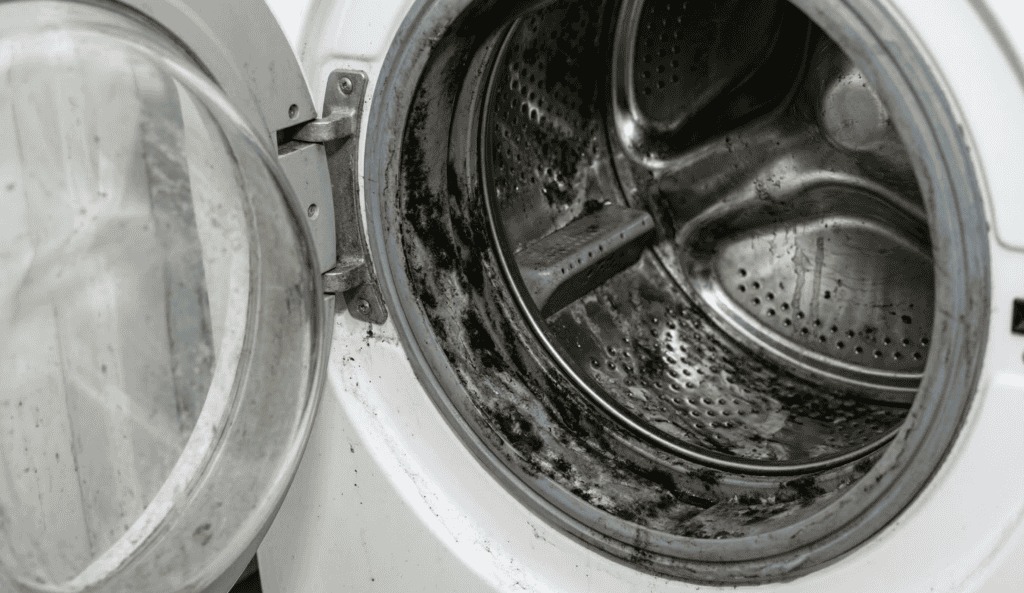
Hello everyone, this is my first time posting, because I am exhausted and a bit dead from fumes.
First time buying a home and it came with a washer and drier. Husband and I were very happy we didn’t have to spend the cash to get a set, but I’m contemplating doing so anyway. I have been scrubbing, gagging, scrubbing some more, with tears of frustration for over an hour. I thought I could willpower through this, but nothing I’m throwing at it is getting this clean. I’m stepping away to get some fresh air, but I am really considering burning this washer to the ground.
How do I clean this? CAN I clean this? Is it worth it?
If approved cleaning leaves a stubborn seal unchanged, stop scrubbing. Note the remaining symptoms and check the condition of the gasket.
Why Mold Returns Even When You Leave the Door Open
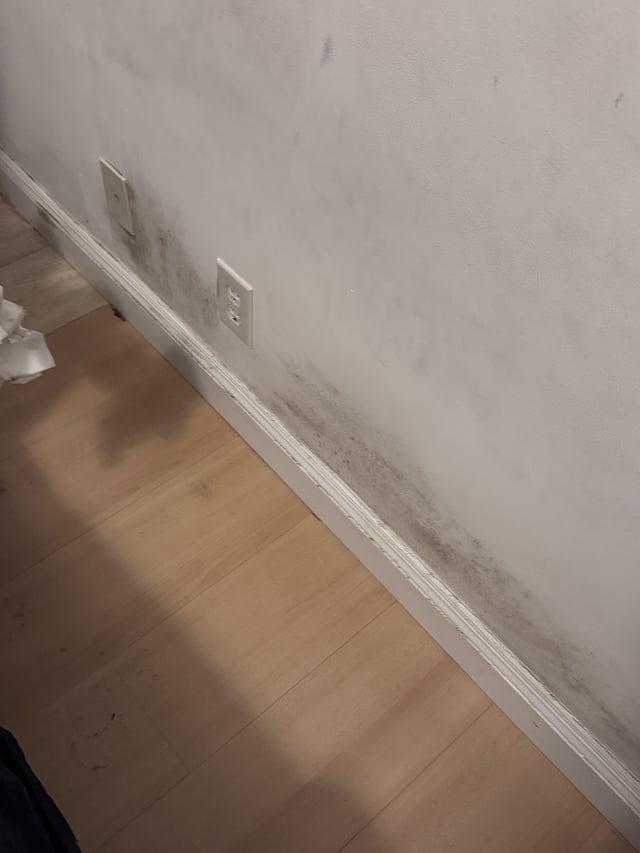
An open door dries exposed surfaces, but a gasket fold can still hold water. Dispenser residue, blocked drainage features, and installation-related drainage problems can also bring the buildup back.
We first discovered a mold issue like this when we bought this place about 2 yrs ago. After we moved in we found the door closed with visible moisture trapped inside (and the previous person had been moved out for a month!). Sure enough the rubber had mold. So we fully replaced the rubber thing after carefully cleaning the area and within about 6 months it had started to develop again!
We leave the door open 24/7 now, but after each wash, water tends to pool in this spot so I have always used a towel to wipe out the area. Recently I did a super hot cycle with an affresh and the mold came out in chunks as seen in the last pic!! I’m so tired of this and don’t know what to do.
Couple questions:
1. Are all front load washers this high maintenance??? I consider myself a pretty diligent cleaner, surely 99% of people aren’t buying new rubber gaskets every 6 months? Most people I know in my life probably don’t wipe down their washers as often as I do???
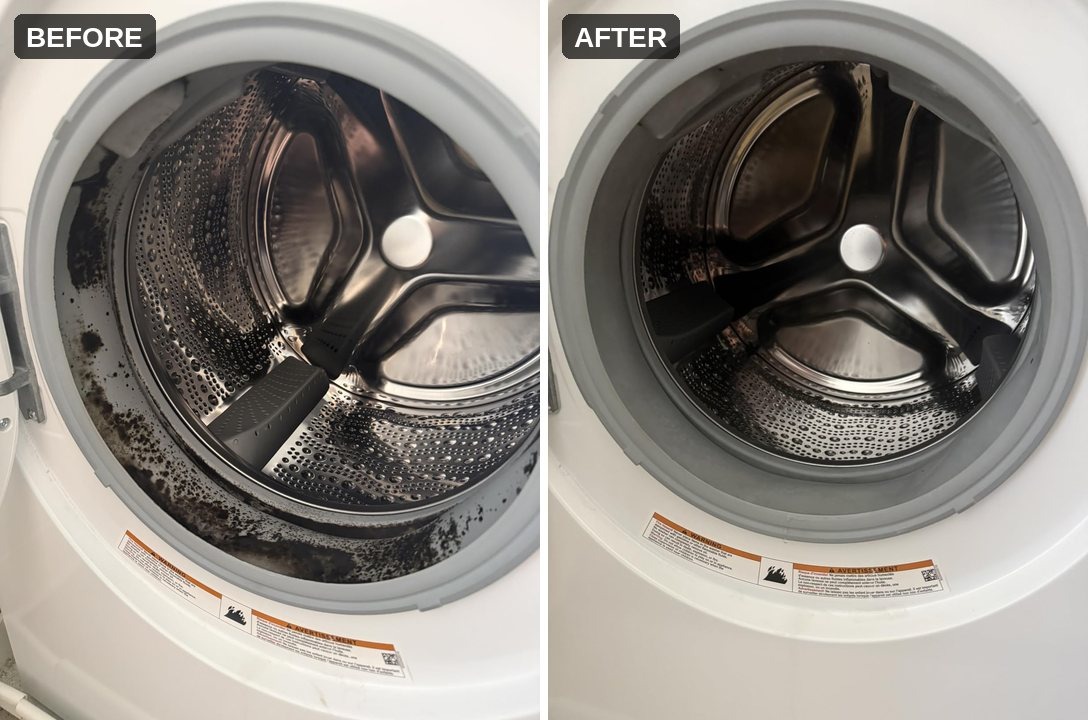
Some washer designs have gasket drainage holes or small attached passages. GE advises checking the holes on models that have them.
I had to deal with a moldy gasket once. It was used properly post wash (left door open) yet the mold would keep coming back. I decided to replace the gasket and discovered that there was a small plastic tube drain affixed to the gasket, which is supposed to remove excess water from the gasket. It was clogged.
Once I cleared the clog and replaced the gasket, no more mold.
For recurring buildup, watch whether the bottom fold stays wet after the washer drains. Inspect only the gasket drainage features your model lists as owner-accessible. Not every machine has the small tube that one homeowner found blocked.
Excess HE detergent or softener can build up, and LG notes that detergent may dissolve poorly in certain cold-water washes.
GE also names a drain hose pushed too far into a standpipe as a source of returned water and odor. Its front-load washer odor guidance describes the installation issue. Have an unusual hose arrangement checked against your model’s installation requirements.
When to Replace the Gasket or Request Washer Service
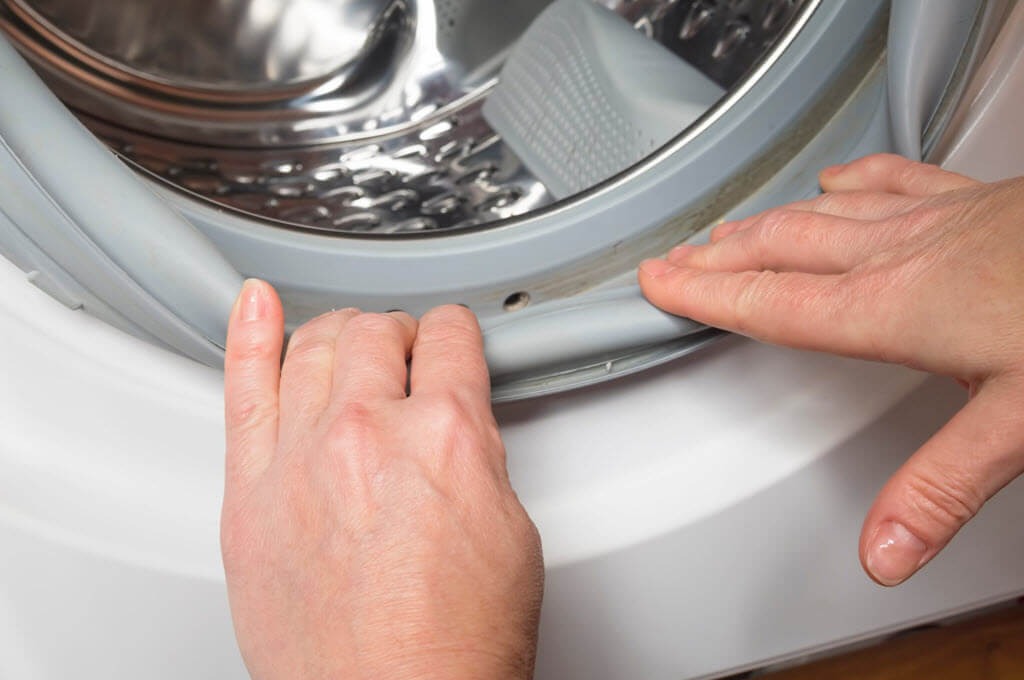
A torn or leaking gasket needs repair or replacement. If odor continues after proper cleaning, draining stays poor, or buildup keeps coming back, have the affected part assessed before you decide the whole washer has failed.
| Condition | Next decision | What matters |
|---|---|---|
| Torn or leaking gasket | Request a gasket repair or replacement assessment | Correct part, installation, and cause of leakage |
| Persistent odor or deposits after prescribed cleaning | Request appliance troubleshooting | Whether the cause is in reachable or deeper parts |
| Drainage remains abnormal | Assess filter, pump, and drain path | Whether a serviceable obstruction remains |
| Repeated gasket replacements | Investigate retained moisture before another repair | Recurring water, residue, or drain problems |
| Major repair proposed | Compare a real repair quote with replacement options | Age, condition, warranty, and part availability |

LG and Samsung direct owners to service when their cleaning procedures don’t fix the problem. A qualified technician should name the failed part and the proposed work.
What if the washer belongs to my landlord?
Document the model, visible deposits, odor, standing water, leaks, and your maintenance attempts, then report the issue through the rental or property-management channel. Who pays for repairs depends on your agreement and local rules.
How to Keep the Washer Dry Between Loads
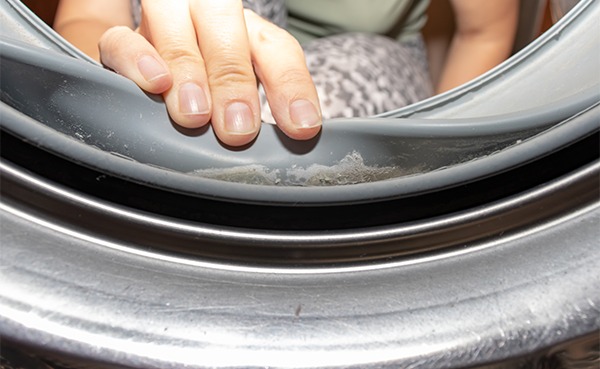
Remove wet laundry promptly. Wipe the gasket and door-contact area after the last load of the day, and let the dispenser dry where it’s safe. Use the right amount of HE detergent. Follow your model’s maintenance schedule: LG documents monthly component care in one guide, and some Samsung washers show a Self Clean reminder after 40 washes. If children can reach the washer, don’t leave the door open unattended. Dry it another safe way.