
How to Clean Mold From a Refrigerator and Know When Cleaning Isn’t Enough
If the mold sits on shelves, drawers or walls you can reach, and the door still seals and the fridge still cools, clean it with the method in your manual, rinse where the manual says to, and dry everything. If the gasket is damaged, the fridge stops cooling, or the mold or smell stays after cleaning, call manufacturer-authorized service and consider replacing the unit. Decide about the food separately.
Can You Clean a Moldy Refrigerator, or Is It Time to Replace It?
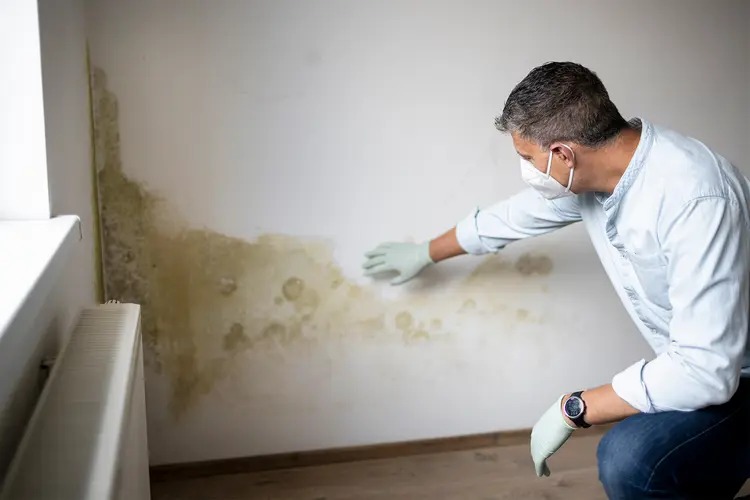
Mold on a removable drawer is a cleaning job. Mold you suspect inside the insulation, or a door that won’t close, means repair, professional service or a decision about whether the fridge is worth keeping.
| What you find | Next step |
|---|---|
| Mold or residue on a shelf, drawer or interior wall you can reach | Clean it with the method your manual allows |
| Buildup in the door gasket’s folds | Inspect the seal and clean the folds you can reach |
| A torn, loose or poorly fitting gasket | Follow the model’s repair guidance or contact appliance service |
| A refrigerator that no longer cools properly | Fix the malfunction before putting food back |
| Persistent odor, repeated growth or suspected contamination in inaccessible parts | Check the causes you can reach, then call a technician |
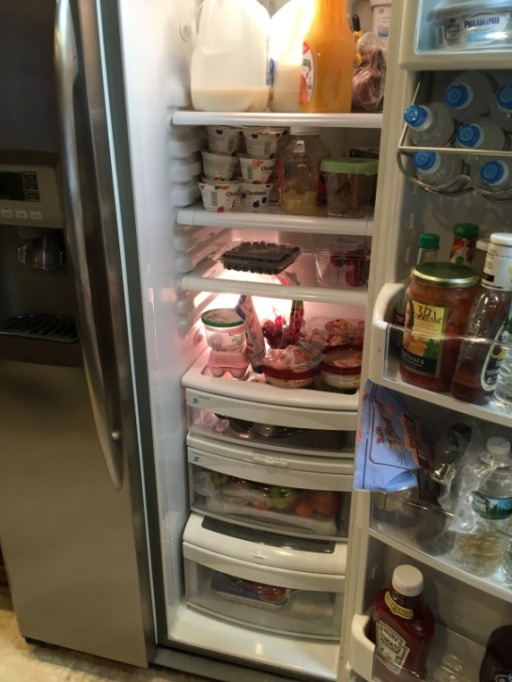
An old stain doesn’t always mean mold is growing. Base your decision on what the mold is on, where the moisture comes from and how far you can reach without taking the appliance apart. Related appliance cases are in kitchen and laundry room mold.
Not sure if this is the right sub Reddit to be putting us in, if it isn’t, please let me know where to.
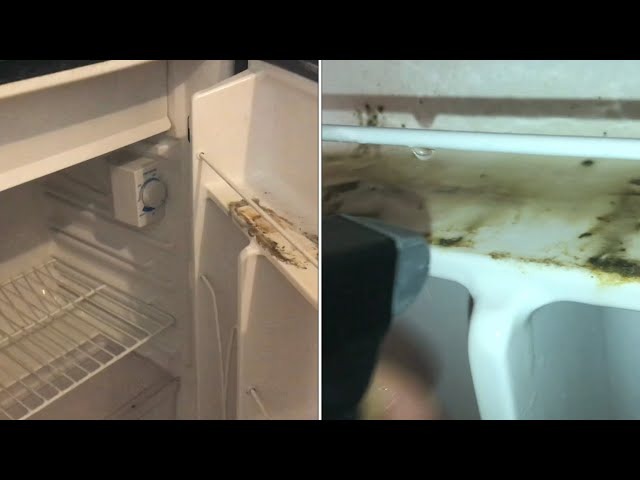
I went on on an extended vacation, and during it, the power went out. When I came back, the food in the fridge had gone moldy, and there was mold on the sides and on the shelves. Somehow (I’m guessing through cracks in the door) fruit flies got in and laid eggs under the rubber seal around the side of the door.
I threw away all the food and cleaned with soap and water all surfaces (doors, shelves, sides) and was able to clean under the rubber seals of the inside of the door, so all the fruit fly larvae is gone.
However, I am still too worried to put my food in the fridge because I don’t kinow if there is mold somewhere deeper than I can see and clean like in the vents or inside areas I can’t get to. In addition, I don’t know if soap and water was enough to inactivate the mold, but I’m not comfortable using bleach inside of a fridge.
How do I truly clean the surface and vents and other inside area so whatever is left is inactivated, so that it will be safe to put food back in. Or is it not safe and I should throw it away and get a new fridge?
Deal With the Food First After Spoilage or a Power Outage
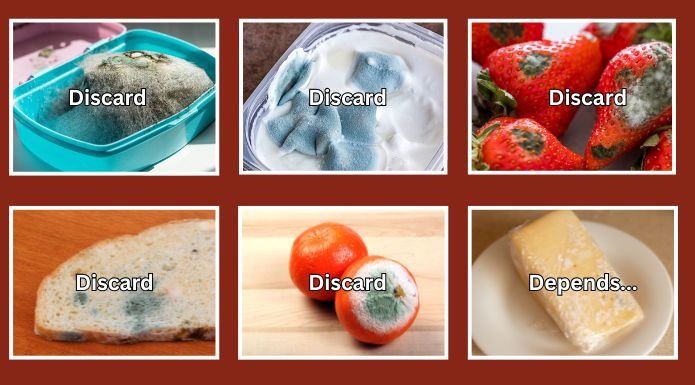
If the mold followed spoiled food or a power failure, decide what to discard before you clean. Cleaning the fridge cannot undo unsafe storage conditions.
Discard spoiled food and anything that food-safety guidance names as unsafe. Moldy high-moisture food goes in the trash; some hard cheeses and firm produce have their own salvage guidance. Those exceptions don’t apply to perishables exposed to unsafe temperatures in an outage. Bag discarded food to contain leaks and residue.
For a power failure, use the time and temperature information you have:
| Situation | What to do |
|---|---|
| Refrigerator without power, door kept closed | Food stays cold for up to 4 hours |
| Refrigerated perishables after 4 hours without power or another cold source | Discard affected perishables |
| Full freezer during a power failure, door kept closed | Holds its temperature for about 48 hours |
| Half-full freezer during a power failure, door kept closed | Holds its temperature for about 24 hours |
| Perishable food left at room temperature | No longer than 2 hours, or 1 hour above 90°F |
These times come from CDC emergency food-safety guidance and FDA advice.
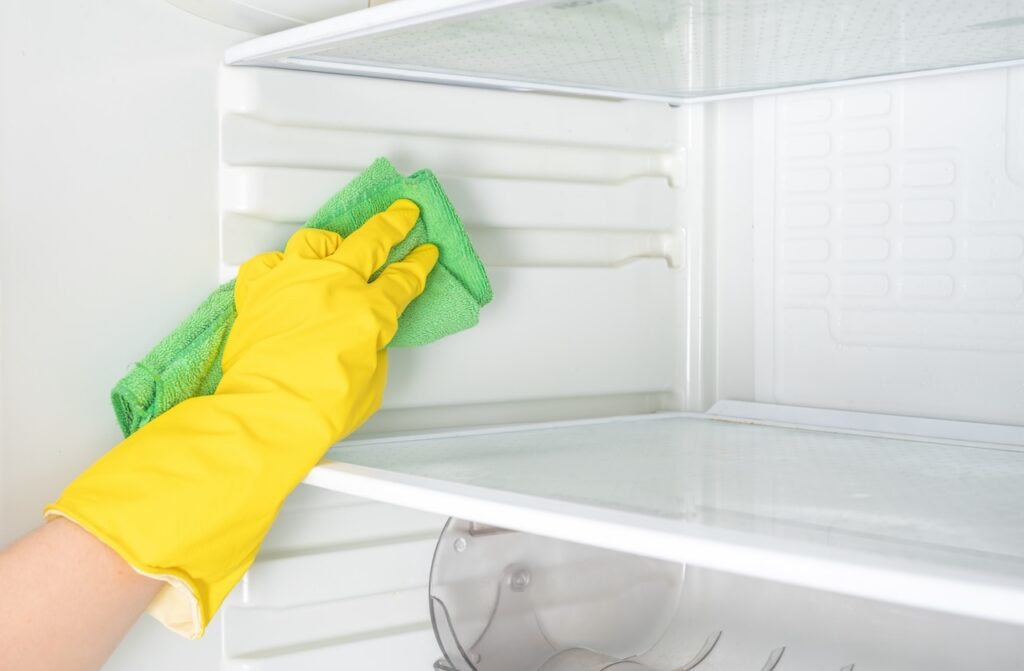
While you clean, keep unaffected perishables cold and within the time limits in the table.
What if nobody knows how long the power was off?
If the storage history can’t show that questionable perishables stayed safe, CDC advises discarding them. Never taste suspect food to decide.
Clean the Shelves, Drawers and Walls You Can Reach
Protect yourself first. CDC advises people with mold allergies, chronic respiratory conditions, underlying lung disease or a weakened immune system to avoid mold cleanup. If cleanup could put particles in the air, CDC recommends a NIOSH-approved N95 respirator, protective gloves and goggles that keep particles out of your eyes.
The steps below follow CDC’s wash-and-rinse sequence for recalled food.
- Prepare the refrigerator. Follow your manual for switching controls off or disconnecting power before deep cleaning. Keep water away from electrical controls, lights and closed mechanical compartments.
- Remove what comes out. Take out the shelves, drawers and bins that are meant to be removed. Don’t force the others.
- Wash removable pieces. Use a soft cloth or another cleaning tool and a cleaner from the section below. Get into the corners and drawer tracks where food residue collects.
- Clean the interior liner. Wipe the walls, the door interior and other surfaces you can reach, removing residue by hand. Rinse as directed, especially food-contact surfaces.
- Dry and reassemble. Dry the cavity and removable parts completely. Check for leftover residue before putting parts back. Wash your hands and clean any towels, tools or work surfaces that touched spoiled food or dirty fridge parts.
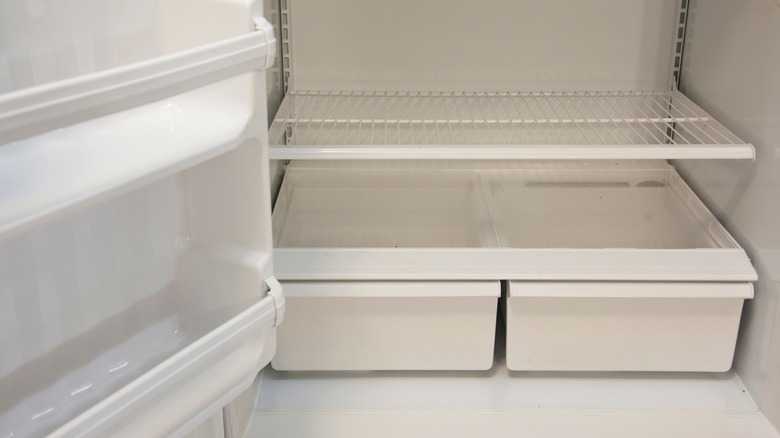
Let a cold glass shelf come up toward room temperature before you wash it with hot water, because a sudden temperature change can crack the glass.
Removable parts are not always dishwasher-safe: some GE and Frigidaire instructions restrict dishwasher use for plastic bins and components.
Check the Door Gasket for Residue and a Poor Seal
Food debris collects in the gasket folds, and condensation forms where warm air meets cold surfaces. Clean the folds with a method your model allows and dry them. Check the gasket for tears and looseness, and make sure no shelf or drawer sticks out and stops the door from closing.
LG’s gasket guidance lists debris, loose seals and misplaced shelves or drawers as things that keep the door from closing properly. A damaged seal needs the manufacturer’s repair guidance.
Bleach, Vinegar, Soap or Baking Soda? Let the Manual Decide
No single cleaner is approved for every refrigerator. Government food-cleaning instructions and manufacturer care guides serve different purposes, and gasket or liner materials can have their own restrictions. A general comparison is in choosing a mold cleaner, but the manual wins.
| Source and context | Published instruction |
|---|---|
| GE Appliances, interior and gasket care | 1 tablespoon baking soda per quart warm water; warns against bleach, ammonia, detergent and petroleum distillates |
| USDA FSIS, refrigerator mold guidance | 1 tablespoon baking soda per quart for the interior; 3 teaspoons bleach per quart for visible mold on rubber casings |
| CDC, cleaning after a food recall | Optional sanitizing with 1 tablespoon liquid bleach per gallon of water after washing |
| Whirlpool, refrigerator cleaning guide | Includes a vinegar option for mold or mildew |
| Frigidaire, refrigerator care guide | Describes warm soapy water and a baking-soda option of 2 tablespoons per quart |
| Sub-Zero, mold inside an appliance | Gives its own cleaning formula and troubleshooting procedure |
These concentrations come from different instructions and are not interchangeable. USDA’s bleach guidance does not override an appliance maker’s restriction on bleaching its gasket.
Even GE’s own instructions vary by context: its interior and gasket care guidance warns against detergent, while another GE page describes mild soap for gaskets. The owner’s manual for your model has the final word.
Never mix bleach with ammonia-containing products or other incompatible cleaners.
Why the Fridge Still Smells After the Visible Mold Is Gone
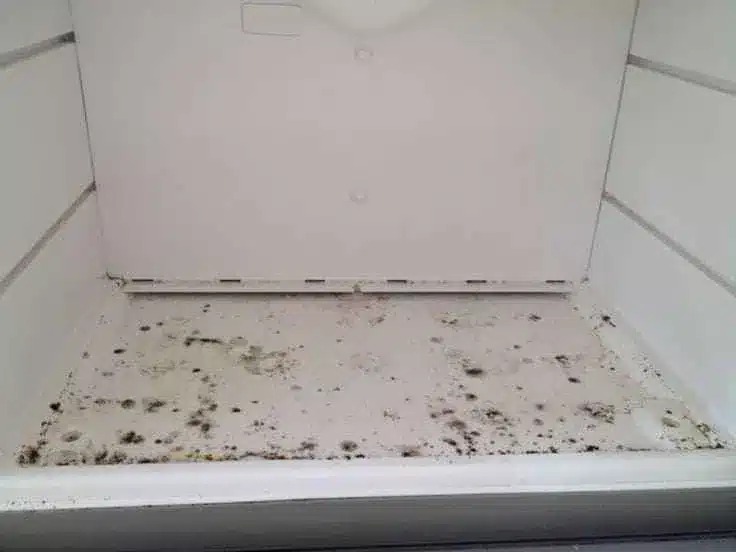
A fridge can look clean and still smell musty once the door is shut. Food residue and moisture left in fittings you can reach can keep the odor going after you’ve wiped the exposed shelves.
USDA acknowledges that odors after food spoilage or power loss can be hard to remove.
I moved into a new flat recently, kept furnishings.
The fridge and freezer were disgusting inside, especially the freezer. I took all the freezer drawers out and poured bleach into them to remove all the mold (there was a lot), and this worked fine. No problems, freezer seems clean.
The fridge was different. Comparatively it had way less mold, and I treated it the same. I took the drawers out and bleached wherever there was mold. A few hours later – clean.
However, ever since I placed the trays back into the fridge, the fridge permanently has a really strong mold smell. I’ve tried airing it out with the window open, but the smell always comes back once the fridge door is shut.
I read online that bleaching mold disperses all of the mold spores into the air? If this is the case, what can I do to get rid of them? It stinks terribly, but I can’t see any visible mold. I’m concerned it might be growing on the food though, and I’ve been mostly eating from my freezer since.
Any advice much appreciated.
The poster’s theory about bleach releasing spores is unverified.
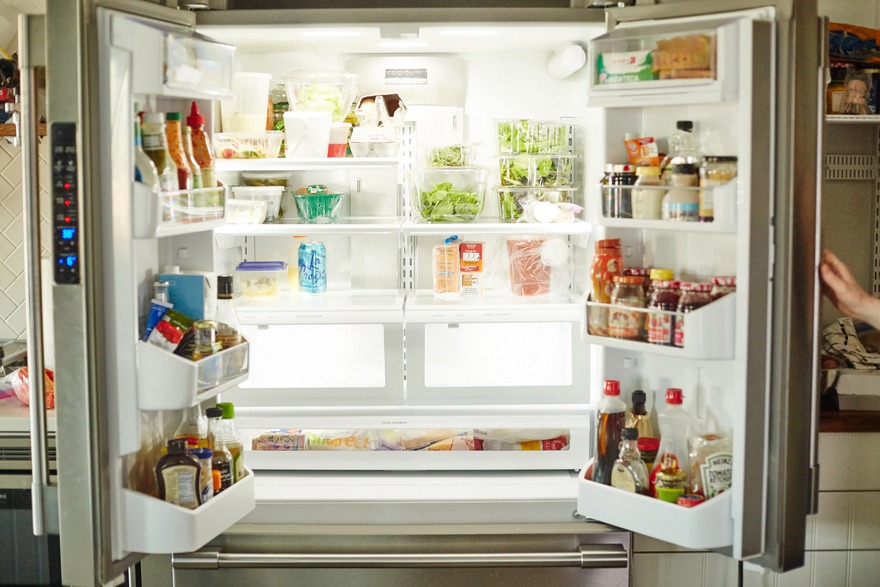
When an odor remains, check the places routine shelf cleaning misses:
- Drawer tracks and removable fittings: Look for residue beneath and alongside the parts.
- Gasket folds: Look for sticky deposits or damp material in the creases you can reach.
- Drains and drip trays: Open them only where your model’s routine-maintenance instructions allow it.
USDA describes repeating the cleaning procedure and airing out the empty appliance. For odors that remain, it also discusses absorbers such as activated charcoal or baking soda; use them only in ways your refrigerator allows. An absorber handles leftover smell, but visible regrowth or a continuing moisture problem means you need to find the source. An odor that survives all of this belongs in the service decision below.
Is the Refrigerator Ready to Use Again, or Does It Need Service?
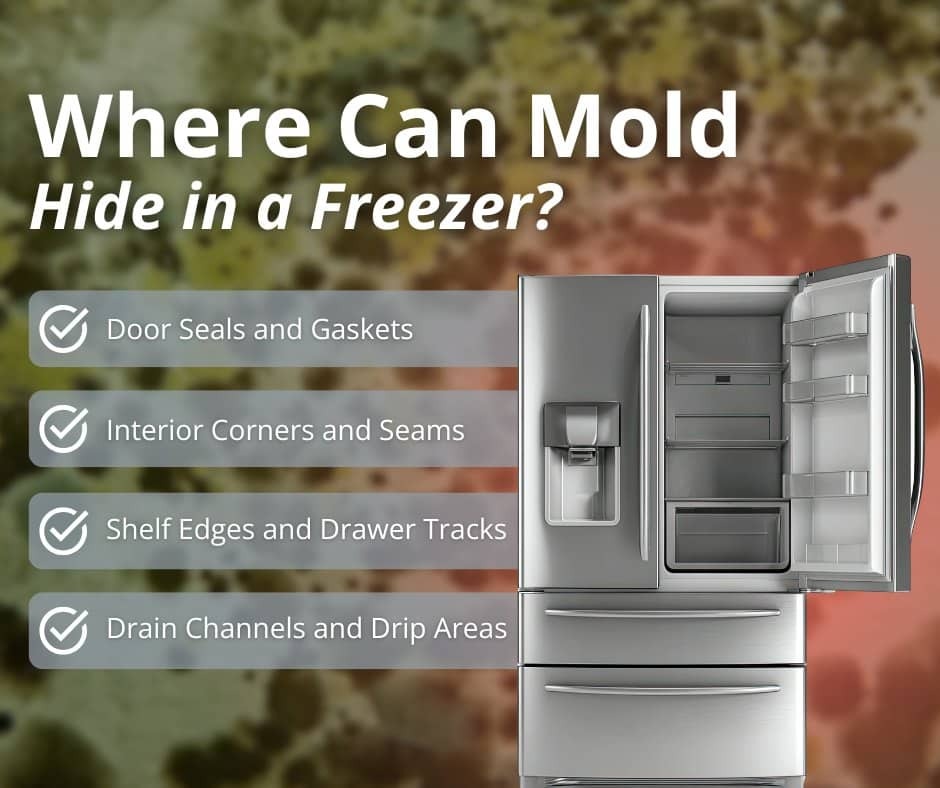
Before you put the cleaned fridge back in use, check three things: the surfaces you can reach are clean, the door closes reliably and the fridge cools normally.
| What to check | Acceptable condition |
|---|---|
| Shelves, drawers, liner and gasket | No remaining removable residue or unwanted moisture |
| Door and gasket | Door closes normally; no tear, looseness or obstruction |
| Refrigerator temperature | Reaches and holds 40°F (4°C) or below |
| Freezer, if applicable | Target temperature is 0°F (−18°C) |
An appliance thermometer tells you more than touch. Before you put temperature-sensitive food back, confirm the fridge has reached a safe storage temperature. The food must also have stayed safe while it was out.
The temperatures in the table come from FDA’s food-storage guidance.
Call a technician if the door can’t seal, the fridge can’t hold temperature, the odor or mold keeps coming back, or the mold appears to reach enclosed parts. Sub-Zero, for example, directs owners to Factory Certified Service when its troubleshooting does not fix the problem.
A technician can tell you whether a gasket or another damaged part can be repaired. Replace the refrigerator if the problem can’t be fixed or repair isn’t practical for your unit.
Keep Mold From Returning, Especially When the Fridge Is Off
Mold can grow even in a fridge that stays cold, and switching one off creates a separate problem when meltwater gets trapped inside.
I recently went away for ten days. Before I left, I unplugged my stupid noisy mini fridge because there were only unopened soda cans inside and I didn’t need to waste the power. I did this a few months ago without issue.
This time, when I get back and open the fridge, I’m assailed with a wave of musty air. I’d left a small cardboard red bull box inside, and the melted frost from the freezer shelf I never use had saturated it with moisture. Quarter sized patches of mould had bloomed over it and a few other spots in the fridge.
I disposed of the box like the obscene biohazard it was, then took out all the cans and rinsed them with hot water. I don’t currently have anything with bleach. I sprayed the mould patches with “clorox greenworks all purpose cleaner” (idk what ingredients that even has), wiped it away, then wiped it down again with water and dish soap. I propped it open to let it dry overnight.
It’s been a couple days. All the visible mould is gone but I still get the waft of musty air every time I open the fridge to remind me of my sin.
Wtf do I do. Dumbass fungus fridge
For absences of a month or less, GE advises keeping the refrigerator running. Its extended-storage instructions are for an emptied, switched-off refrigerator that will sit unused for longer.
For everyday use, cover food, remove spoiled items promptly and wipe up spills before residue builds up around the door. To prepare an appliance for an extended shutdown:
- Remove food, packaging and anything that holds moisture.
- Follow the maker’s instructions for shutdown, ice-maker settings and water supply where applicable.
- Remove residue and trapped moisture before storage.
- Leave the doors open, as GE advises for extended unplugged storage. Secure an unused refrigerator against child or pet entrapment.