
How to Remove Mold From Basement Concrete Walls and Floors
For a small patch on sound basement concrete that you can reach, fix the moisture problem, scrub the surface with detergent and water, and dry it thoroughly. If the growth extends behind finishes, keeps coming back, or comes with major water damage, surface cleaning won’t solve it. Fix the moisture and get a qualified assessment.
| What you see | What it probably is | What to do |
|---|---|---|
| Small patch on exposed, sound concrete | Surface growth you can reach | Check it fits the DIY limits, then clean |
| White, powdery or crystalline deposits | Probably efflorescence | Identify it before treating it |
| Peeling paint, crumbling mortar or covered walls | Damaged coating or hidden contamination | Find out what is underneath before disturbing it |
| Damp floor beneath mats, carpet or boxes | Trapped moisture, maybe contaminated belongings | Check the slab and the coverings separately |
| Extensive growth, sewage exposure or major water damage | Complex contamination or a structural moisture problem | Get a qualified assessment |
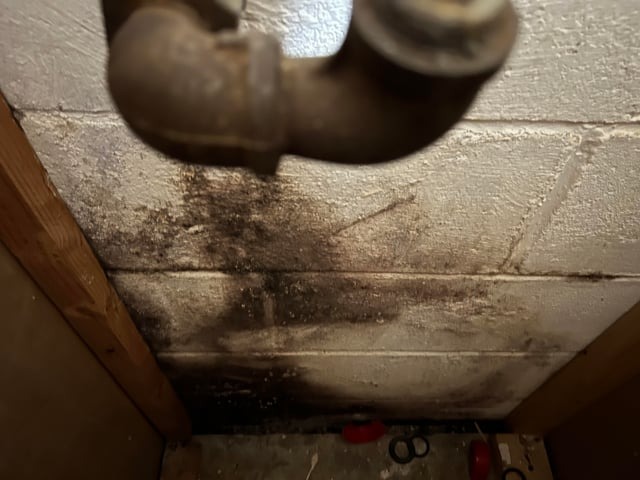
A dark patch on an exposed cinder block wall is often a simple cleaning job. The same patch next to crumbling mortar or behind a finished wall needs a closer look.
Is it mold, efflorescence, or just a stain on concrete?
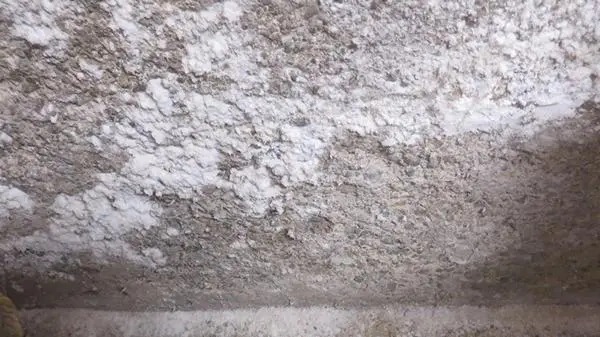
White powder on a basement wall is often efflorescence, a mineral deposit left when moisture moves through masonry and evaporates. Mold is biological growth, usually fed by dirt, dust, paint residue or other organic material on the surface. Both can appear on the same damp wall.
| What you see | What it points to | Next step |
|---|---|---|
| White, chalky or crystalline residue | Efflorescence | Look for moisture moving through the masonry |
| Fuzzy or irregular dark, green or gray patches | Probably mold | Check the surface and decide how much to clean |
| Discoloration beneath flaking paint | Coating deterioration, mineral deposits or hidden growth | Look at the finish and the material underneath |
| Dark marks after previous cleaning | Leftover staining or new growth | Check for new growth, dampness and other signs |
| Crumbling mortar with staining | Deteriorating masonry, probably with a moisture problem | Get a masonry or foundation assessment |
Color and texture only hint at what you’re looking at. They don’t identify the mold species or give a diagnosis. A white deposit can be mineral material even with fungal growth nearby.
Concrete Network describes efflorescence as a salt deposit that can look like white mold on concrete. The EPA says soluble white material in damp crawlspace soil can be alkaline salts.
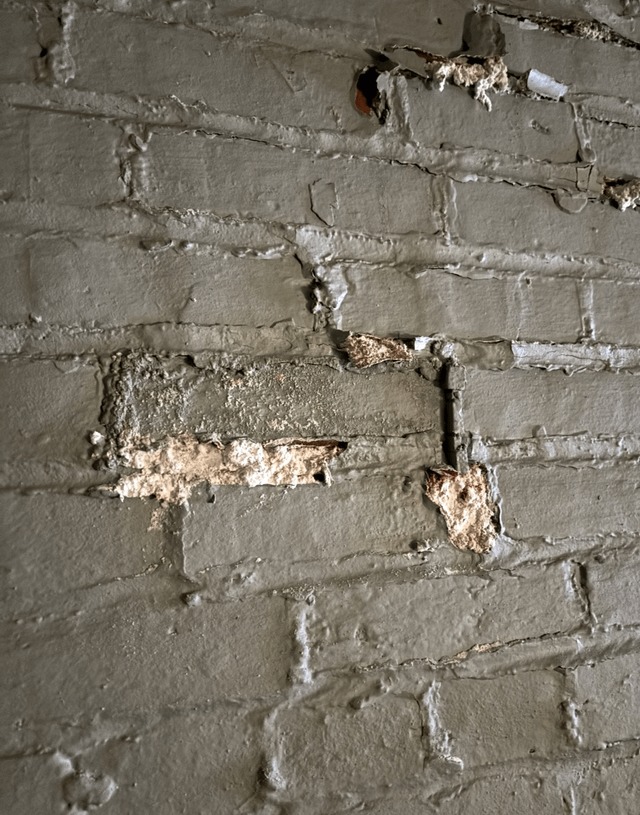
Before you treat anything, write down what the mark looks like and where it is: on the block face, in a joint, under paint or beside the floor. Then sort it as likely mineral, suspected growth or unsure. If you’re unsure, get it inspected before using chemicals or coatings.
Is this a safe DIY cleanup or a professional job?

You can usually handle a small patch on sound, reachable concrete yourself. The EPA’s rough guideline is about 10 square feet, roughly 3 by 3 feet. To measure, multiply length by width in feet: a patch 2 feet by 3 feet covers about 6 square feet.
A patch is a DIY candidate when the concrete is sound, you know where the water comes from, and you can reach the growth without demolition. Contaminated water, hidden growth or major water damage rule out DIY at any size. Call a professional when you have any of these:
- Contaminated water: Sewage backups or water that may carry hazardous contaminants need a different cleanup approach. Don’t dry them with fans as if the water were clean.
- Hidden or extensive growth: Growth behind finished walls, inside HVAC components or across larger areas can require containment and specialized removal.
- Significant water damage: Wet insulation, floor assemblies and damaged building materials make the problem bigger than cleaning concrete.
- Unsafe access or deterioration: Crumbling walls, damaged coatings and unreachable areas can need other trades before remediation.
For a limited cleanup, CDC guidance calls for protection that includes at least a properly fitting NIOSH-approved N95 respirator, gloves and enclosed goggles. People with asthma, COPD, allergies, immunosuppression or underlying lung disease should not do mold cleanup, according to the CDC.
Why does mold appear on concrete basement walls?
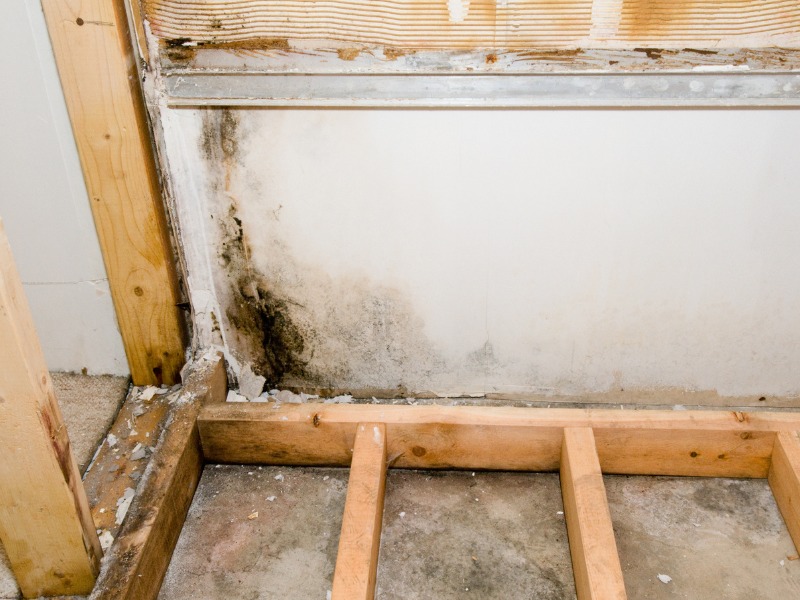
Concrete is mineral-based, but basement walls collect dust, dirt and paint residue. With cardboard or wood stored nearby, those materials can feed mold when moisture is present.
Water gets in through foundation cracks, mortar joints, plumbing leaks or drainage failures. Condensation forms when humid air meets cold masonry. High indoor humidity keeps surfaces and stored materials damp long enough for growth.
Match the fix to the source. A dehumidifier lowers moisture in the air. A leaking pipe needs repair. Water coming through the foundation may need drainage or masonry work.
The EPA recommends indoor relative humidity of 30% to 50%, with below 60% as a broader goal where feasible. Controlling room humidity doesn’t help if moisture stays trapped behind a coating or beneath a floor covering.
Look for patterns: dampness after rain, where downspouts discharge, plumbing leaks, condensation on cold surfaces and moisture around the slab-wall joint. A humidity monitor helps you track room conditions over time.
Any recommendations on a dehumidifier for a basement? Single family home, built in 1895, approx 2300 sq ft (3 storeys).
We got a ton of mold in the basement in the two years we’ve been here. Not on the walls or around the utility sink or sump pump pit but like damp banker’s boxes stacked on the cement floor, mold on chairs and other objects in the storage area (again not near walls or sinks). Mold inside a fridge the previous owners left behind (with the doors open).
I’ve never noticed condensation, but I’ve never looked for it though. Definite no breaches of piping, spills, or pooling of water. Unfinished basement, all piping is exposed.
I figure I try this and see if that helps anything. I was quoted roughly $3k to get the ducts insulated.
Check cardboard and other stored materials during a moisture investigation, even when the concrete looks clean.
How to clean a small mold patch from bare concrete or cinder block
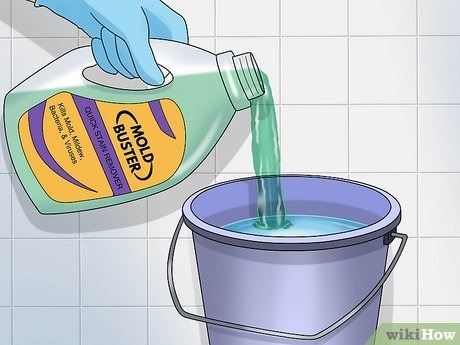
For limited growth on exposed, sound concrete, the EPA’s mold and moisture guide recommends scrubbing mold off hard surfaces with detergent and water, then drying them thoroughly. Do this once the moisture source is fixed or a fix is underway.
Cleaning steps
- Prepare the area. Move uncontaminated belongings away from the wall. Don’t spread residue into occupied rooms. Never dry sweep or dry-brush suspected mold; keep everything damp.
- Put on your protection. Wear the N95, gloves and goggles, and use tools made for exposed masonry, such as a cloth or nonmetal brush.
- Scrub with detergent and water. Use a modest amount of solution to lift visible growth and built-up residue. Follow the label directions for your detergent.
- Collect residue and excess water. Wipe up loosened material without leaving standing water. The EPA describes water-extraction vacuums for pulling water from wet concrete and cinder block. For final cleanup, once contaminated materials are removed and the area is dry, it recommends HEPA vacuuming where appropriate.
- Dry thoroughly. When the water is sanitary, ventilation and dehumidification help drying. Don’t push air through contaminated materials or into the building’s air-handling system.
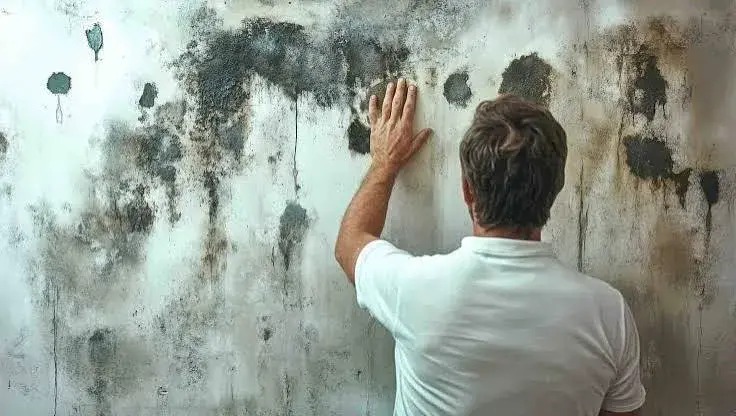
Use as little water as you can. Don’t hose down the basement or pressure-wash an interior wall. Driveway-cleaning methods put a lot of unwanted water indoors.
Bleach, vinegar, commercial mold sprays, or detergent: what belongs on concrete?
Cleaning removes contaminated material from the surface. Biocides act on organisms, and stain removers change appearance. Each does a different job.
For an ordinary small patch on accessible concrete, start with detergent and water, the method the EPA supports.
| Method | What it does | Limit |
|---|---|---|
| Detergent and water | Physically cleans reachable hard surfaces | Remove the residue and dry thoroughly |
| Household bleach | Conditional option described by CDC | Follow CDC’s conditions and ventilate |
| Vinegar or peroxide | Commonly discussed alternatives | Check they suit the concrete and existing finishes first |
| Proprietary mold cleaners | Product-specific cleaning or treatment | Surface compatibility and directions depend on the product |
| Acidic mineral-deposit cleaners | Made for some mineral stains | Solves a different problem than mold; check masonry compatibility |
The EPA discourages routine bleach use for mold cleanup. Killing mold doesn’t remove the contaminated material, and dead mold residue still matters for exposure.
The CDC’s cleanup instructions permit bleach or dish detergent in household situations. If you use bleach, mix no more than 1 cup in 1 gallon of water and ventilate well.
Never mix bleach with ammonia, vinegar, acids or other household cleaners. Dangerous chemical reactions can result.
Painted concrete, damaged mortar, and hidden material change the job
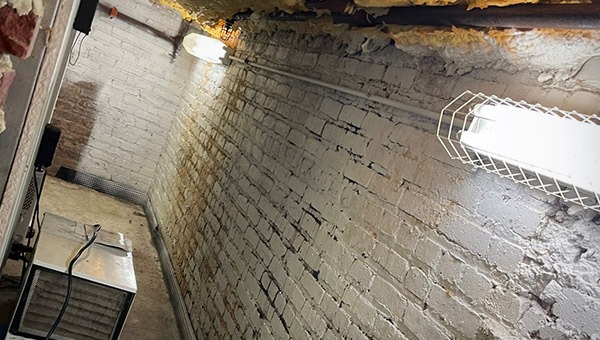
Painted concrete needs a look at both the paint and the masonry under it. Growth can sit on the paint, under a failing coating or in materials installed against the wall.
| Material | First step | When routine cleaning stops working |
|---|---|---|
| Sound bare poured concrete | Limited hard-surface cleaning | Extensive growth or ongoing damage |
| Sound exposed cinder block | Limited cleaning, paying attention to texture and joints | Deep deterioration or unreachable areas |
| Intact painted concrete | Check for surface growth and whether your cleaner suits the coating | Suspected growth under the paint |
| Peeling coating or crumbling mortar | Check the finish and the masonry condition | Removal means hazardous disturbance or structural repair |
| Drywall, insulation or framing beside concrete | Check it separately | Hidden or water-damaged porous material |
| Concrete hit by contaminated water | Specialized contamination assessment | DIY guidance doesn’t apply |
Coatings can peel when moisture moves through the wall. Under a failing finish you might find mineral deposits, staining or deteriorating material. An intact wall face tells you little about the wallboard or insulation behind it. How hidden layers change the decision is explained for tile, carpet and walls.
In a house built before 1978, an old painted basement wall raises an EPA lead-safe renovation concern. Deal with that before you scrape the coating.
Cutting, grinding, drilling, sanding or blasting concrete, brick and mortar can release respirable crystalline silica. Don’t use a grinding wheel or aggressive power brush for basement mold cleaning.
Crumbling joints, spalling or visibly moving cracks call for a masonry or foundation evaluation. Contaminated drywall and insulation need their own decision on whether to save them.
Mold on a concrete basement floor: mats, carpet, and laminate
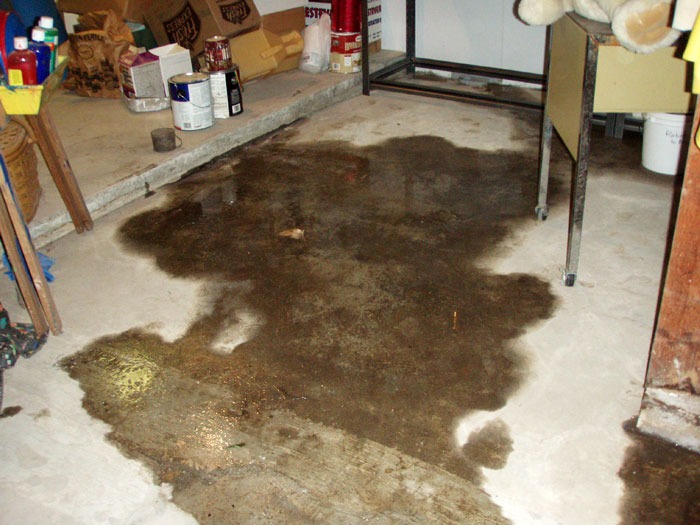
Rubber mats, carpet, padding and stored belongings can hide moisture on a concrete floor for months. Treat the floor and whatever covers it as separate problems.
Hello, I live in the damp NE in a 100 year old house. I recently had some rubber mats for a home gym on the concrete floor, where after several months I found moisture accumulation and some mold growth on the floor/mats. Also, tons of efflorescence. I cleaned the area with a bleach solution, laundry detergent solution, and plan to finish with another bleach spray. I really want to get my equipment back up and running, and don’t want to deal with mold anymore (it was a pain to do). I purchased some 0.75″ dricore panels for the area to get the stuff off the concrete, but want to do something to the concrete before putting them down. I have read numerous different opinions on this (drylok vs. epoxy vs. ghostshield vs. other), and curious to see if ghost shield vaportek 440 is worth the money? anyone have any experience? I would not be doing my whole basement, probably just a 10×10′ area. The concrete does have some hairline cracks that I suspect the hydrostatic pressure is causing some water leakage.
Before you put coverings back, make sure the slab is dry and the new assembly won’t trap moisture.
After flooding, the EPA describes a simple slab check before replacing flooring: secure clear plastic sheeting around its edges on the concrete and wait about 16 hours. Moisture beneath the sheet means the slab is still too wet for replacement flooring in that post-flood setting.
If you find moisture under movable coverings, check the exposed slab and the underside of each material separately. Carpet backing, padding, cardboard and wood-based products hold moisture and may need a different salvage decision from the concrete.
Should you seal or paint the basement concrete after cleaning?
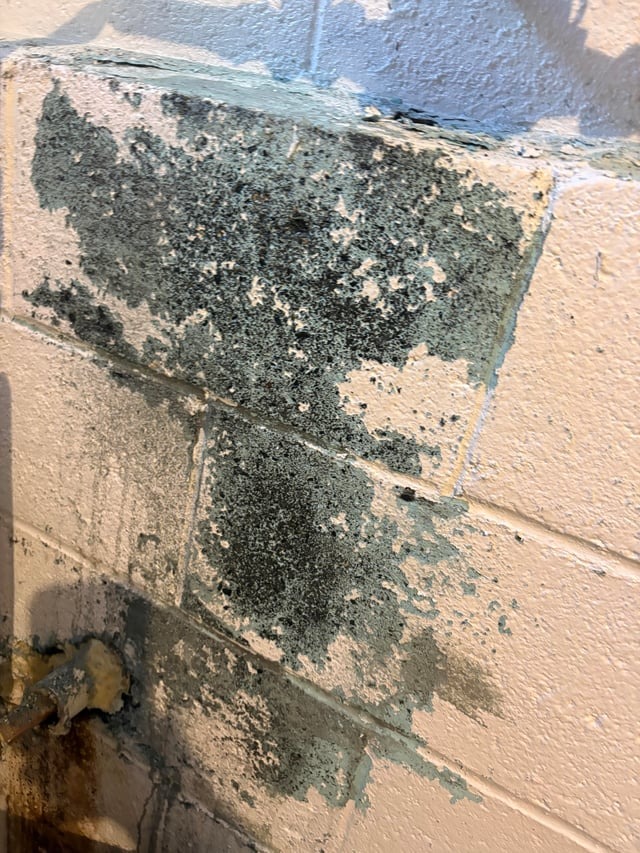
Don’t paint or caulk over active mold. The EPA says to clean and dry first. Masonry paint, sealer, epoxy and waterproofing repair do different jobs. If water keeps getting in or the old coating is deteriorating, deal with that before adding another finish.
For products such as Drylok, Kilz or epoxy, check the surface, existing coating, moisture conditions and manufacturer requirements before choosing.
When to call a mold professional or foundation specialist
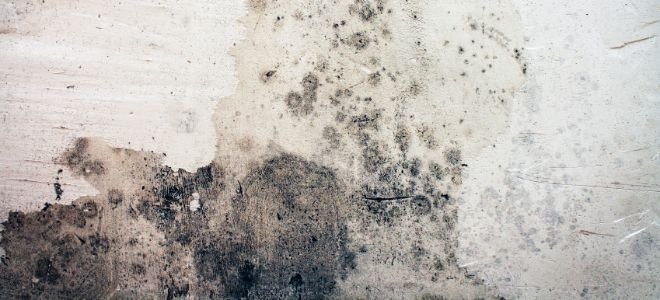
A mold remediation contractor and a foundation specialist answer different questions about the same basement. One assesses contamination and its removal. The other investigates water pathways, deteriorating mortar or foundation condition.
We are considering putting in an offer on this 120 year old home in Ohio, but I’m concerned about what we might be getting ourselves into. The amount of efluorescence and crumbling paint and mortar seems significant and throughout the entire basement. Didn’t see any actual water, but did spot some mold near the floor in a couple spots. Is it just decades of deferred maintenance, or signs of more significant issues that require exterior excavation and waterproofing? We’re willing to budget for it, but I’m nervous buying in a market that doesn’t provide much time to get quotes or expert opinions.
EDIT: We did put in an offer on this house and it was accepted, but we ended up walking away after the inspection report came back with a host of other issues throughout the house. There was a pattern of neglect and we finally realized we would be in over our heads. Feeling relieved! Thanks all for the feedback and insights.
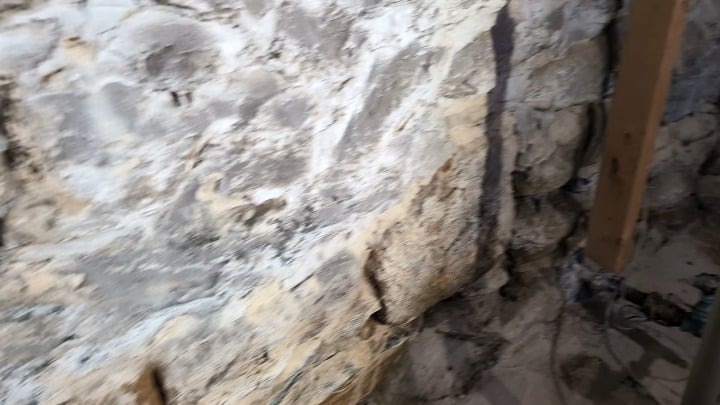
Before you call, write a short summary:
- Materials and location: Poured concrete, block, painted masonry, flooring or finished wall assemblies.
- Extent: Rough dimensions, and whether the affected material is visible or hidden.
- Water history: Flooding, active leaks, seepage or changes after rain.
- Damage you’ve seen: Peeling paint, deteriorated mortar, damp neighboring materials and persistent odor.
- Expertise you need: Mold removal, water-source investigation, masonry condition or a combination.
Ask what the proposed work includes for physical removal, containment, moisture correction and completion criteria. The EPA recommends considering relevant experience and references when choosing a remediator.
How to tell whether concrete mold cleanup worked and keep it from returning
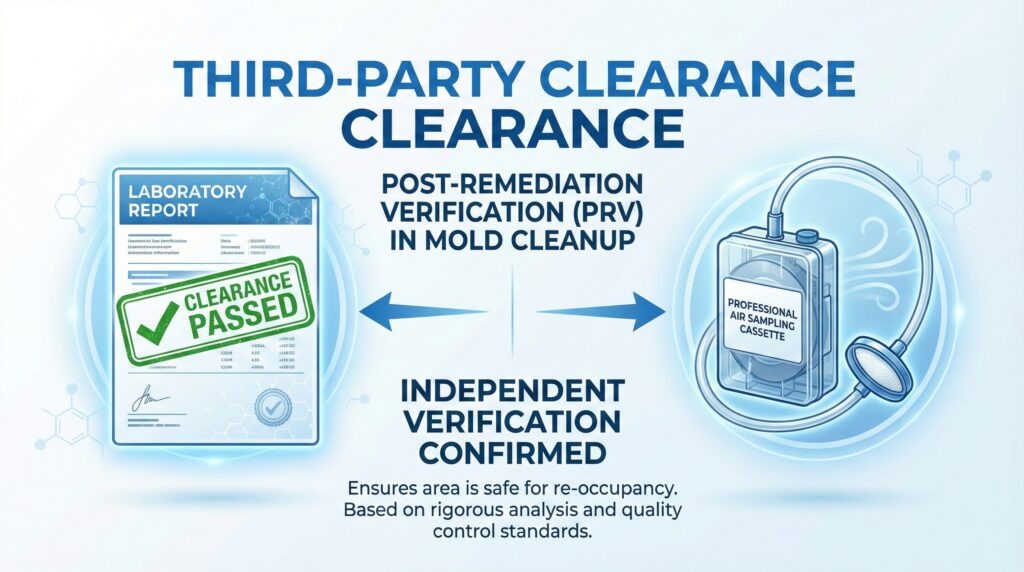
The EPA’s remediation evaluation guidance emphasizes correcting moisture, removing visible mold and mold-damaged material, and confirming that the moldy odor is gone.
Post-cleanup checklist
- Moisture source: Is the water problem fixed, with no new sign of the original leak or seepage?
- Concrete: Is the treated surface dry, with no visible new growth?
- Neighboring materials: Have you checked accessible adjacent materials for moisture or contamination?
- Odor and damage: A moldy odor or newly damaged material means you need to look further.
- Follow-up: Inspect after the next rain or moisture event and note any changes.
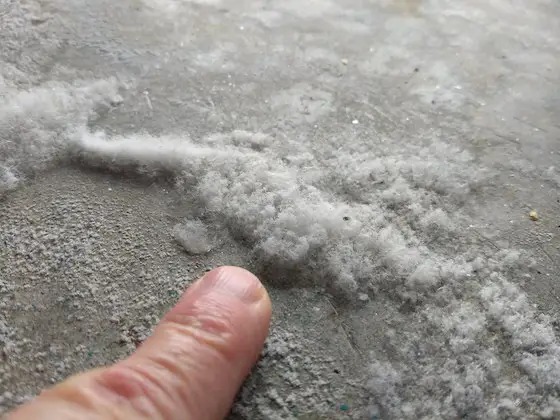
Some cosmetic staining can remain after proper cleaning. Judge leftover discoloration alongside moisture, odor and signs of new growth.
The EPA says routine air sampling is unnecessary for judging an ordinary visible-mold cleanup. A negative air sample doesn’t replace checking the materials and moisture conditions. Complex professional remediation may need a separately agreed verification scope.