Mold Cleanup PPE: Choosing Respirators, Goggles, and Gloves
For a small mold cleanup you can handle yourself, wear a NIOSH-approved N95 respirator (or a higher-level particulate respirator), dust-excluding goggles, gloves and clothing that covers your skin. The respirator has to seal with the goggles on. If the mold is hidden or extensive, the work involves dusty demolition, contaminated floodwater is present, or the person cleaning has a higher health risk, stop and arrange qualified help. The comparison of DIY and professional mold removal covers the next step.
When is mold cleanup beyond a DIY PPE decision?
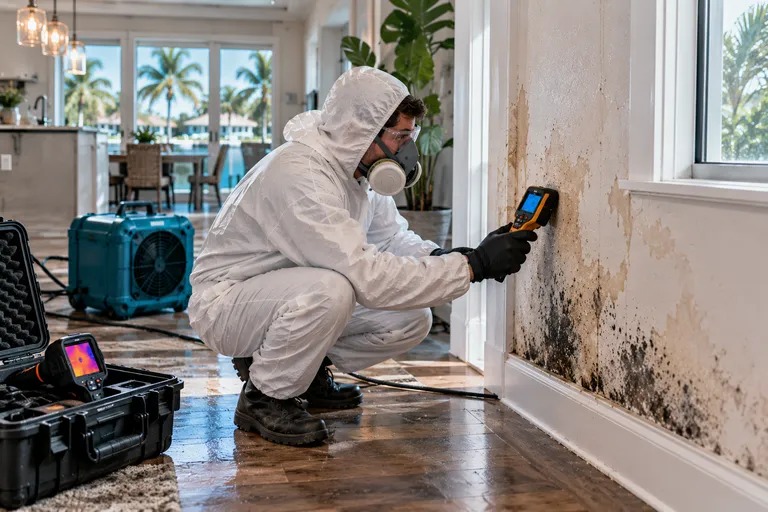
A small patch on an accessible surface is one kind of cleanup. Opening a damp wall, pulling out contaminated insulation, or disturbing materials after a flood is another. Choosing a respirator doesn’t tell you whether the work is appropriate for DIY. For the first kind, clean a small mold patch safely.
The EPA’s mold-remediation guidance sorts jobs by affected area and raises the protection as the area grows:
- Less than 10 square feet: its examples use minimum PPE.
- 10 to 100 square feet: its examples use limited protection.
- More than 100 square feet, or work that puts substantial dust in the air: full protective measures and containment can be required.
The sizes show how much protection the EPA expects at each level. Don’t read them as a green light for DIY. A small patch still needs more protection if you break wallboard, strip wallpaper, open a wall cavity or disturb heavy growth.
Before you clean, check four things:
- Extent and access. Can you see the whole affected surface and reach it without opening the structure? Suspected growth behind baseboards or inside walls makes the job bigger.
- Material and disturbance. Wiping an accessible hard surface exposes you to far less than tearing out water-damaged drywall. If the plan involves dusty removal, reassess before you start.
- Water source and other hazards. Fix a recurring leak first. Sewage-contaminated floodwater, unsafe electrical conditions or structural damage bring risks that mold PPE doesn’t cover.
- The person doing the work. CDC advises people with mold allergies, asthma, COPD, underlying lung disease or immune suppression not to take part in mold cleanup. Children should not take part in disaster cleanup.
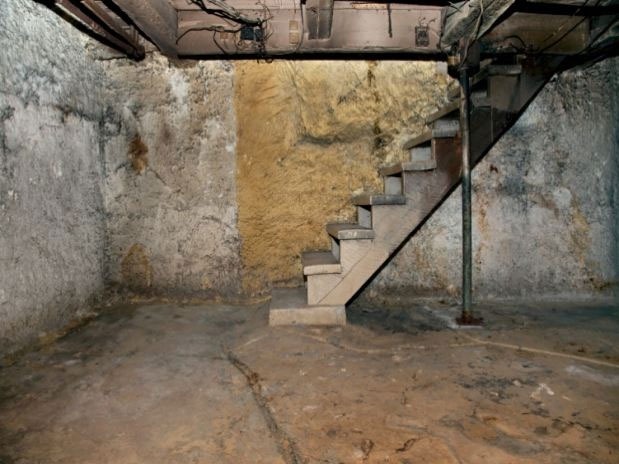
Say your basement baseboards are water-damaged after repeated rain. The visible stain might be all there is, or the moisture might run behind the trim and into the wall. Settle that before you buy a P100 respirator.
If you can’t size up the job without opening concealed materials, or it involves contamination and hazards beyond a straightforward cleanup, get a qualified assessment first.
What belongs in a basic mold-cleanup PPE kit?
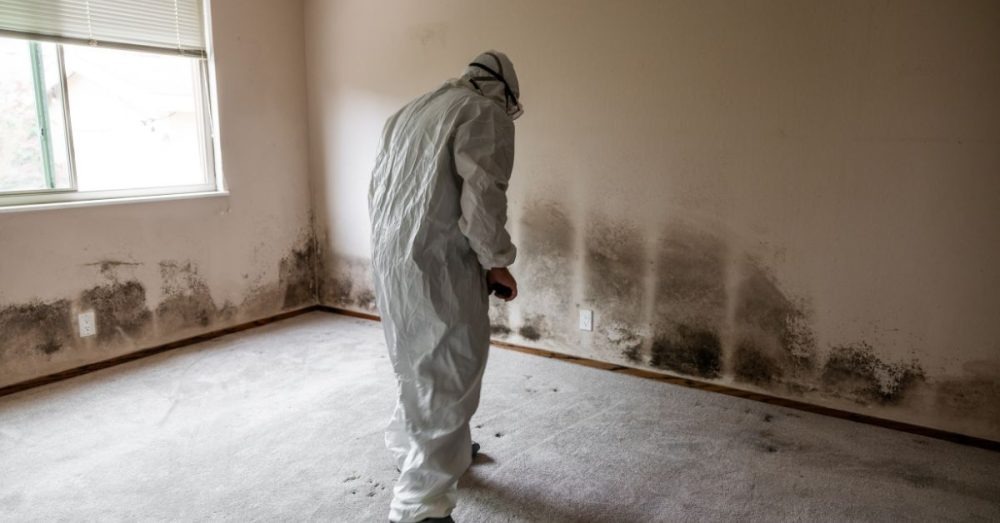
For a limited household cleanup that suits DIY, the CDC’s mold cleanup recommendations name three core items: a NIOSH-approved N95 or more protective respirator, goggles that keep out dust and small particles, and protective gloves.
Also cover your arms and legs, and wear footwear that suits the surface, especially when it’s wet.
| Cleanup situation | Protection to prepare | What changes the selection |
|---|---|---|
| Small, accessible surface cleaned with mild detergent | Approved N95 minimum, dust-excluding goggles, rubber gloves, covered clothing | Fit and the material you’re cleaning |
| Limited cleanup of a damp surface with a known, non-sewage water source, already judged suitable for DIY | Respirator, goggles, gloves, covered clothing, footwear for wet conditions | Waterproof boots can help; flooded materials, sewage or concealed damage mean reassessing |
| A stronger cleaning product | Particle protection plus eye protection and chemical-compatible skin protection | The product label, its chemical hazards and compatibility information |
| Dusty removal or disturbed wet porous materials | Reassess before relying on a consumer PPE kit | Specialist evaluation and extra protection for the specific job |
For cleaning with mild detergent, the EPA lists household rubber gloves. When you need protection from contaminated materials or cleaners, it calls for longer gloves reaching toward the middle of the forearm. For more irritating chemicals it lists natural rubber, neoprene, nitrile, polyurethane and PVC; the right material depends on the substance.
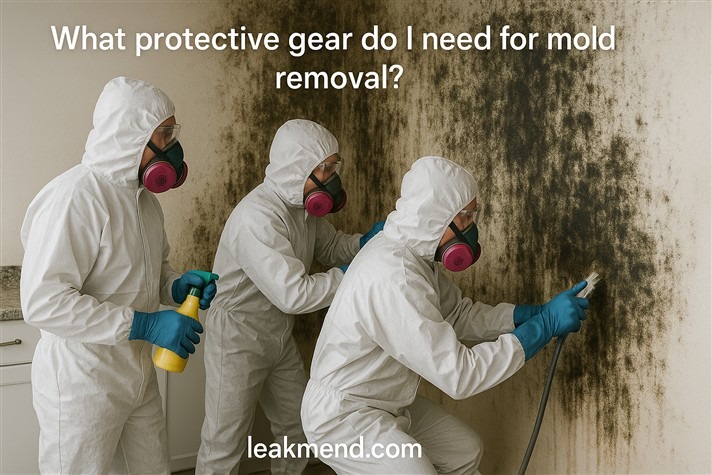
Lay everything out before you start and check each piece: facepiece and filters, goggles, gloves, clothing and footwear. Replace anything damaged or missing before you go in.
Should you use an N95, P100 half-mask, or full-face respirator?
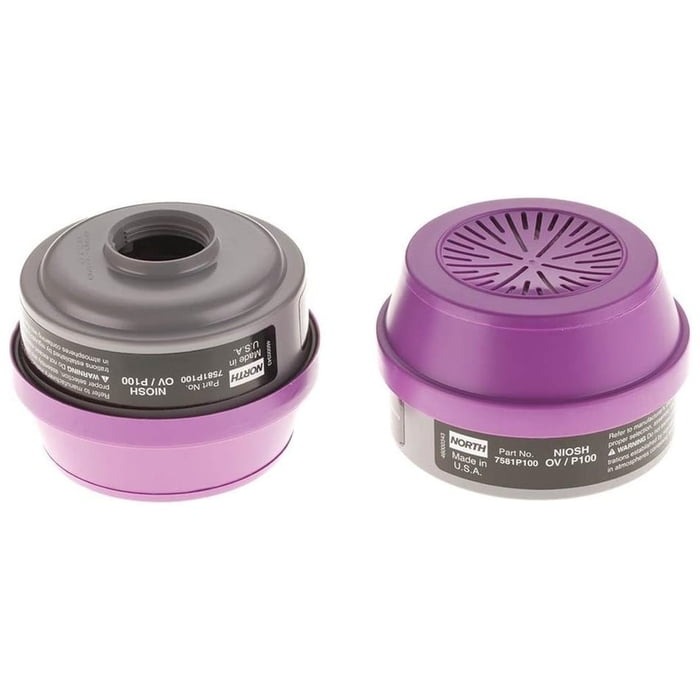
The CDC recommends a NIOSH-approved N95 as the minimum respiratory protection for eligible mold cleanup. Reusable half-face and full-face respirators offer other options, and which one fits depends on the task, the approved filters, the face seal and the exposure.
| Respirator | Best for | Watch out for |
|---|---|---|
| N95 filtering facepiece respirator | Basic particulate protection for limited cleanup | Needs a tight face seal and separate eye protection |
| Elastomeric half-face respirator with approved P100 filters | Particulate protection for the task, including some more demanding work | Needs separate goggles; filter and facepiece must be an approved combination |
| Full-face air-purifying respirator | Respiratory protection with eye and face coverage built in | Needs the right filters, a proper fit and trained use |
The N95 rating means the filter blocks at least 95% of specified test particles under NIOSH test conditions. Your actual protection is lower if air leaks around a poorly fitted facepiece, so the rating doesn’t mean a 95% cut in your total exposure.
P100 is a particulate-filter class. Reusable half-face respirators can take approved particulate elements, and full-face respirators build in eye protection.
The CDC’s disaster-cleanup guidance names two reasons to consider a reusable half-face or full-face respirator: removing moldy materials for more than four hours, and tearing out drywall.
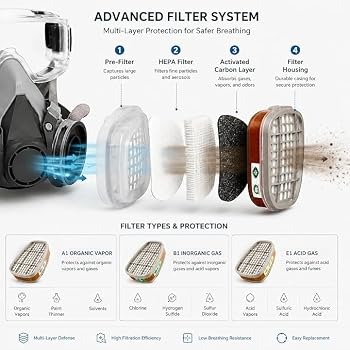
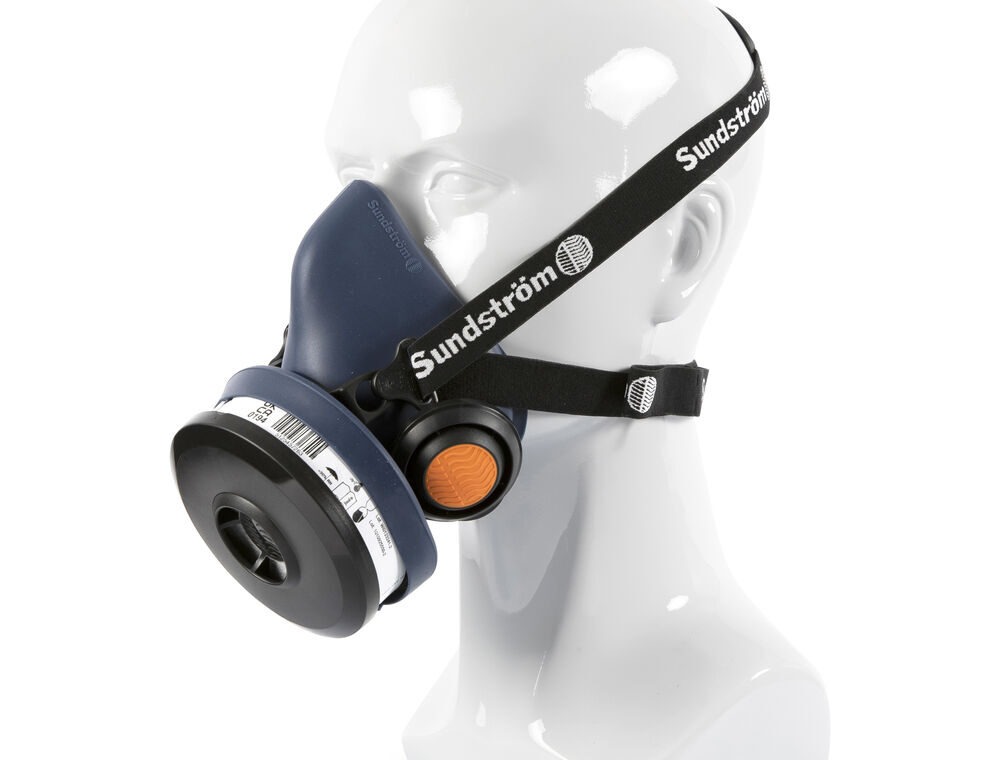
Hi, I have to Clean some mold in my bathroom and I have that mask you see in the picture. I bought it for spraypainting miniatures and I need to know if it is sutuable for mold
Do It have to throw it away after I am done or can I just replace the cotone filters and wash the rest of with water or something?
For reusable equipment, identify the exact facepiece and its manufacturer-approved particulate elements before you choose a setup. Evaluate the chemical hazards of any cleaner you use separately.
How do you verify NIOSH approval and a proper face seal?
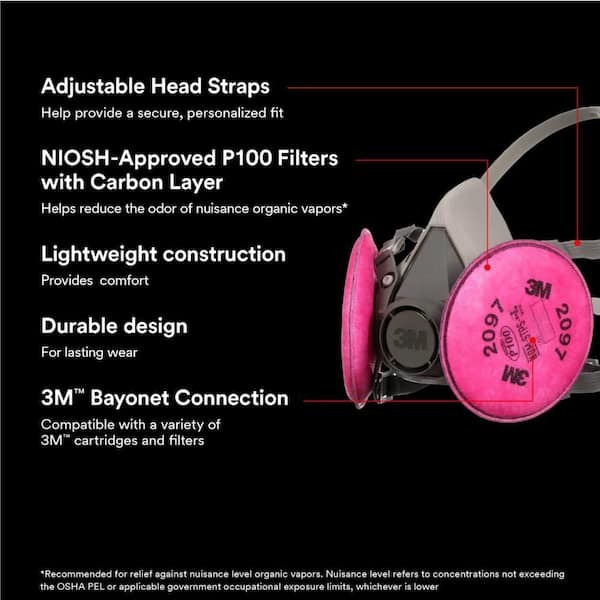
Check the manufacturer, model, filtering class and TC approval number (for example, TC-84A-XXXX) against the NIOSH approval information and Certified Equipment List.
Then put on the N95 as directed and do the NIOSH user seal check: cover as much of the facepiece as you can with your hands, breathe out gently and feel for air escaping around the edges.
If air leaks, adjust and repeat the check, or try a different suitable size or style. Facial hair, damaged straps and goggles pressing against the mask can break the seal.
Under OSHA’s respiratory protection rules, covered employees also need workplace fit testing, which is a separate procedure from a routine user seal check.
How should goggles, gloves, and clothing fit together?
Goggles have to seal around your eyes without breaking the respirator’s face seal. Ordinary prescription glasses, standard safety glasses and openly vented goggles don’t give the dust exclusion that EPA and CDC mold-cleanup guidance describes.
This gets awkward with a reusable half-face respirator. The mask rises across the nose and cheeks, exactly where some goggles also need to sit. Buying each item separately can leave you with a setup that is uncomfortable or hard to fit.
Hello!
I want to inspect my basement for mold. When it rains my basement leaks and my baseboards got damaged because it rained all of June. I was ready to get the 3M 6297 p100 respirator and then realized I need to protect my eyes too with non vented goggles. I need to be extra cautious because I am not sure what I will find. My health hasn’t been great and I am not trying to deal with anything else.
I am beyond frustrated as I think goggles wont work over this respirator since it goes to the bridge of the nose. I am not trying to spend over $100 for a complete respirator that I might never use again after this and it just seems excessive. I would appreciate some solution. Thank you!
A half-face mask and goggles need enough room around the nose bridge to keep both protections working.
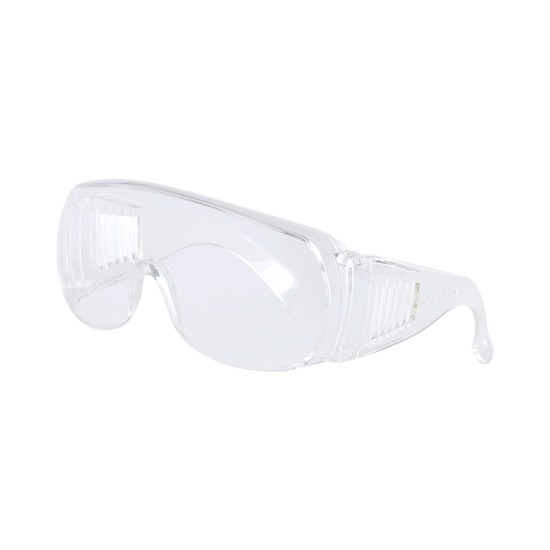
Try the full setup in a clean area. With the respirator in place, seat the goggles against your face and check whether they shift the mask, leave gaps, or blur your vision when you turn your head. If you can’t wear them together with a good fit and a clear view, change the setup before you work.
Gloves should be intact, cover the skin likely to touch wet contaminated material, and suit the cleaner you use. Long sleeves, long pants and proper footwear protect the rest of your skin. A disposable coverall belongs to a larger professional remediation setup.
What changes when mold cleaners produce chemical fumes?
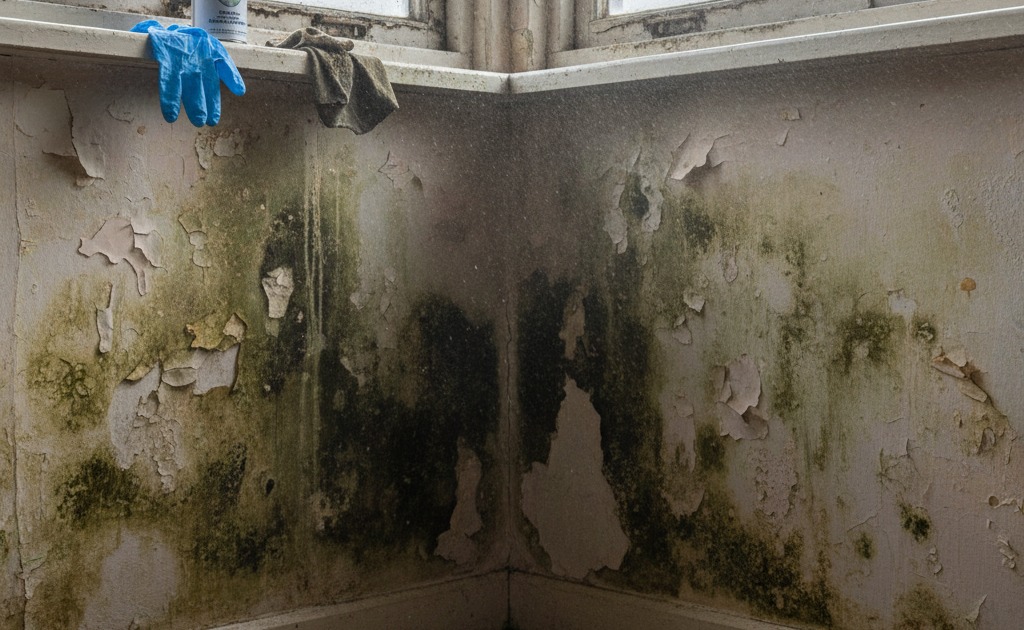
Mold spores and dust are particulates. Cleaning agents add chemical gases, vapors and splash hazards, which need a separate assessment. N95 and P100 filters don’t automatically protect against gases or vapors, so a particle filter is no substitute for a chemical cartridge.
EPA advises against routine biocide use in mold remediation. If you use a cleaning product, follow its label and ventilation directions; CDC recommends opening windows or doors to bring in fresh air. Avoid fans that could spread mold-contaminated dust into clean areas. Never mix bleach with ammonia or any other cleanser.
Im looking to use products like “Cillit Bang Black Mold Remover” for the bathroom which I think contains a % of basically bleach as well as “Airnet” and “Airpur” on the HVAC.
I asked AI and for 3M masks and it it said that a 7502 mask plus one of these filters:
3M 6059 ABEK1
3M 6099 ABEK2P3
3M 60926 ABEK1P3
Any of these would work. I assume 6099 would be the strongest filter.
But if it does not have “P3” on the name, I wouldn’t use it because you are not protecting against mold spores, so I will probably go with 6099. Also the world of 3M filters and masks is pretty dense with so many combinations. Sometimes filter parts are sold separately. Im not sure what im buying at this point. And im in EU and sometimes I get recommended products that are listed differently in the US.
Also AI makes a lot of mistakes so I wanted to ask if anyone knows.
EDIT: Ok so it appears 6099 is not compatible with 7502 masks, only with full face masks. And 60926 is an US only product. See what I mean? there’s too much info.
A cartridge name can encode several filter classifications, and the approved setup depends on both the hazard and the exact respirator. Regional product differences make it harder.
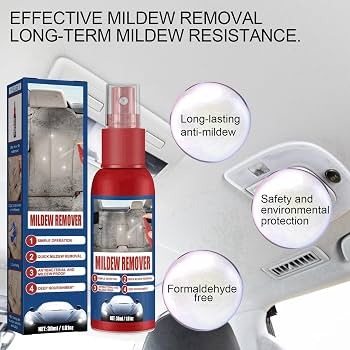
Read the product label and safety data sheet for your cleaner. Work out whether the hazards are particulate, gas, vapor, splash or a mix. The respirator and cartridge you pick must be supported by the manufacturer and approved for that hazard. A cartridge suffix, a commenter’s recommendation or the absence of a noticeable smell tells you nothing about your protection. If you can’t establish the chemical exposure and the protection it needs, don’t improvise a cartridge combination. Use a simpler cleaning method suited to the job, or get qualified guidance.
For a simpler method, start with the DIY mold-cleanup basics.
How do you leave the work area and care for PPE?
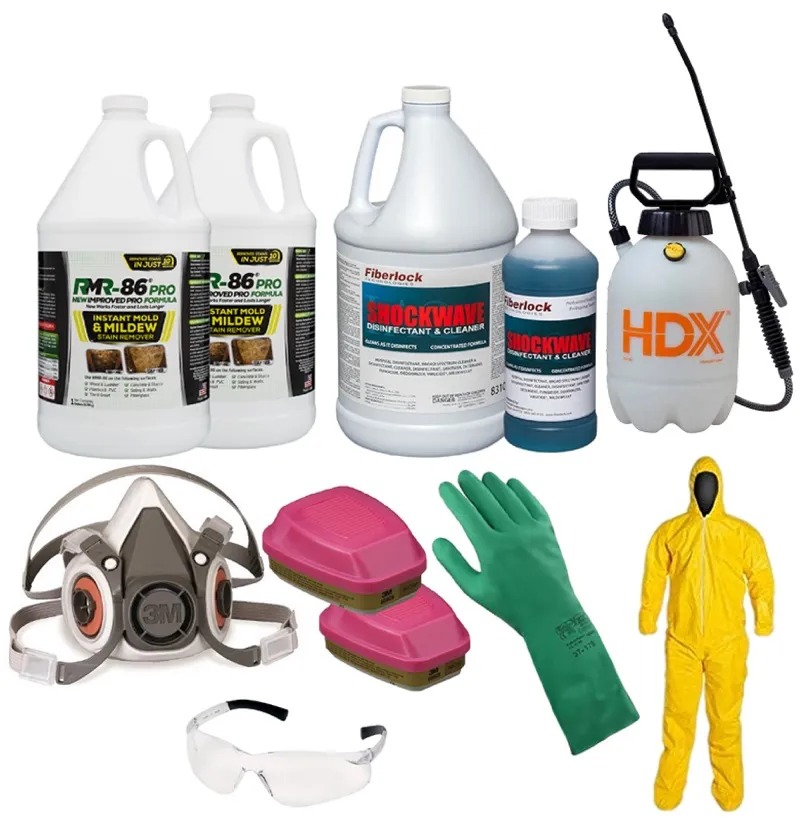
- Before entering: Set up a clean space for belongings, food and hygiene, away from the contaminated work area.
- While leaving: Keep your respirator on until you’re out of the exposure area. Don’t handle contaminated PPE surfaces more than needed, and don’t move debris onto clean objects.
- After cleanup: Once outside the exposure area, take off a disposable N95 by its straps without touching the contaminated front. Wash your hands thoroughly and change out of the clothes you wore. Follow the manufacturer’s removal instructions for reusable equipment.
- Before storage: Dispose of disposable protection as directed. Clean, dry and store reusable equipment as its manufacturer says.
CDC’s disaster-cleanup guidance says to discard an N95 when it’s damaged, visibly soiled or noticeably harder to breathe through, and it gives disposal guidance for N95s used in that setting. A reusable facepiece has its own care instructions; no single chemical washing recipe fits every respirator.
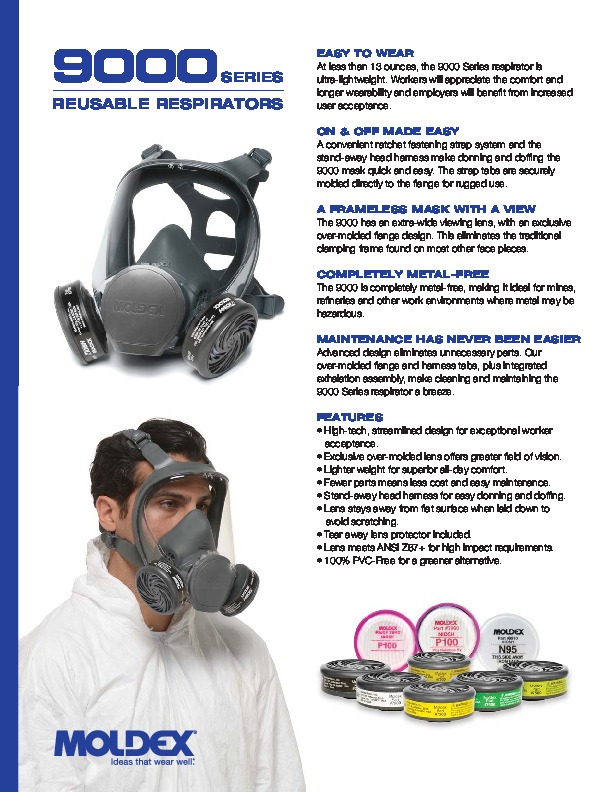
I left my half face respirator in a box and forgot about it for 2 years. Now it has mold on it. Can I just clean it and reuse it or should I buy a new respirator?
Edit: alright, new respirator it is
If a respirator is visibly degraded, contaminated or in doubtful condition, follow the manufacturer’s replacement and service guidance before using it again.